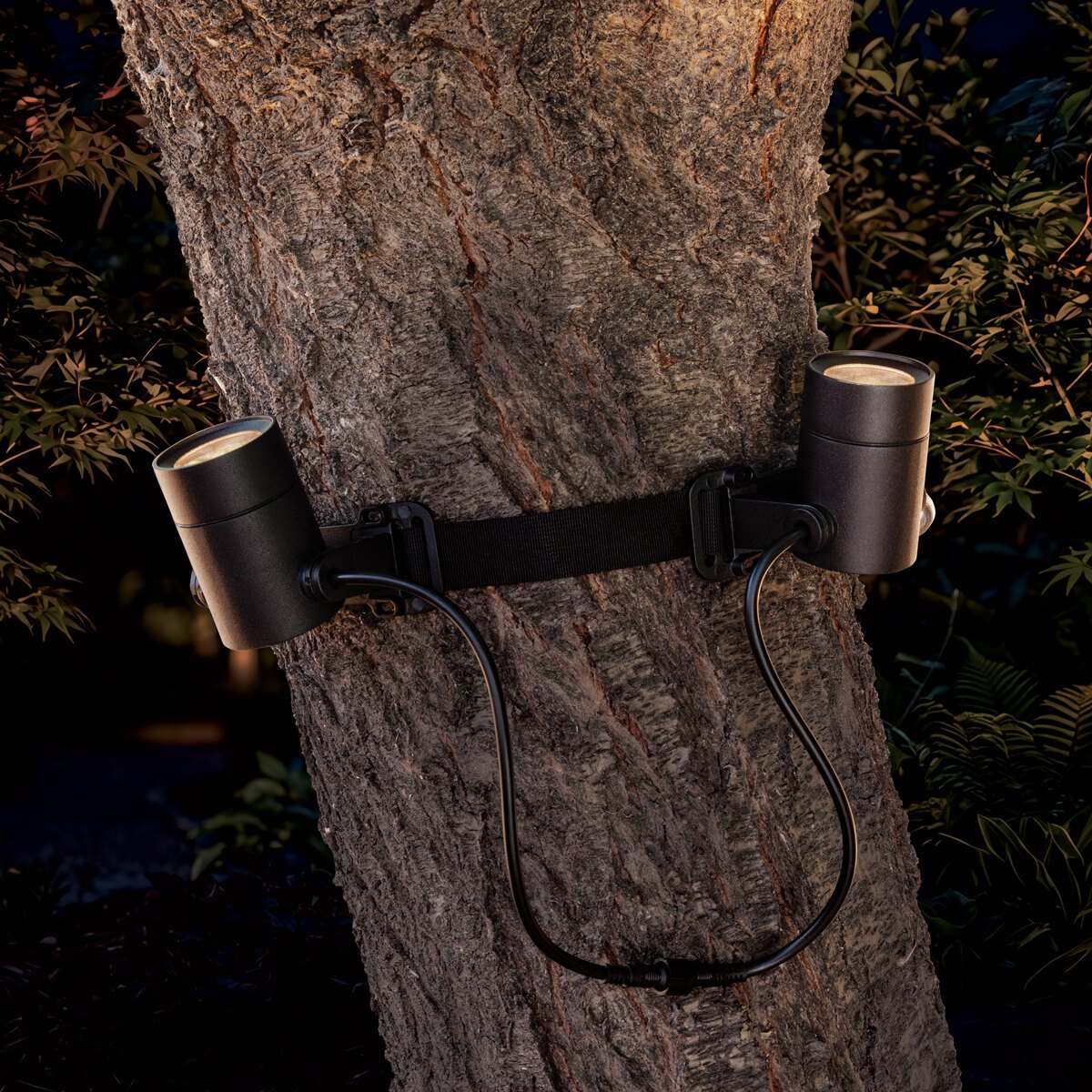
How to choose an outdoor directional light
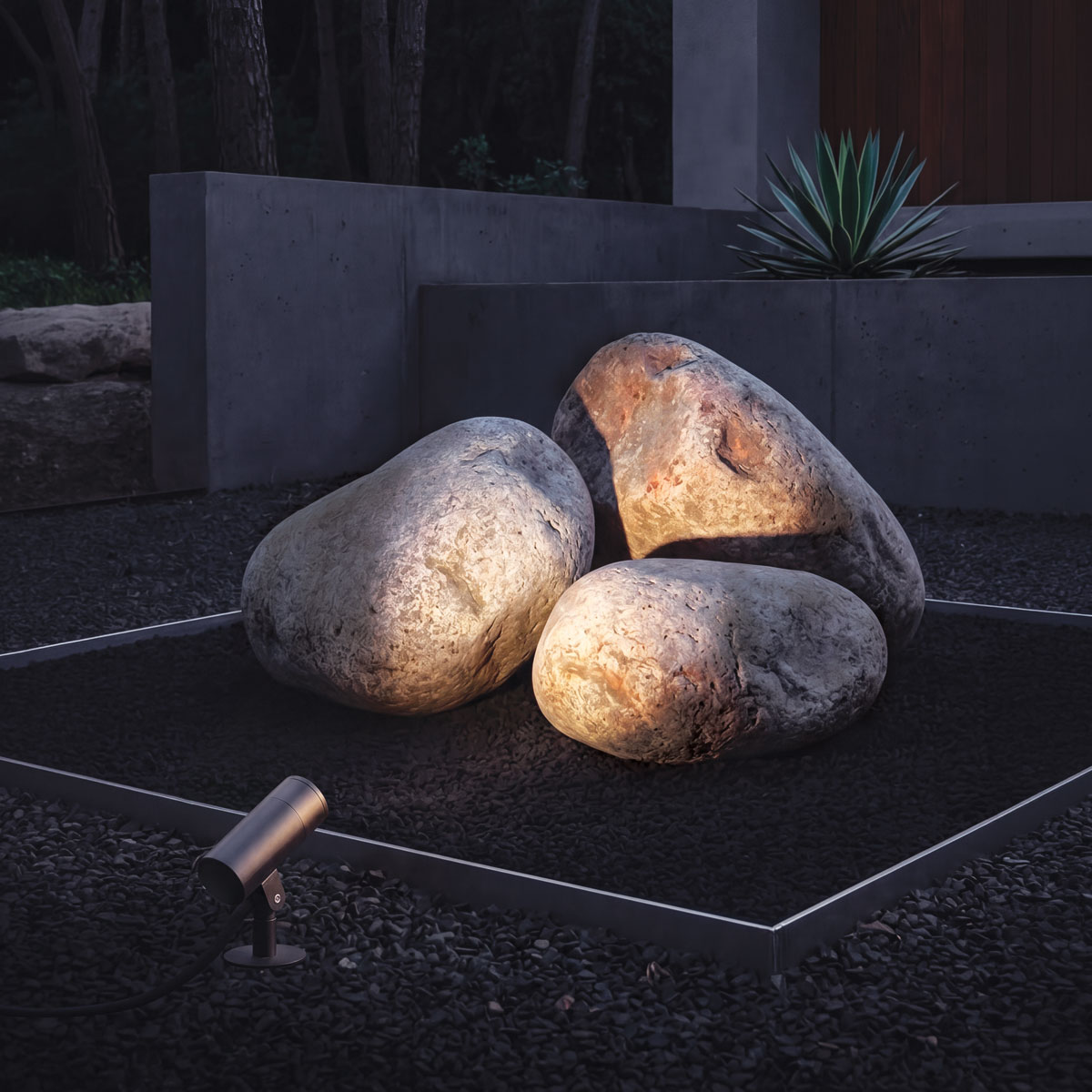
An outdoor directional light does not light the whole garden but highlights one feature, so start by deciding what it will light and from how far away.
Light output for the feature
Fittings in this category are rated 2 to 10 W with 290 to 1023 lm of luminous flux. A lower-output model suits a low shrub, a stone or a house number lit from close by. A taller tree, a facade column or a wall lit from a few metres away needs a stronger fitting. A large facade or a wide tree canopy is usually lit by several evenly spaced fittings rather than one powerful one, which gives fewer hot spots and harsh shadows.
Warm colour temperature
All these fittings give warm white light at 3000K or 2700K. Warm light brings out the tones of timber, brick and stone, and greenery looks more natural in the evening than under cool light. 2700K is warmer still and suits timber facades or decking. Within one area, such as a single facade, do not mix 2700K and 3000K fittings, as the difference shows clearly on a pale wall. If other lights already illuminate the garden, match their colour temperature.
Protection against rain
Every fitting in this category is rated IP65: dust-tight and protected against water jets from any direction, so it can be installed in the open. It must not, however, be submerged or placed where water collects. Housings are mostly aluminium, with an acrylic or tempered glass window. The outdoor cable connection must be as well sealed as the fitting itself, so it is best done by an electrician.
Position and housing colour
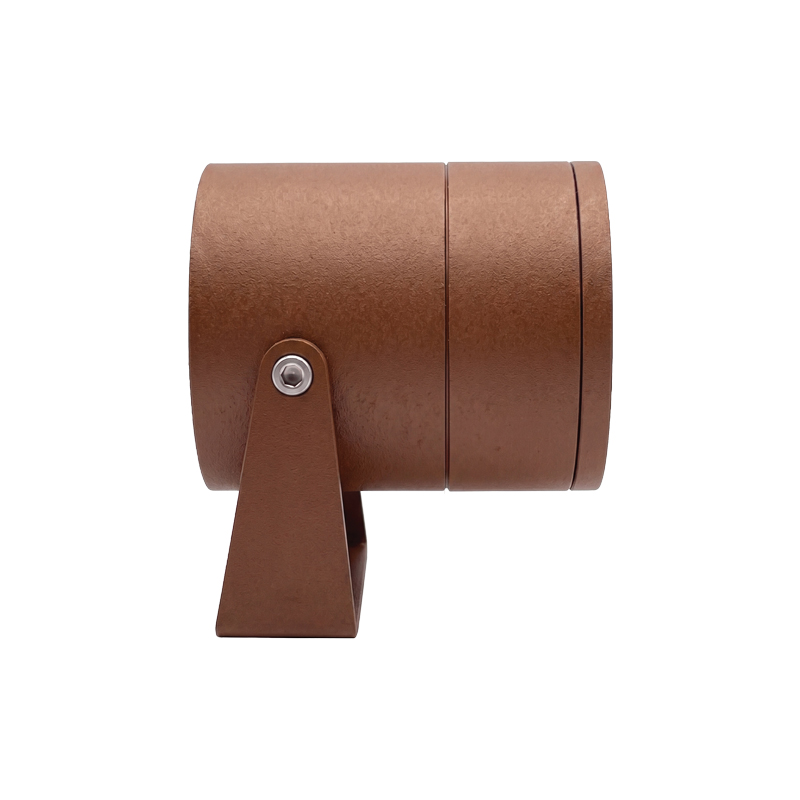
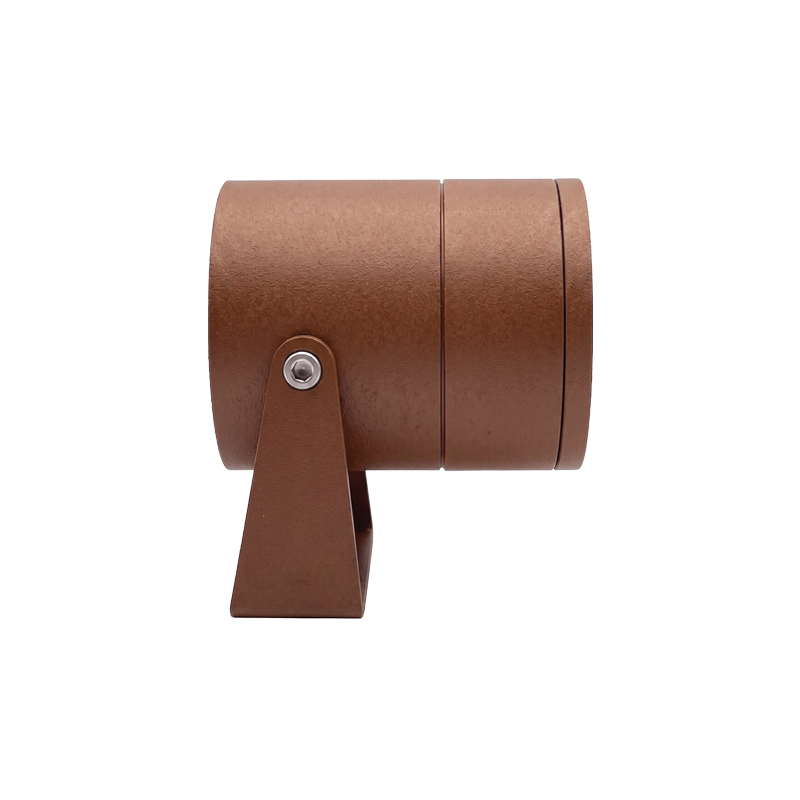
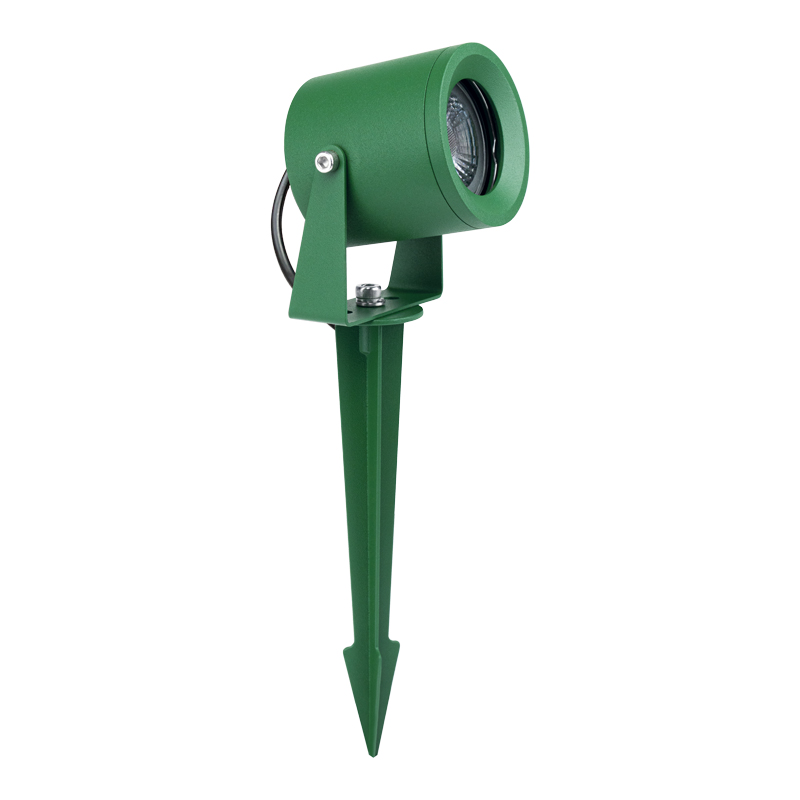
Mount a directional light so the fitting itself is as discreet as possible while the beam falls on the target surface. Aim it away from paths and neighbours' windows so it does not dazzle passers-by. Housings come in black, brown and green. Black and brown are easy to match to a facade, fence or decking, while a green housing almost disappears among plants. Before installing, consider the distance to the power supply and the cable route.
| Parameter | In this category | What it means |
|---|
| Power | 2–10 W | accent light rather than general yard lighting |
| Luminous flux | 290–1023 lm | higher output for a more distant or taller feature |
| Colour temperature | 2700K, 3000K | warm white |
| IP rating | IP65 | dust-tight, protected against water jets |
For other outdoor options, see outdoor wall lights, spike lights and outdoor recessed lights.