How to choose a wall light
What the light is for
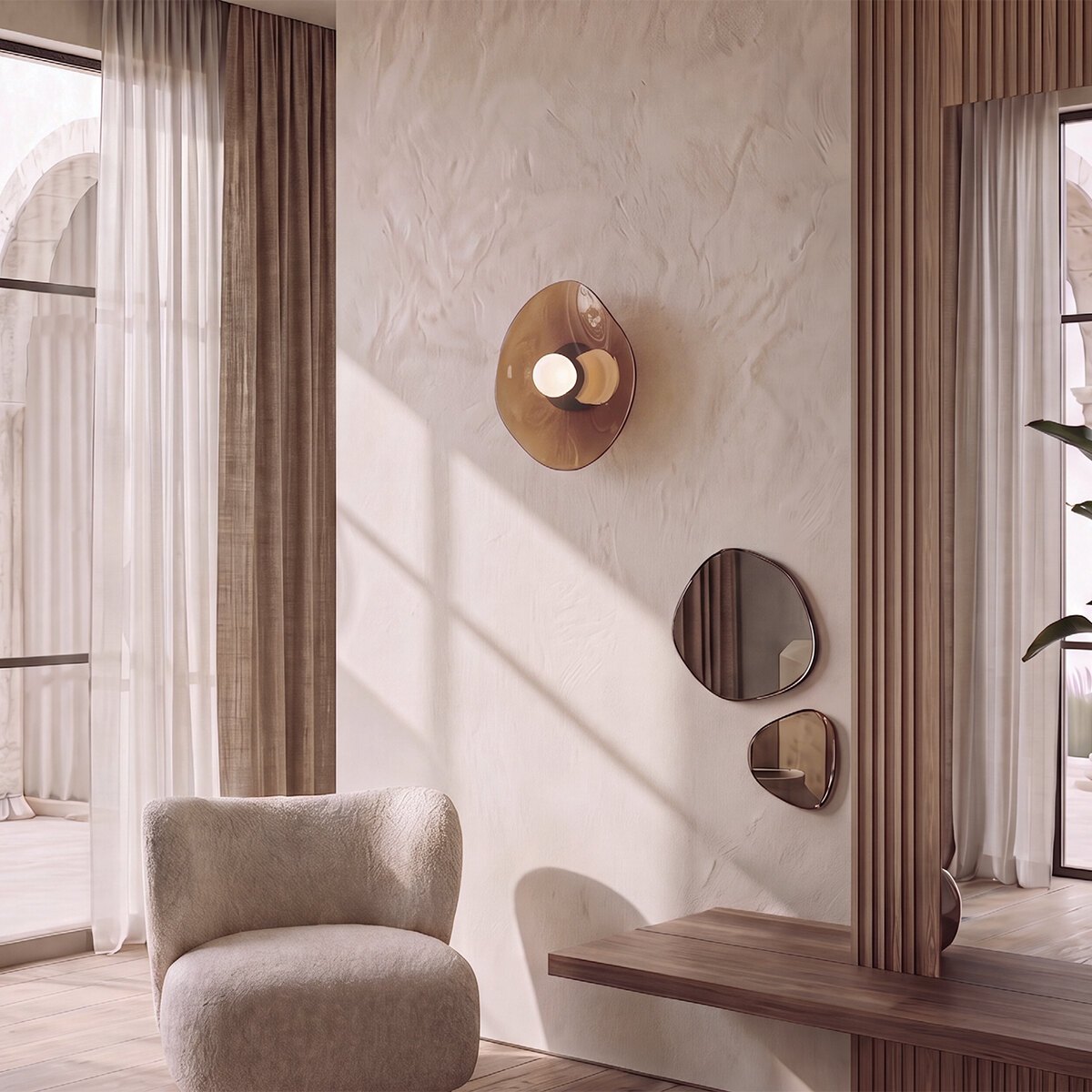
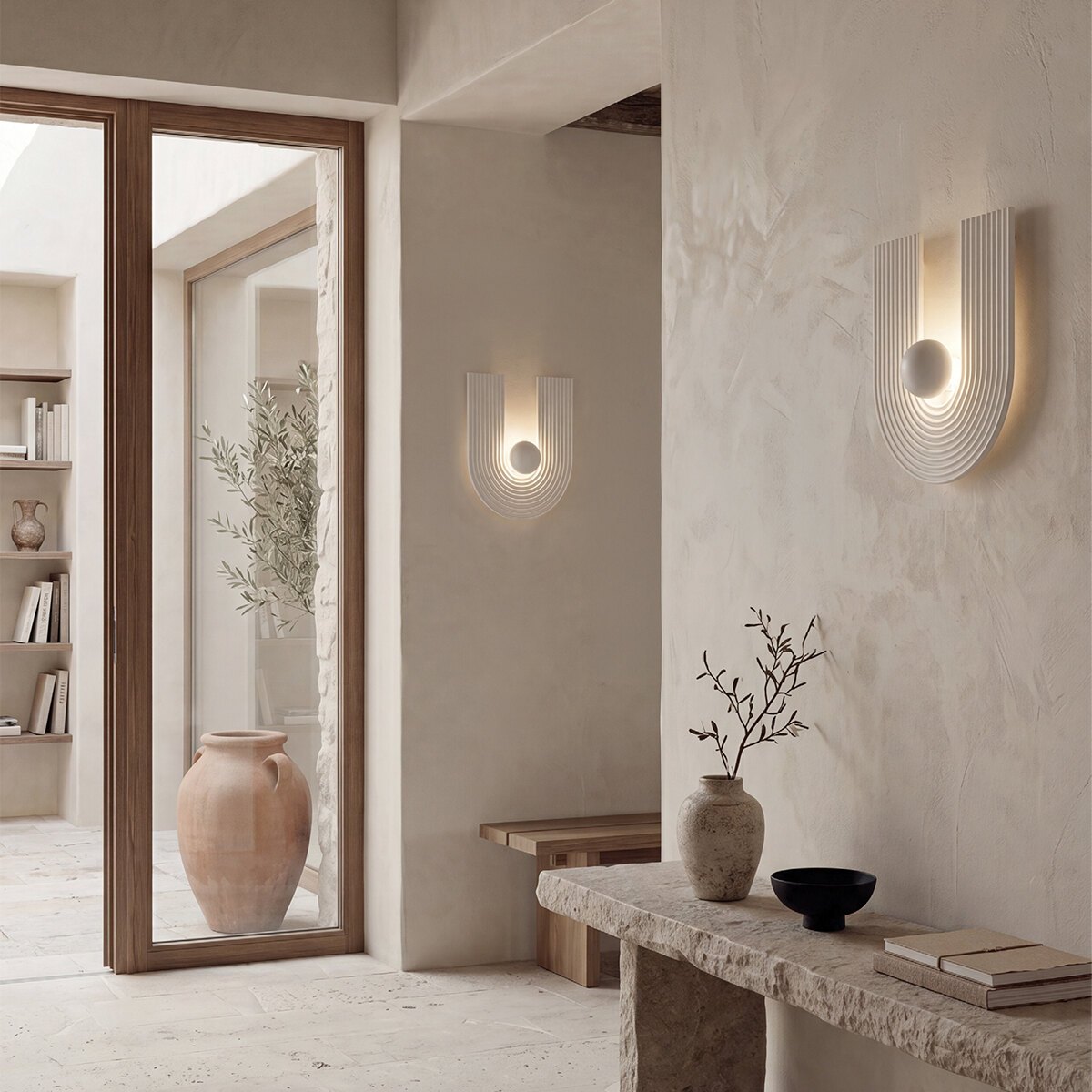
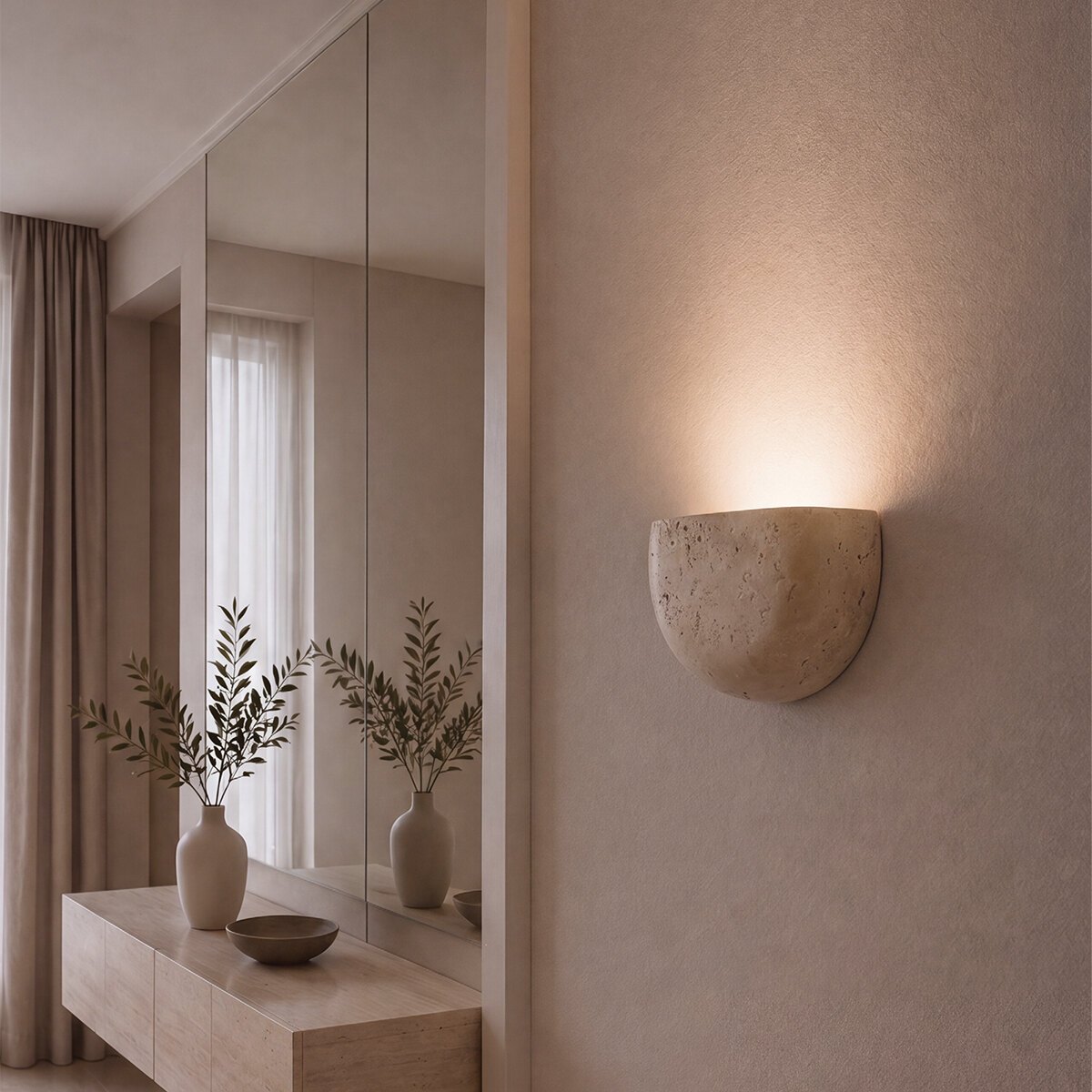
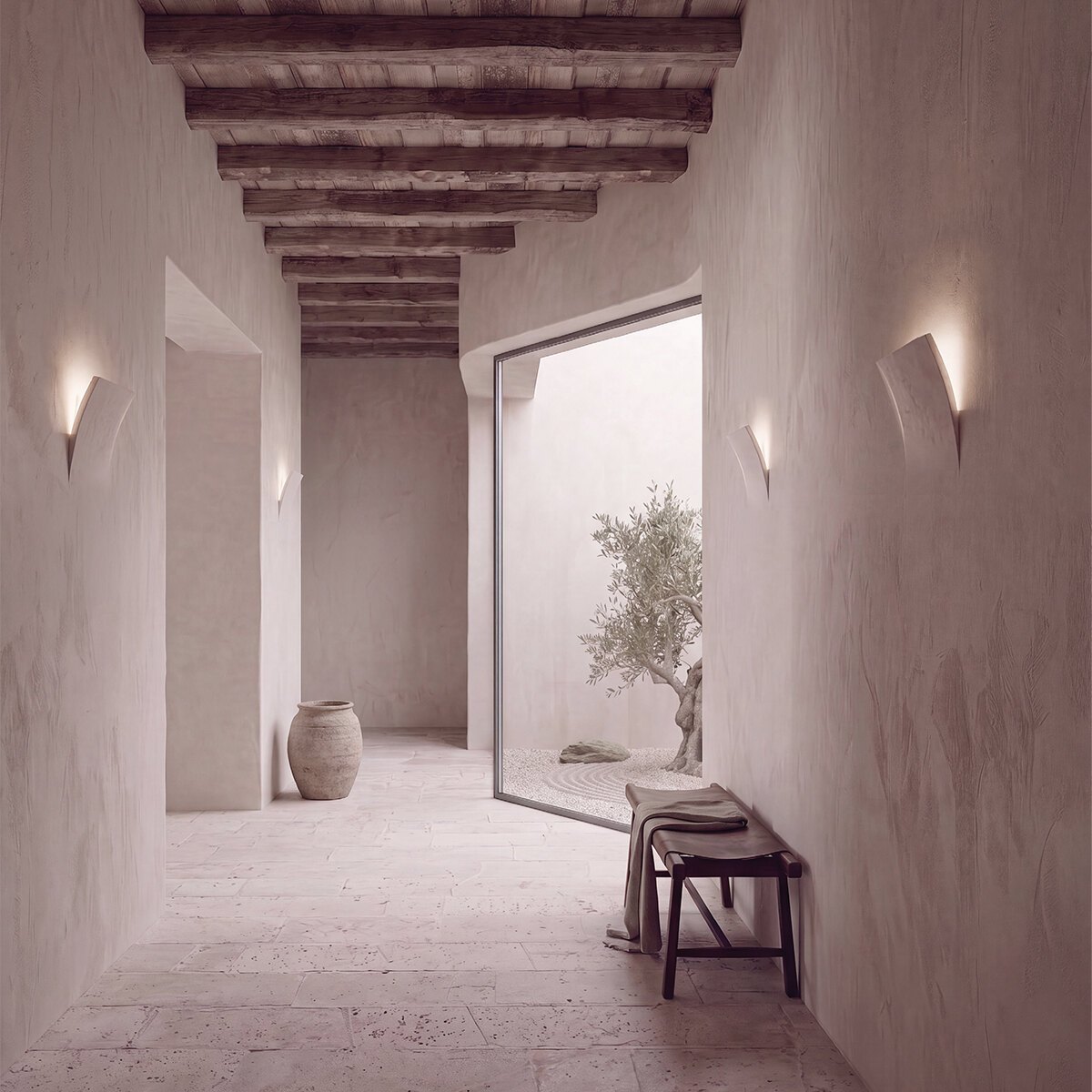
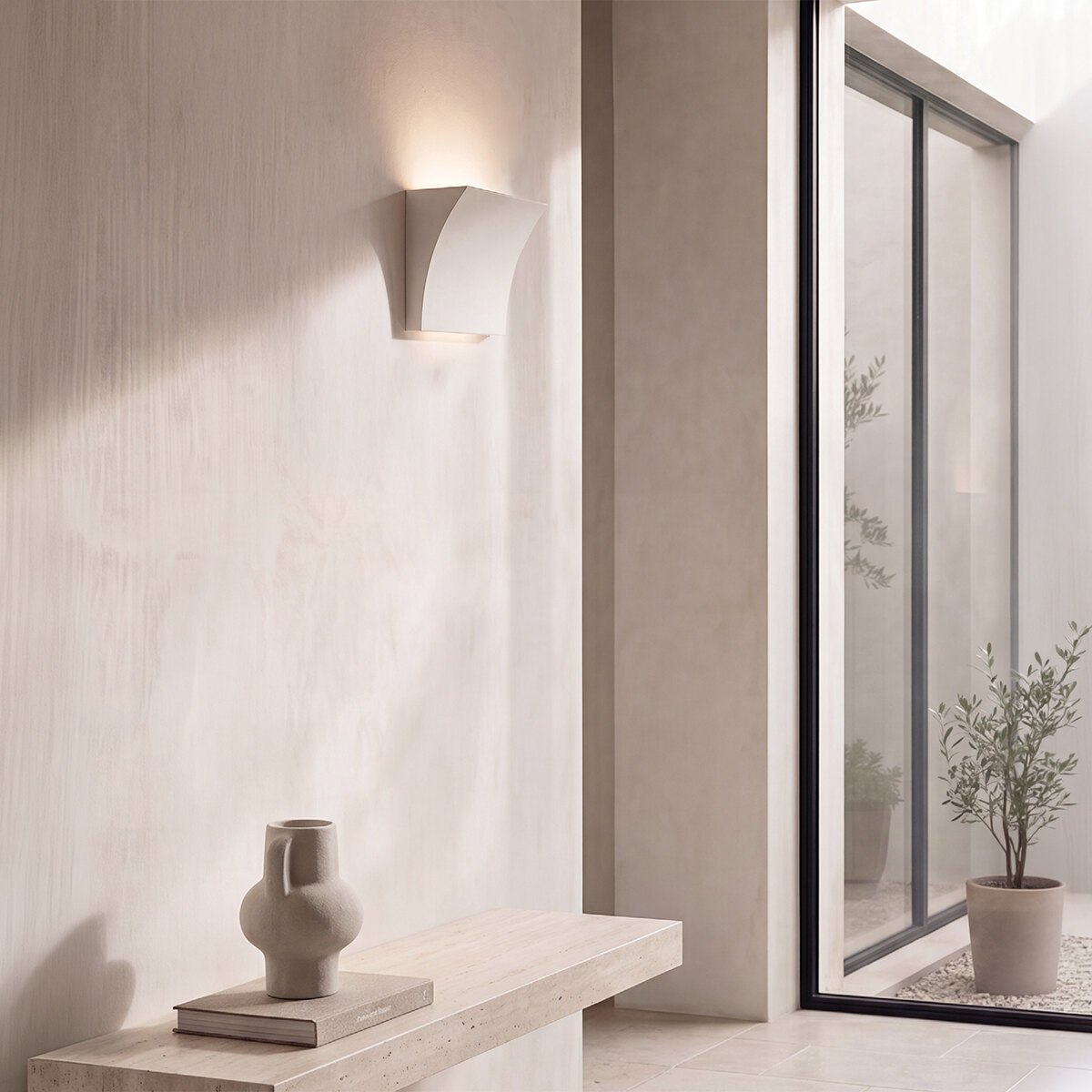
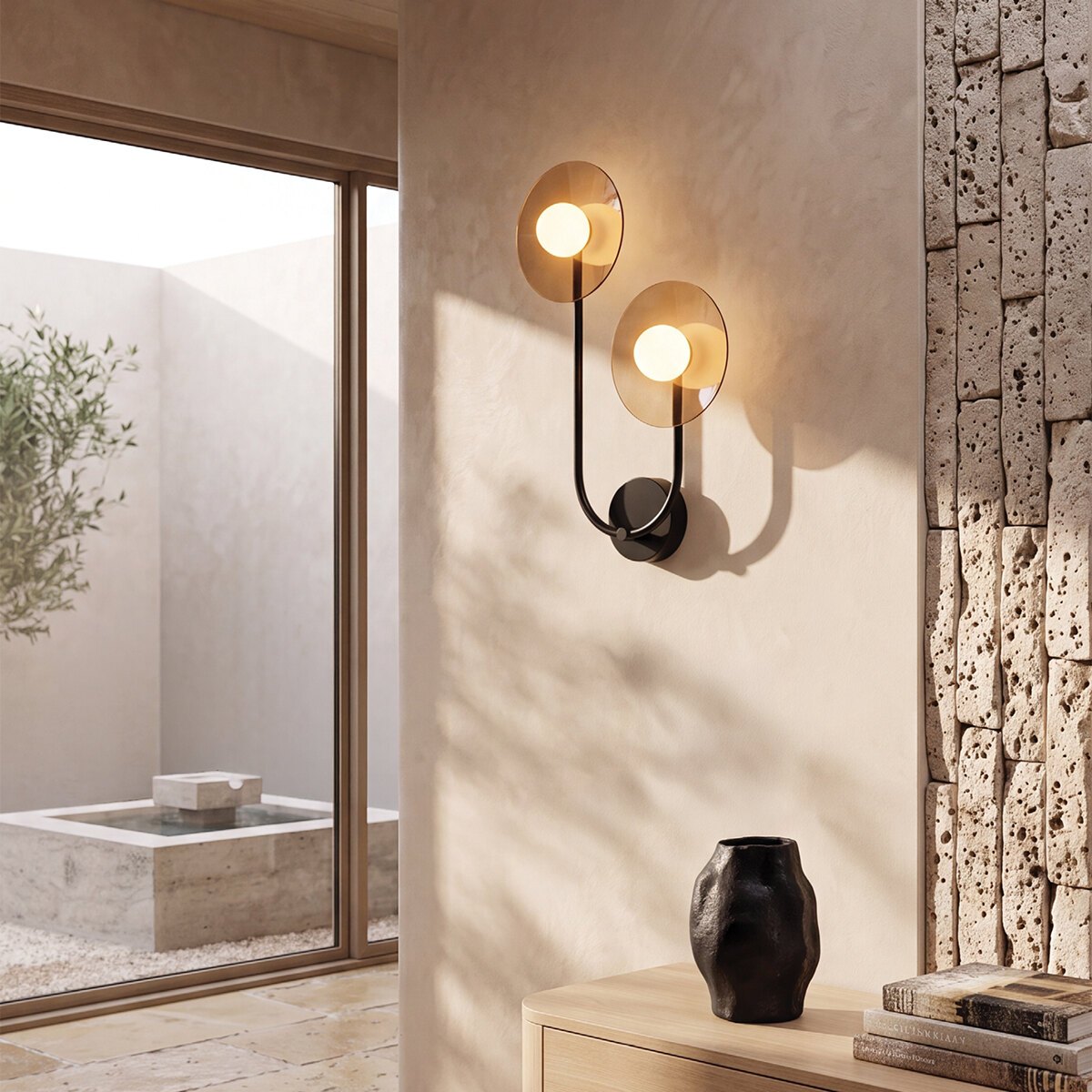
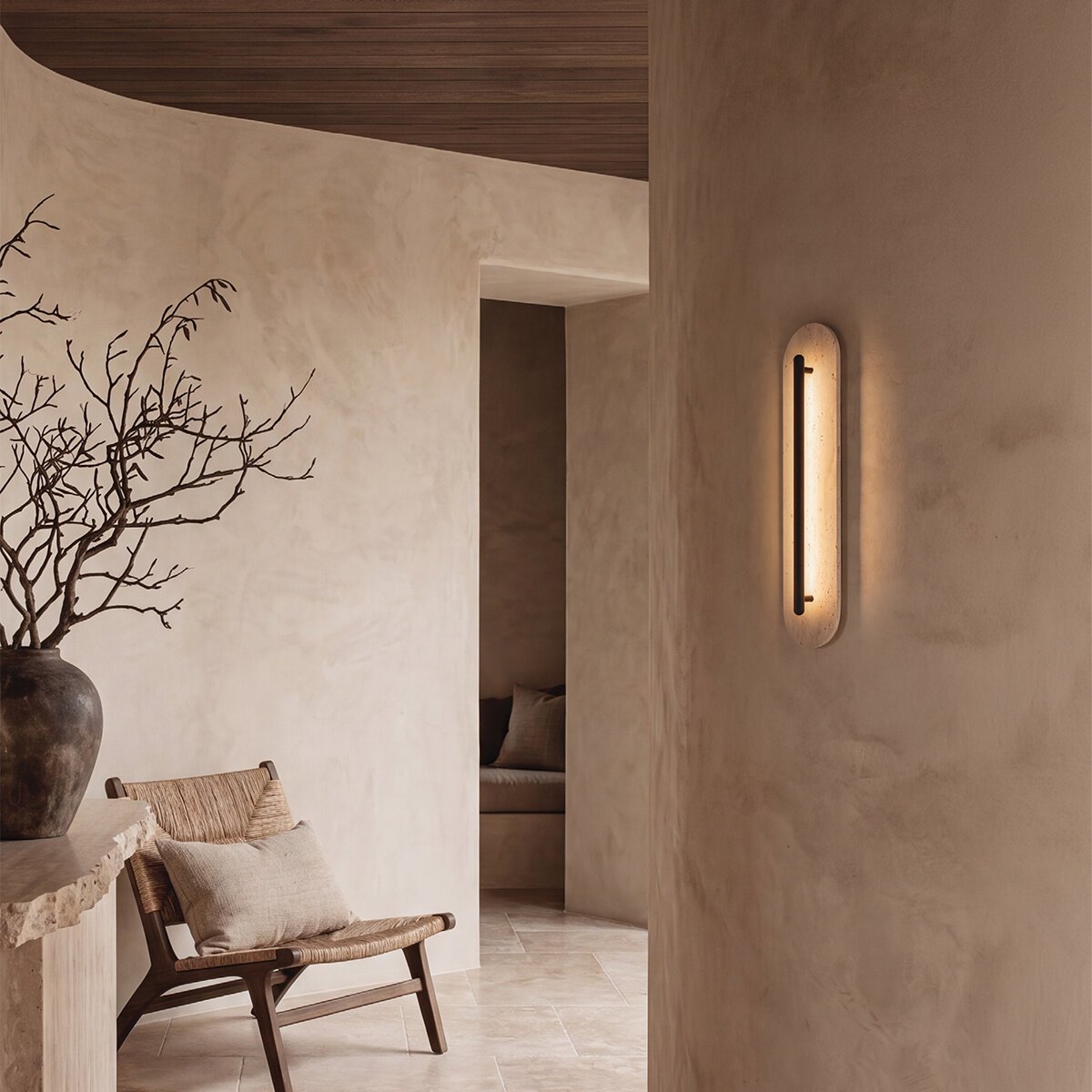
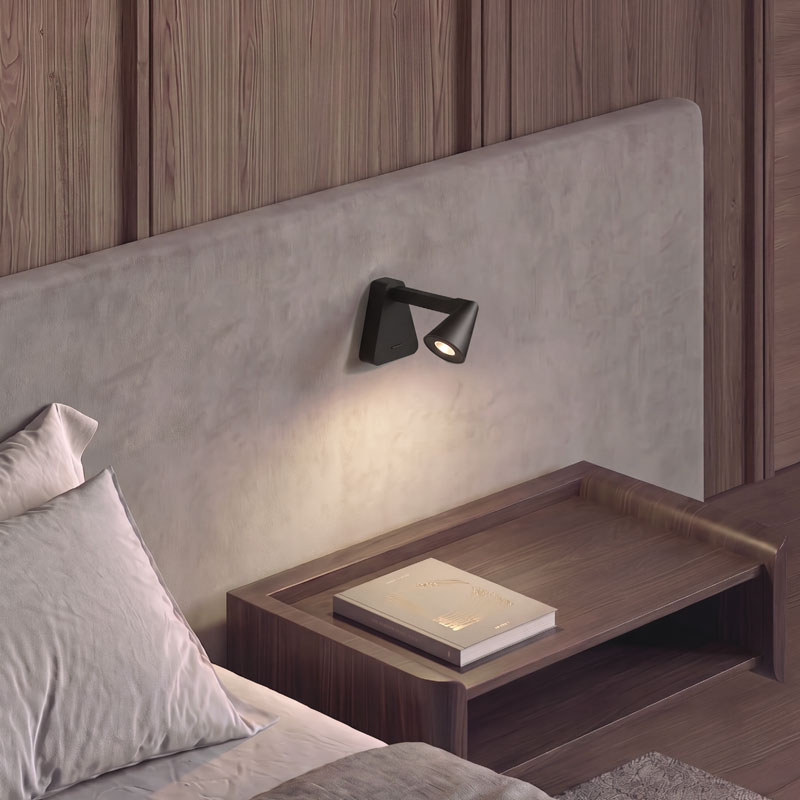
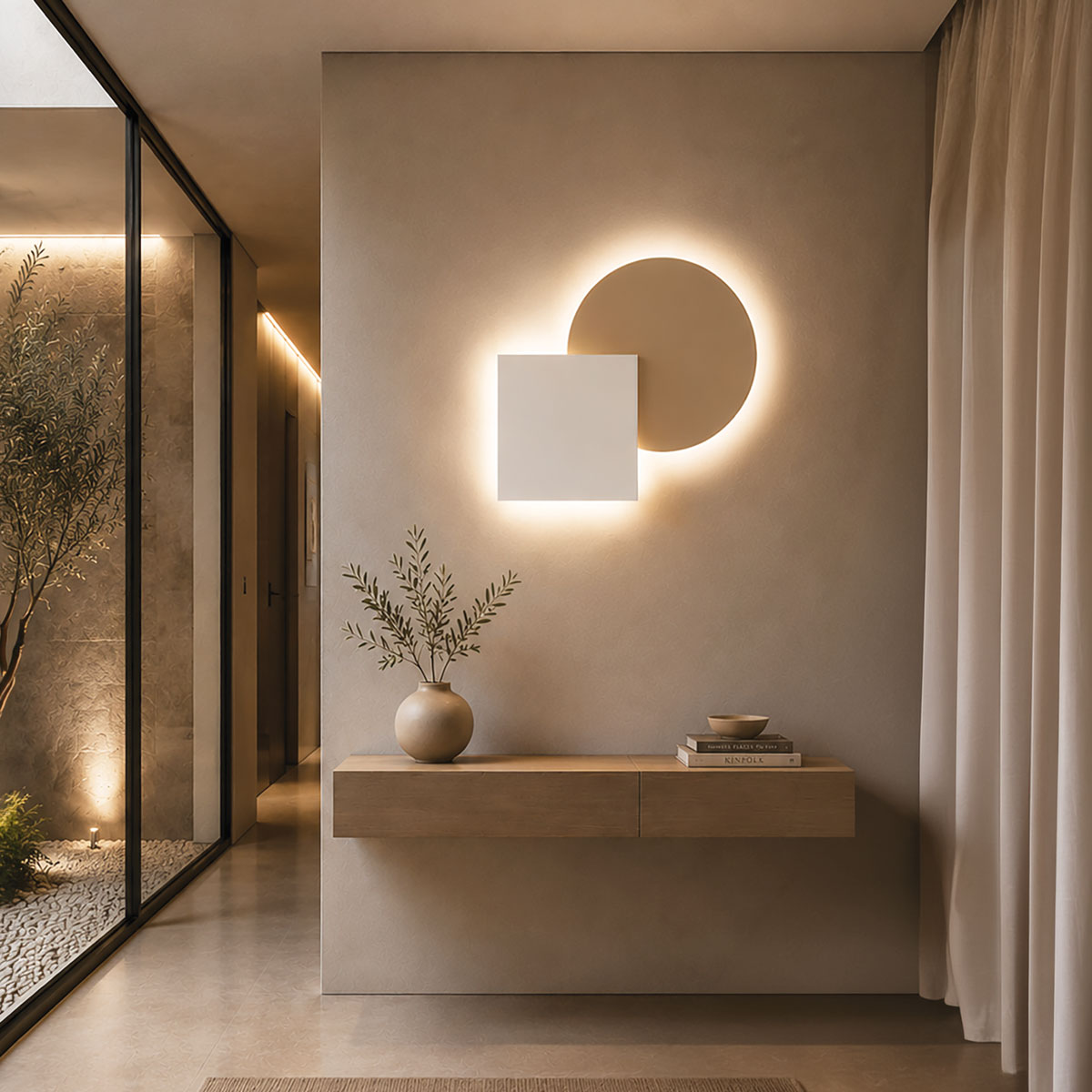
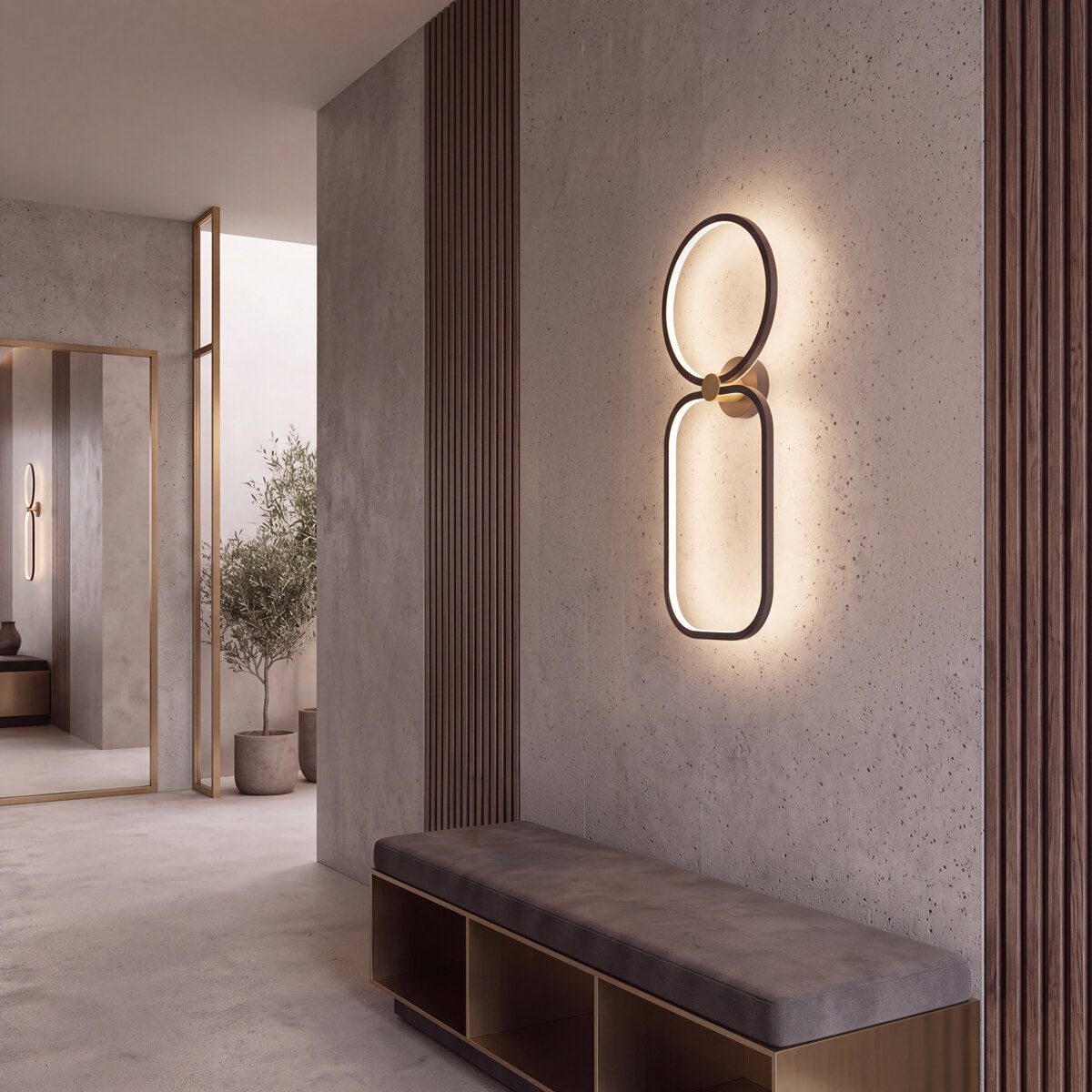
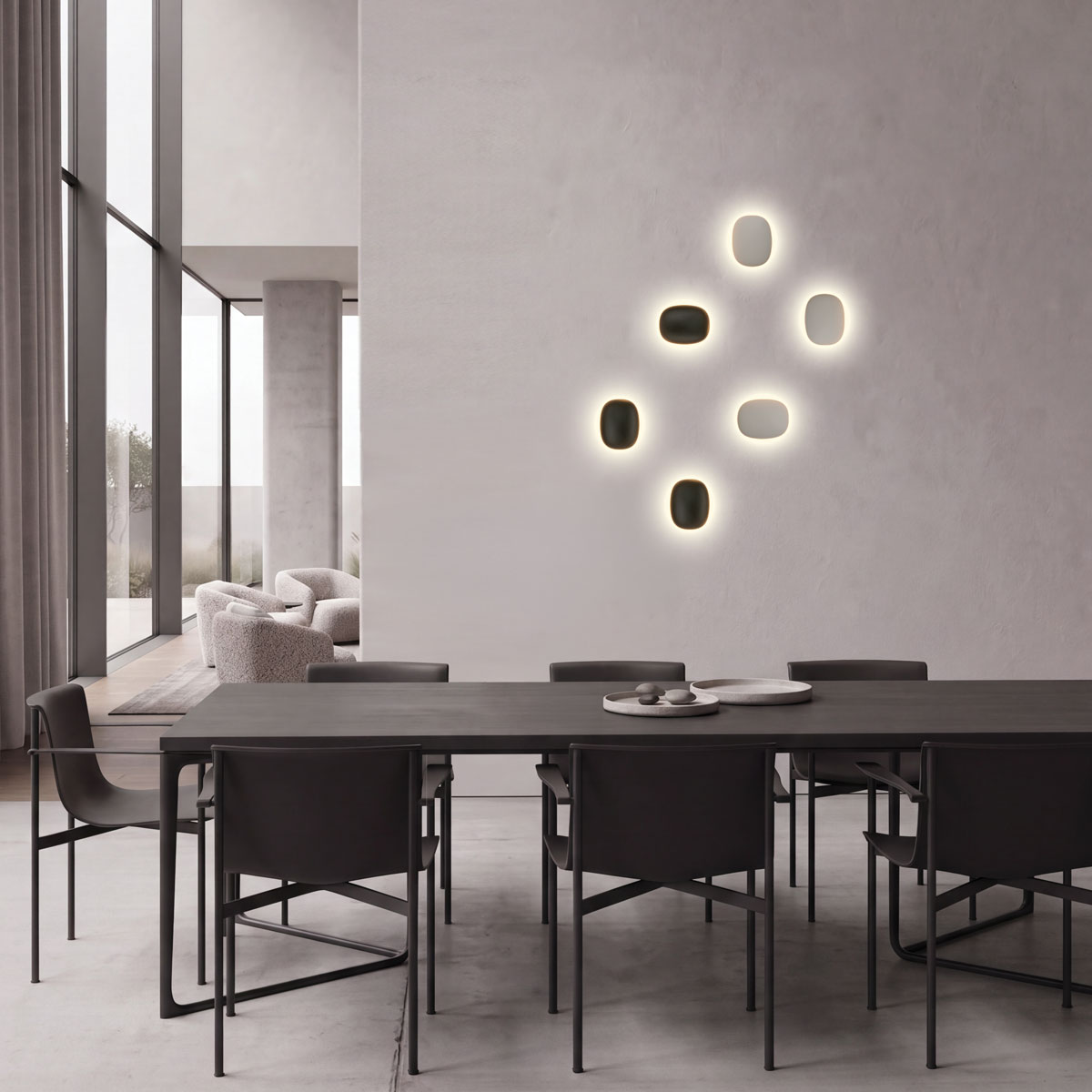
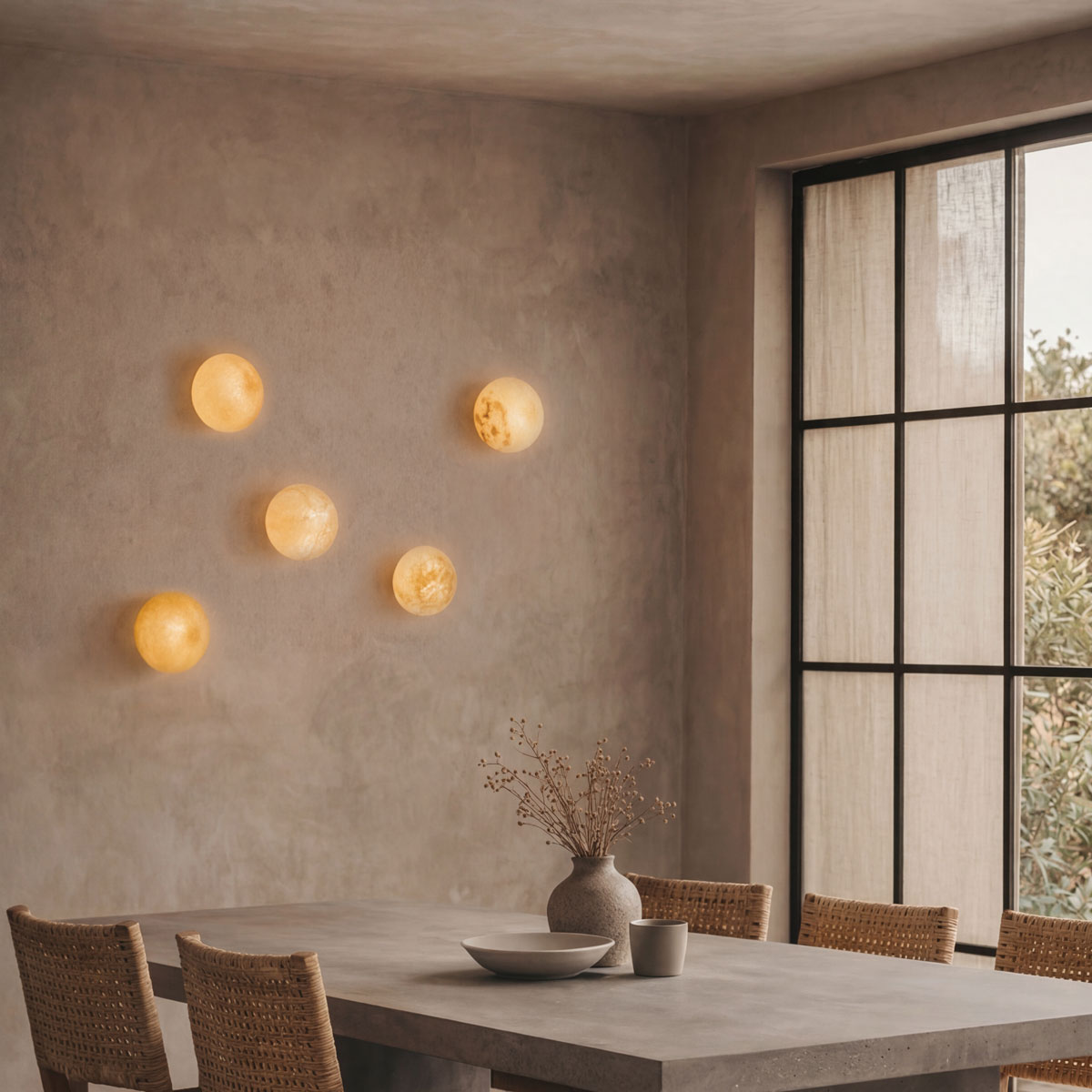
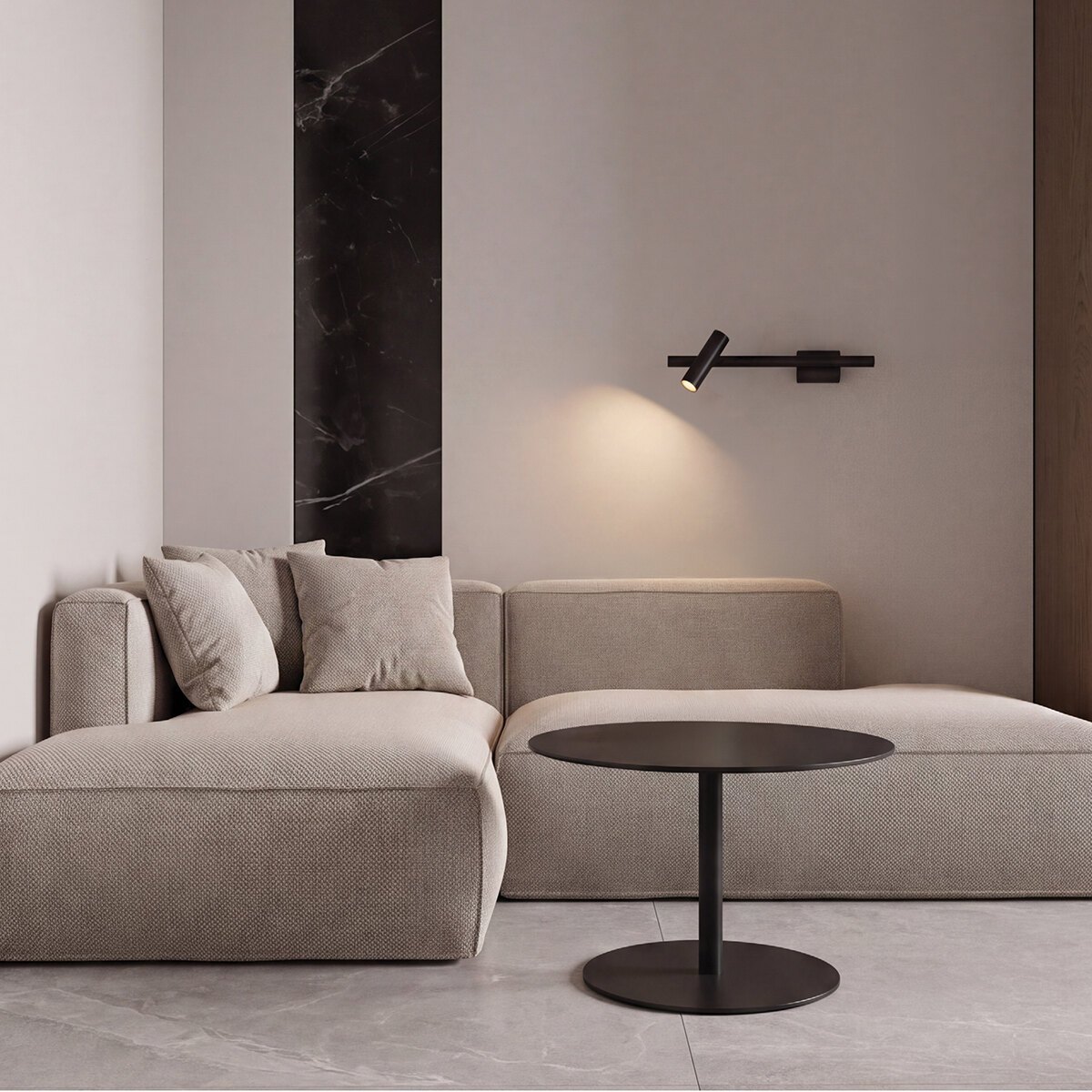
A wall light is rarely the only light in a room, so first decide what job it has to do. Reading in bed needs a directional beam, a mirror needs even light that leaves no shadows on the face, and a hallway or stairwell needs soft orientation light. Decorative wall lights wash the wall itself and create an accent, so their output can be modest. Once the job is clear, choosing the shape and the luminous flux becomes much easier.
Mounting height and output
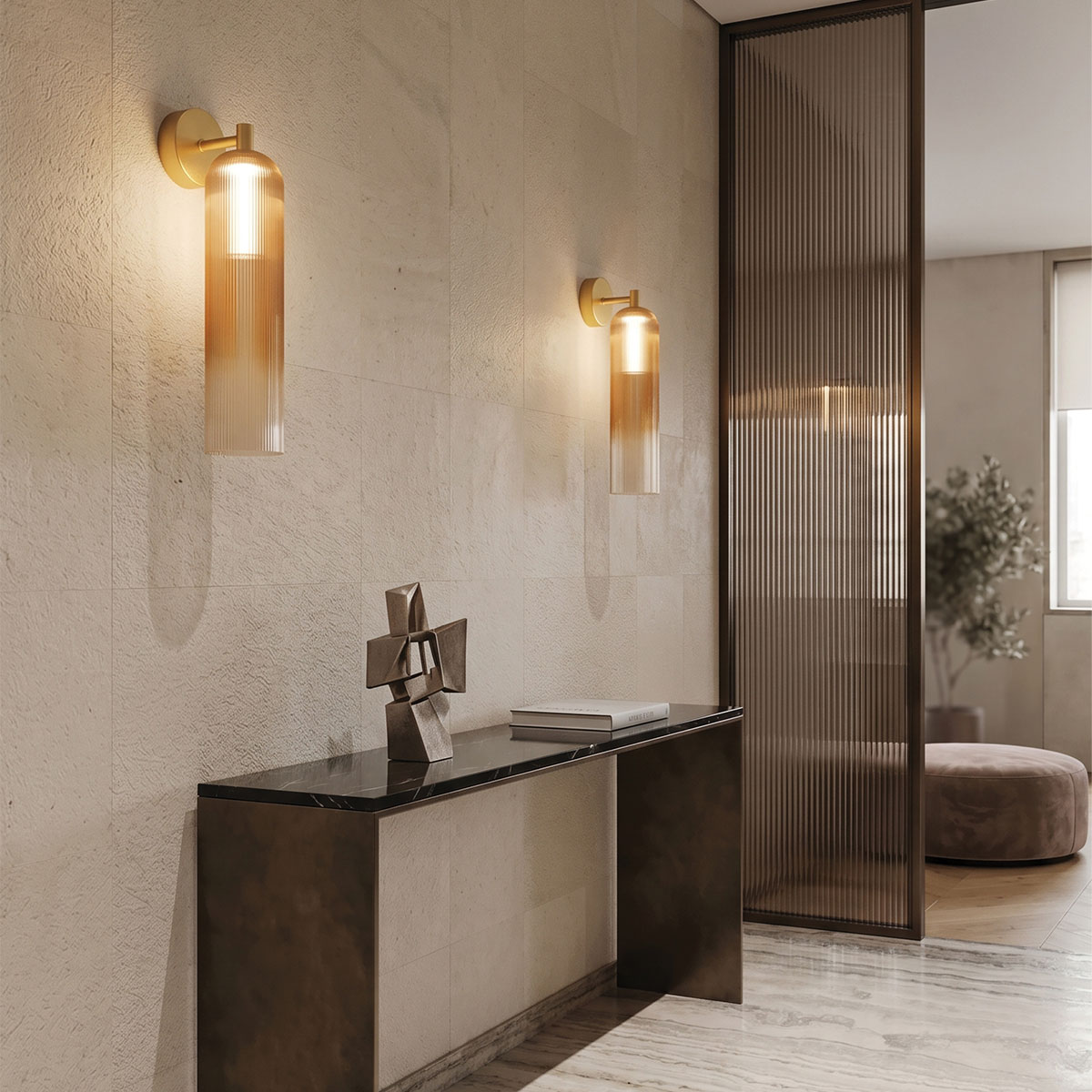
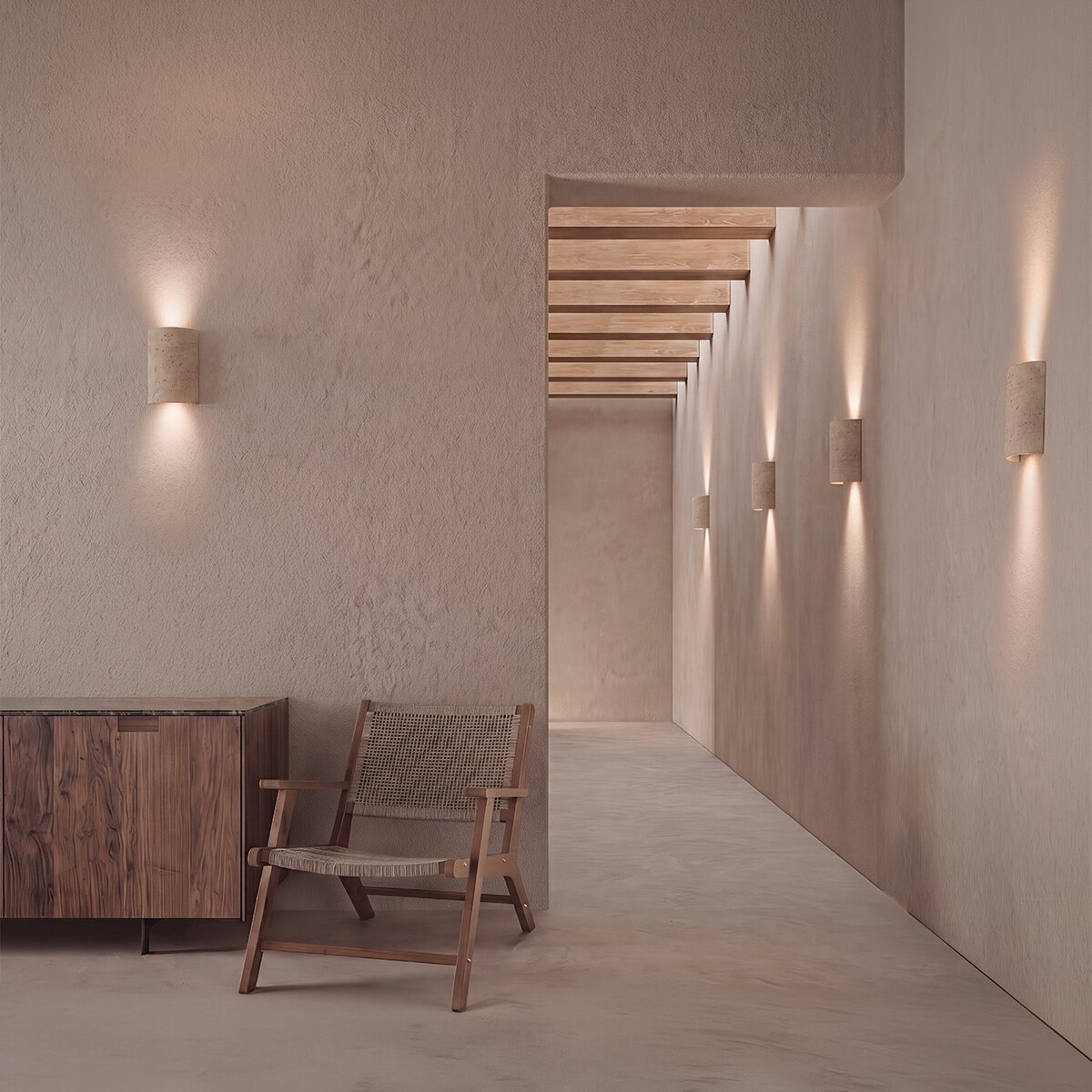
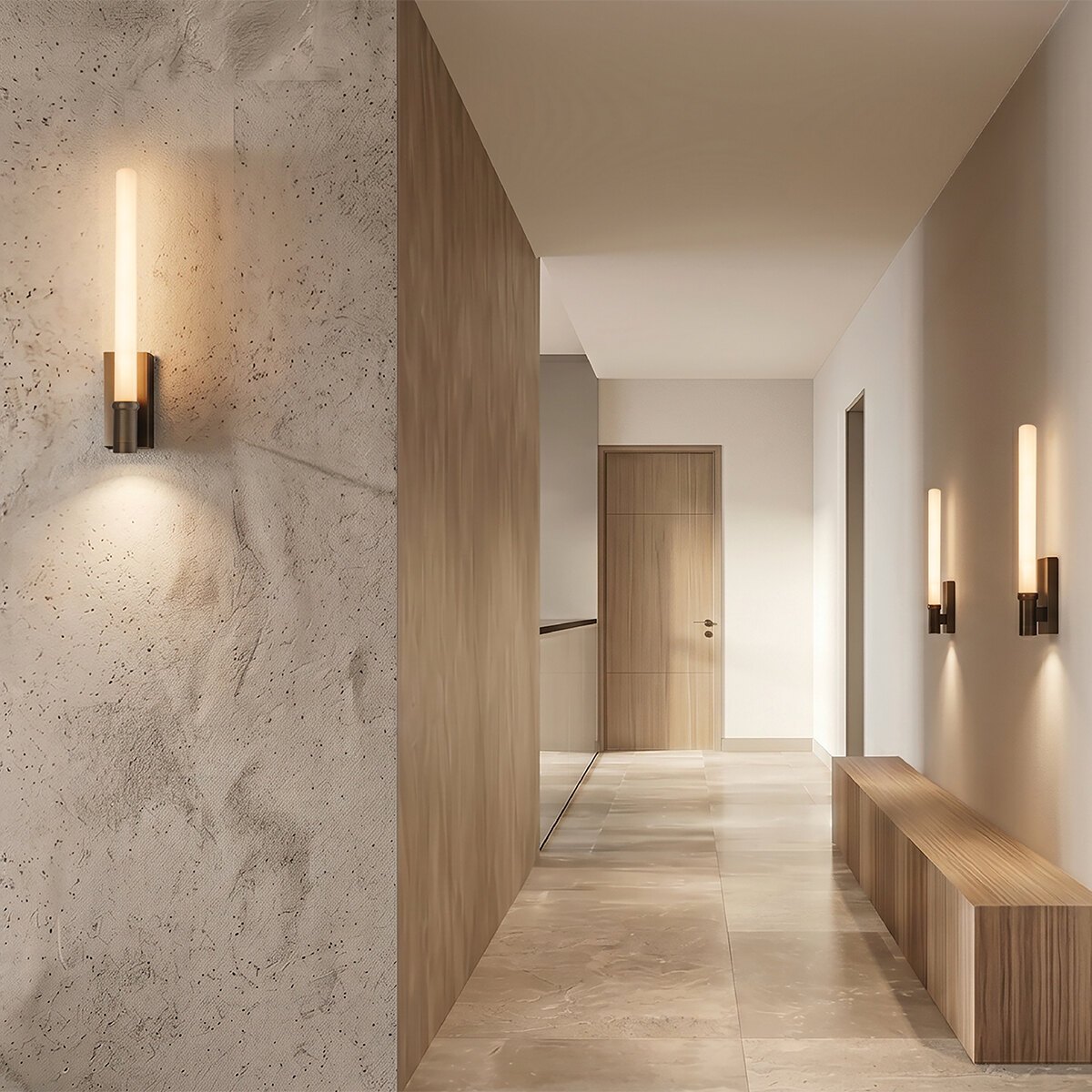
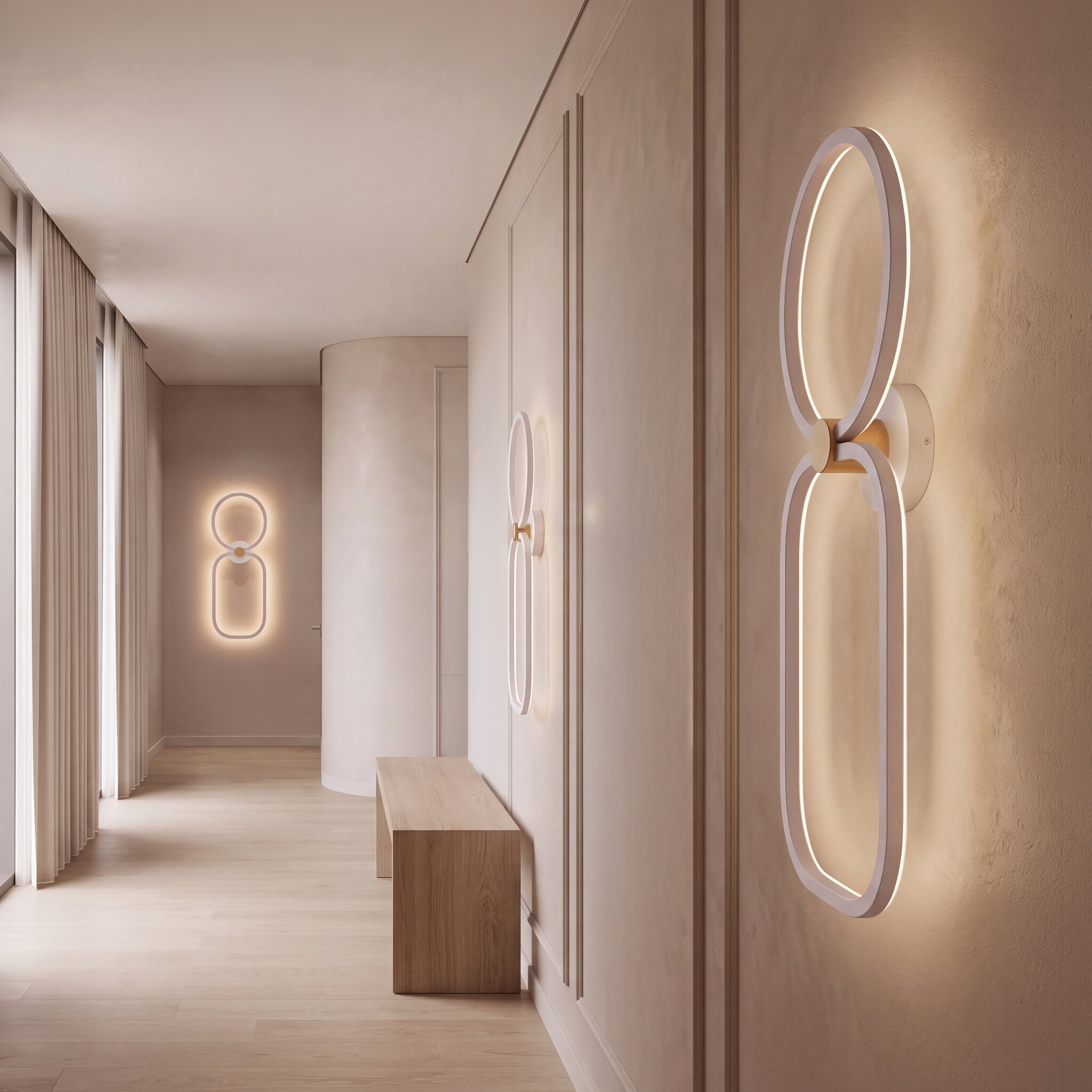
In living rooms and hallways wall lights are usually fixed at about 150–170 cm from the floor, and lower beside a bed so the light falls on the page rather than into your eyes. Fittings in this category range from 140 to 4080 lm and from 1 to 75 W. A few hundred lumens is usually enough for reading or for orientation light in a hallway, while the stronger models are for when a wall light has to light a whole small room. Fix several matching lights on a long wall at the same height.
Bulb base and colour temperature
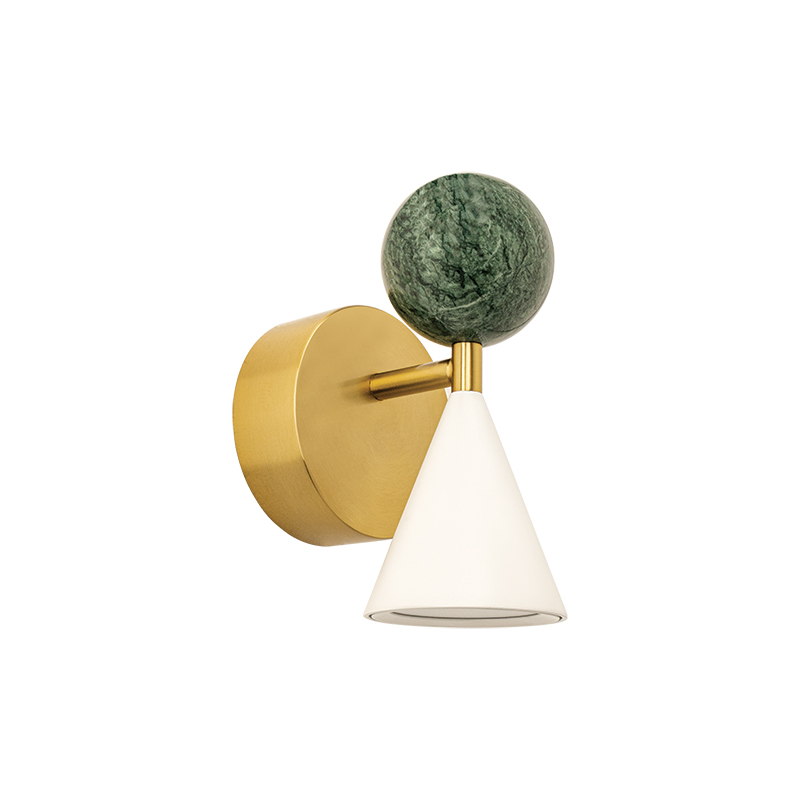
The most common light source is an integrated LED, and among replaceable bulbs the G9 base leads, followed by E27, GU10, E14, S14d and GX 53. G9 bulbs are small, which makes them a good fit for compact wall lights with a glass shade. Integrated models are mostly 3000K warm white, with many at 4000K. Bedrooms usually get 2700–3000K and a bathroom mirror 3000–4000K. With a replaceable bulb, you set the colour temperature yourself when you choose the bulb.
Wall lights in the bathroom
In a bathroom the zone decides the IP rating you need. Most lights in this category are IP20 for dry rooms, with some IP44 and IP54 models that suit zone 2 beside the bath or shower. There are no IP65 or IP67 fittings here, so none of them is suitable for zones 1 or 0. Lights designed for bathrooms are grouped in a separate subcategory. Dimming is only possible on TRIAC (phase-cut) and touch-controlled models.
| Bathroom zone | Where it is | Minimum IP | In this category |
|---|
| Zone 0 | inside the bath or shower tray | IP67 | none |
| Zone 1 | above the bath or shower | IP65 | none |
| Zone 2 | next to the bath or shower | IP44 | IP44 and IP54 available |
| Outside the zones | rest of the room | no specific requirement | IP20 is fine |
Lights intended for bathrooms are in bathroom wall lights, and accent pieces in decorative wall lights. Wall lights are often paired with pendant luminaires and freestanding luminaires.