How to choose an outdoor freestanding light
Bollard height and spacing along a path
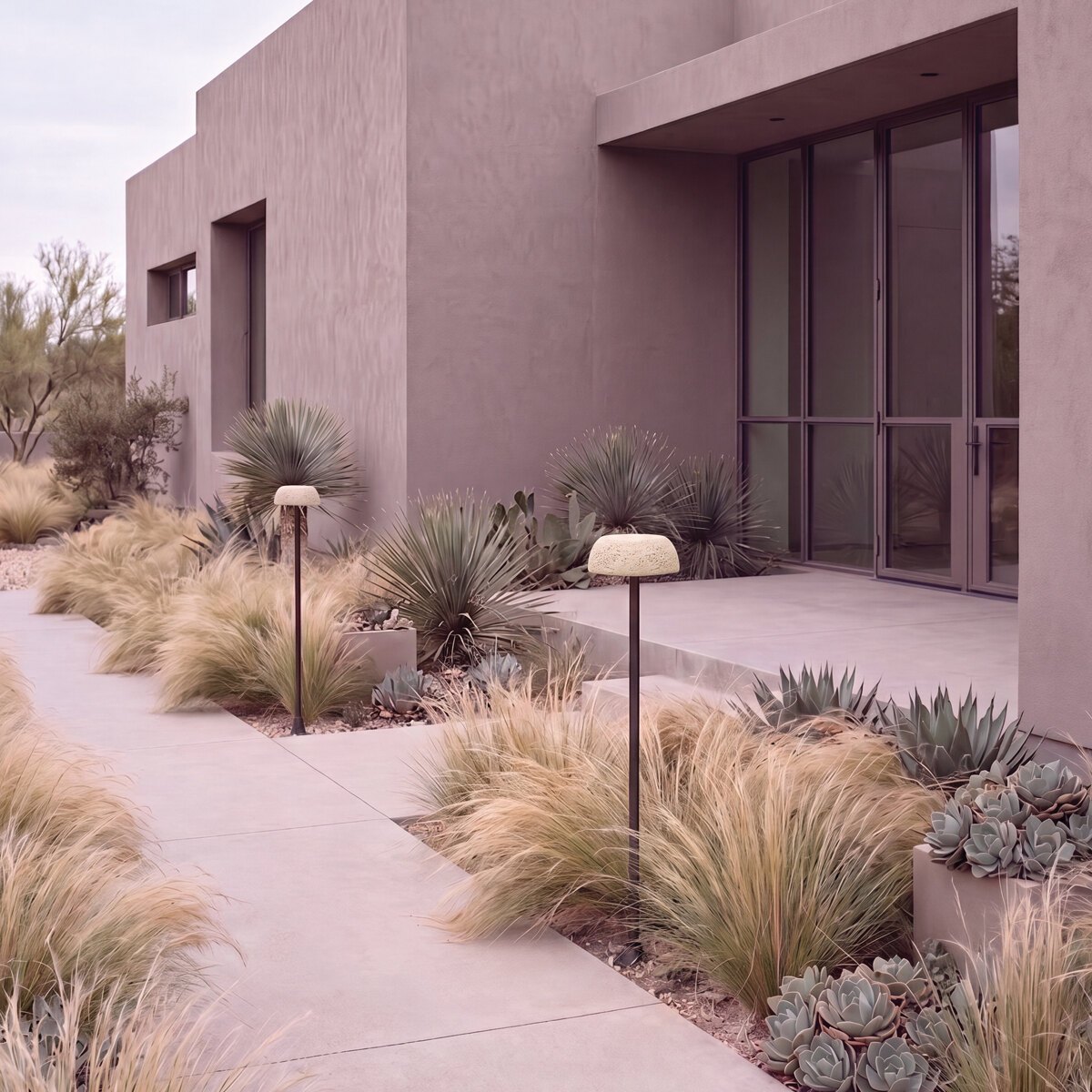
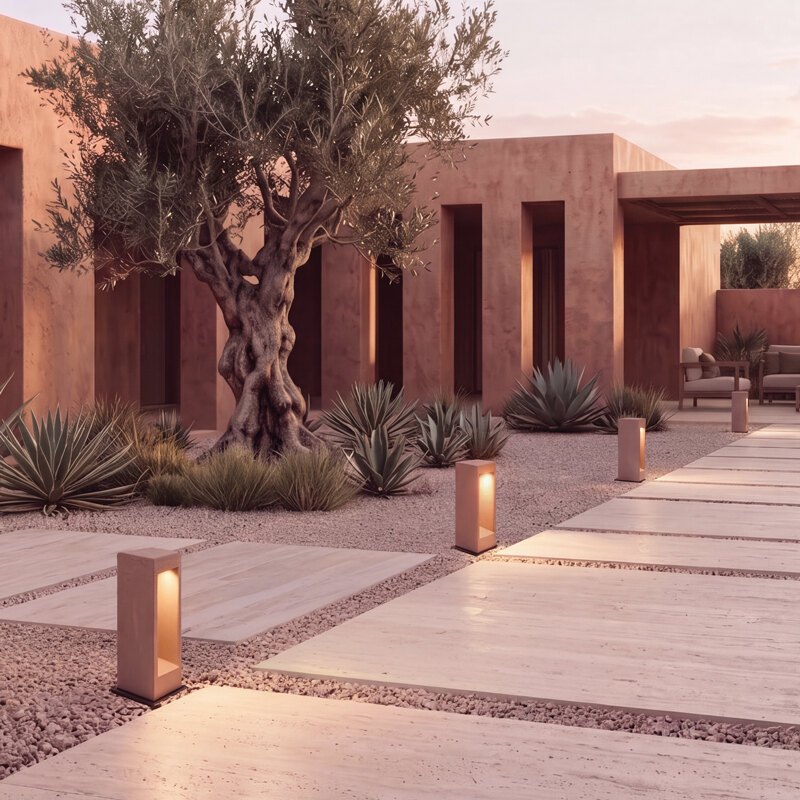
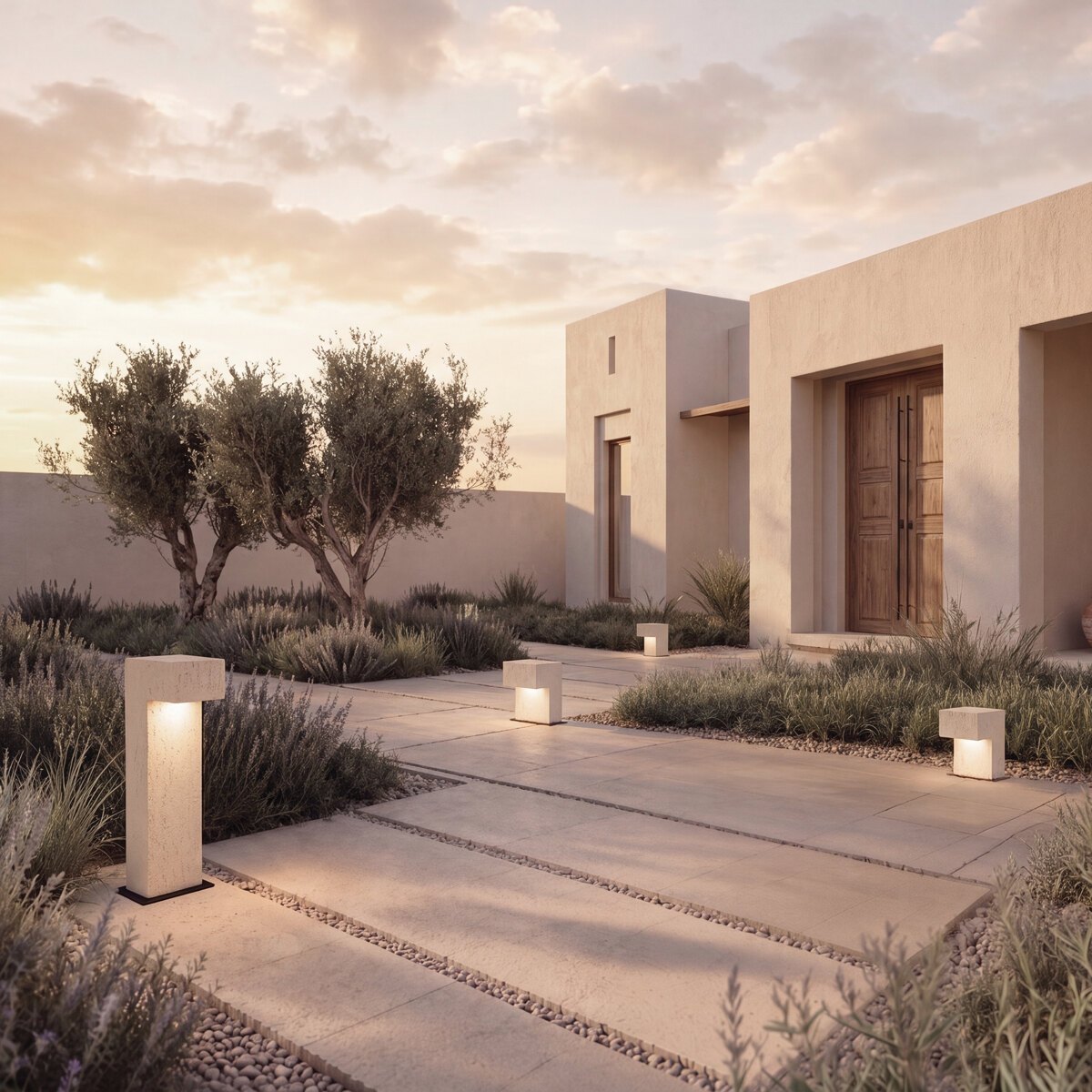
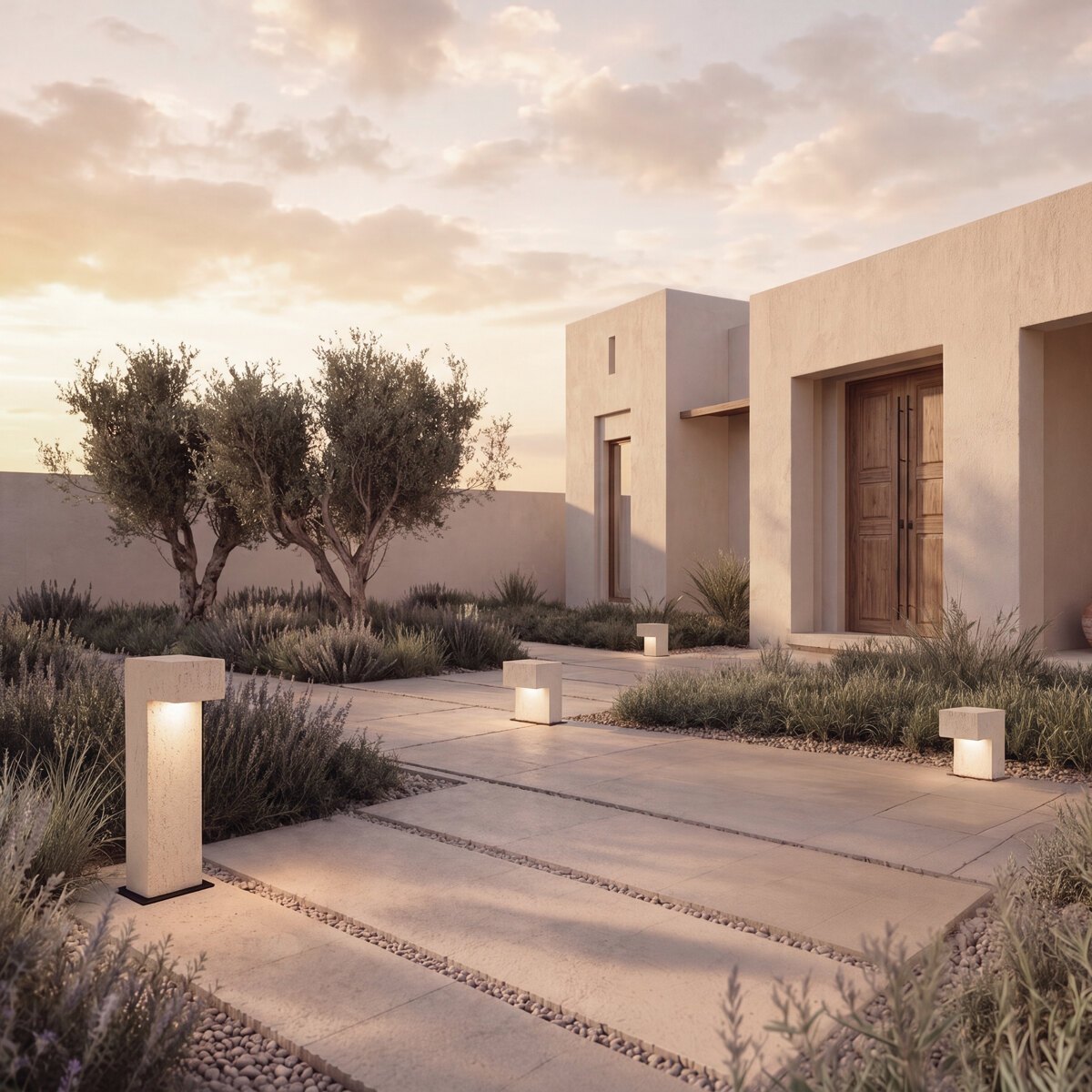
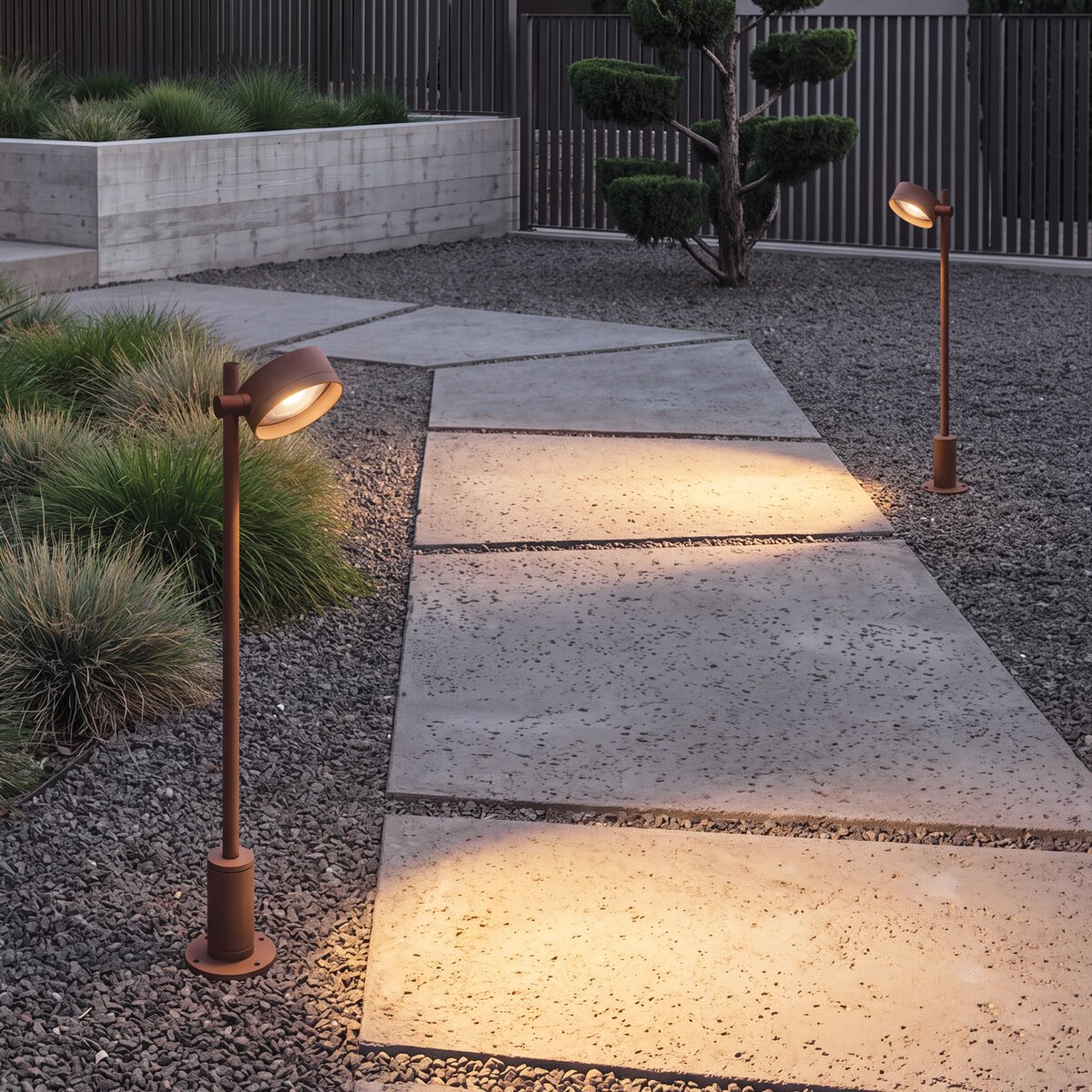
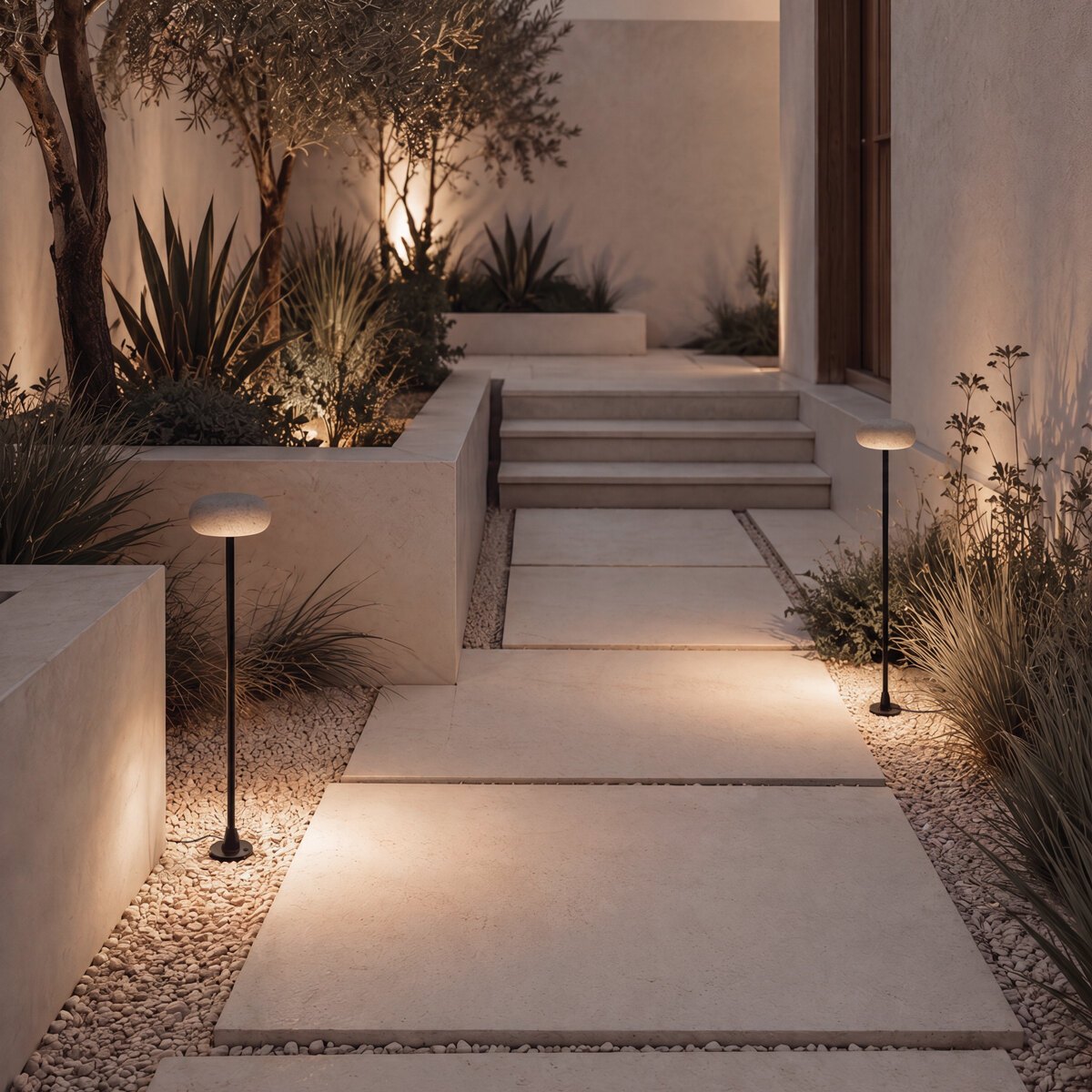
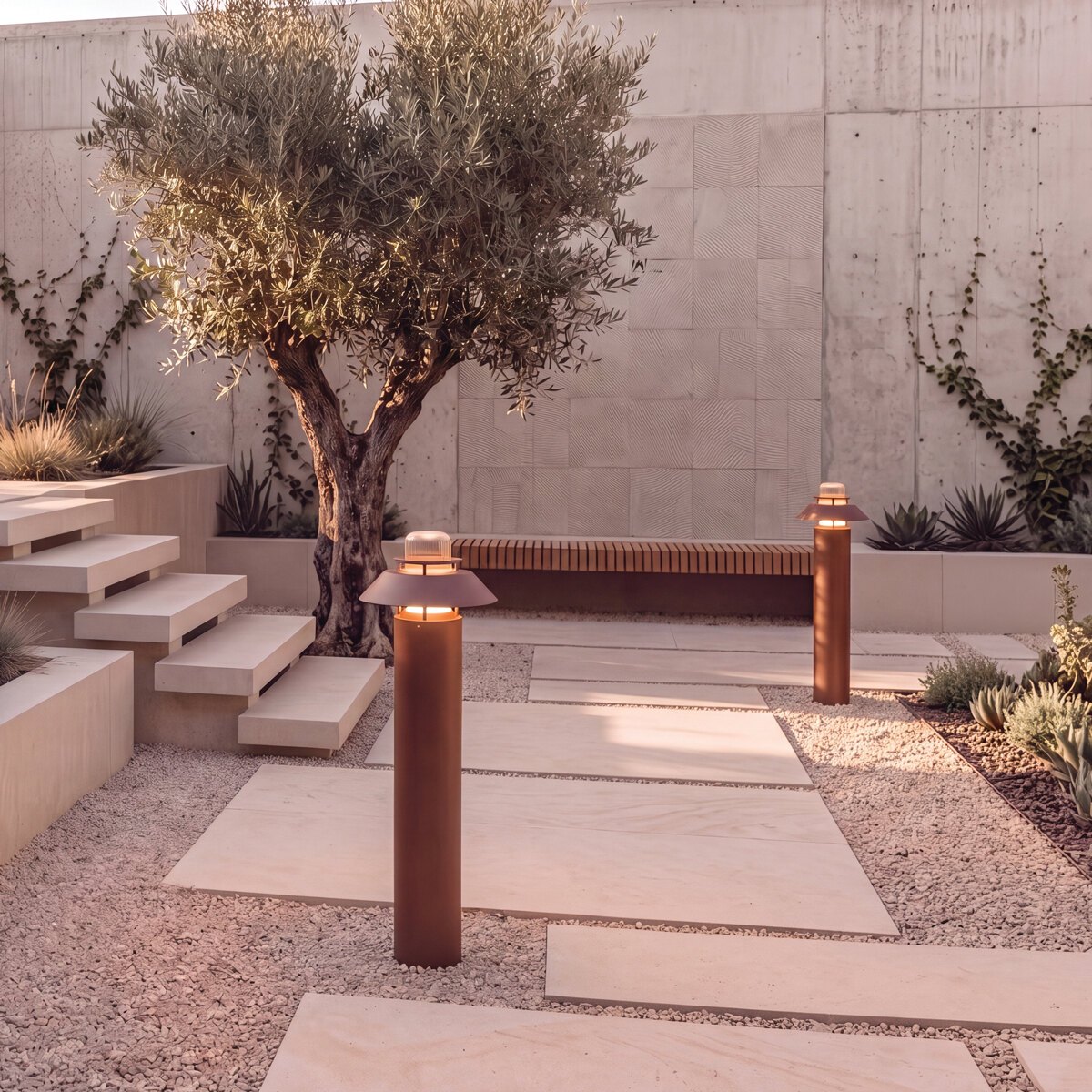
Bollards along a path usually stand in a single row on one side or alternate from side to side. A lower bollard sits closer to the ground and lights a smaller area, so you need more of them, set closer together. A taller post lights a wider circle but is more visible in daylight. Along a path, evenness matters more than brightness: several identical lights at equal spacing look calmer than one bright one. Before buying, sketch the path and mark the route of the power cable.
Output and glare
Lights in this category range from 2 to 35 W and from 85 to 2480 lm. Low-output models simply mark the edge of a path, while higher-output ones light a terrace, a parking space or a courtyard. Because a freestanding light sits at or below eye level it can easily dazzle, so near a seating area choose one that throws its light downwards or through a frosted diffuser. Compare power and output together, since the same wattage gives different output on different models.
Water protection
IP65 dominates in this category, IP54 is less common, and there is also an IP67 model. Beside a path the light is splashed by rain, watering and snow, so IP65 is a sensible benchmark. Low spots where water pools after a downpour call for IP67. IP54 lights are best placed on a covered terrace or under a canopy, where rain does not reach them directly. Cable joints in the ground should be made in sealed junction boxes, with the cable laid in protective conduit.
Colour temperature and materials
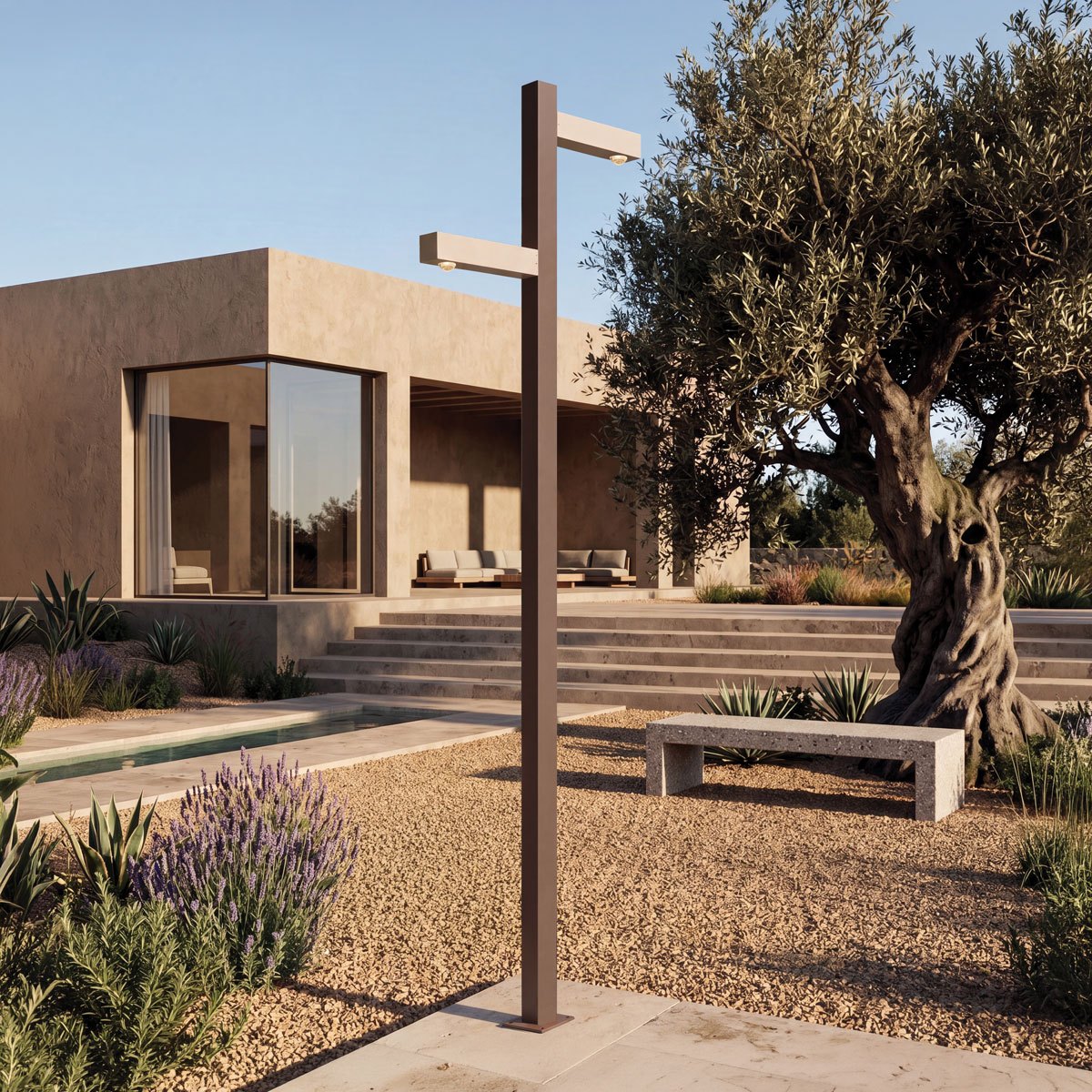
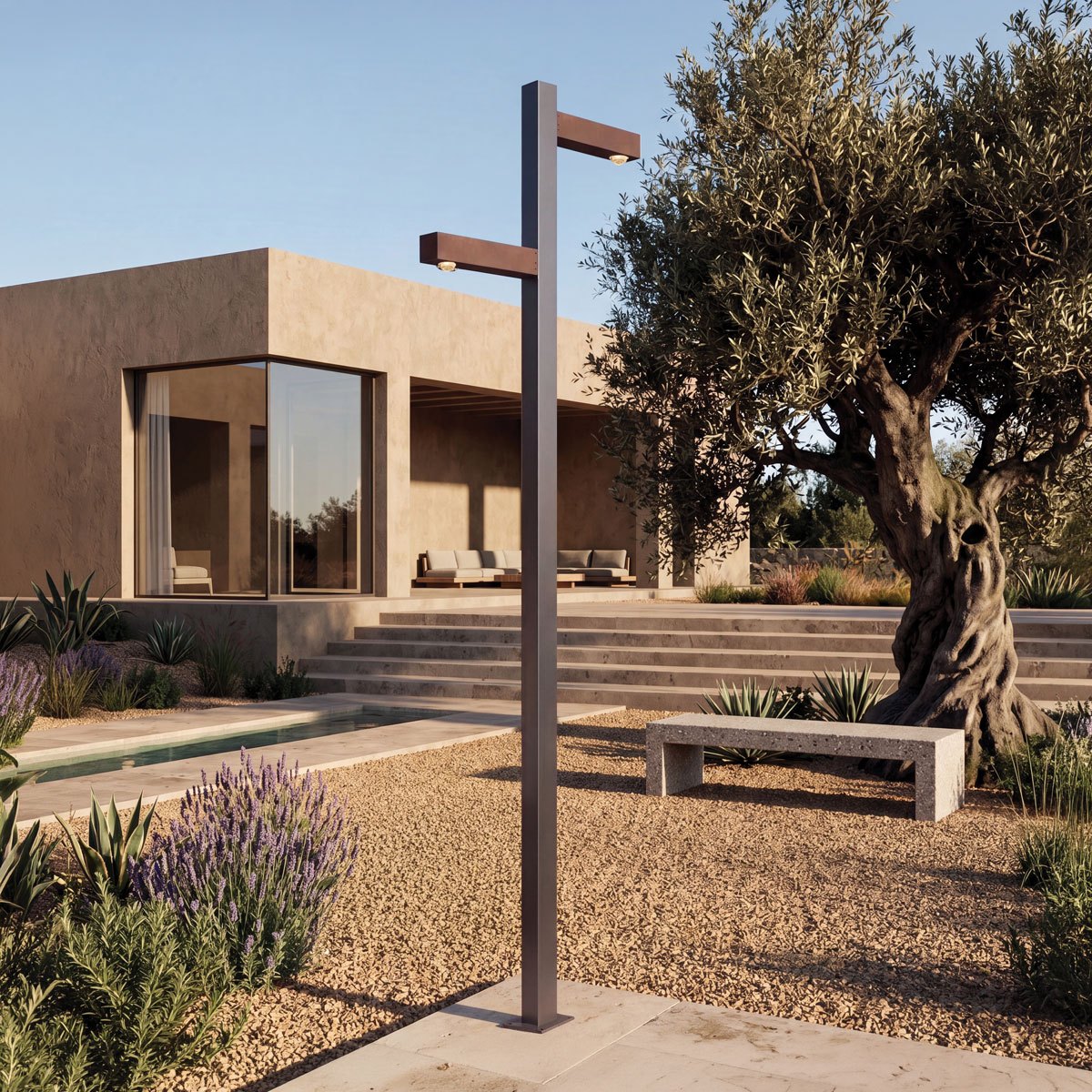
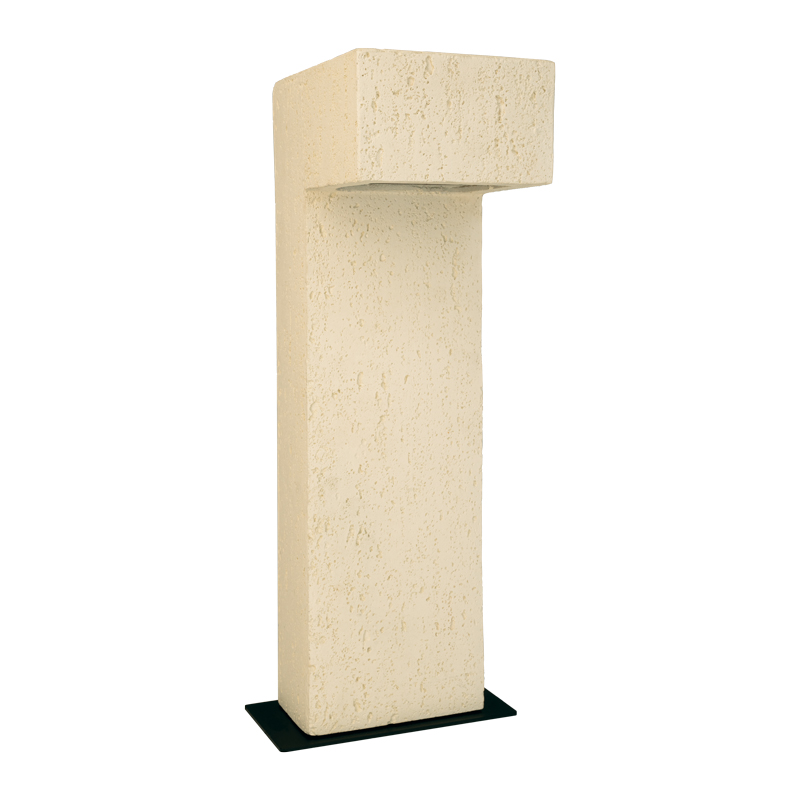
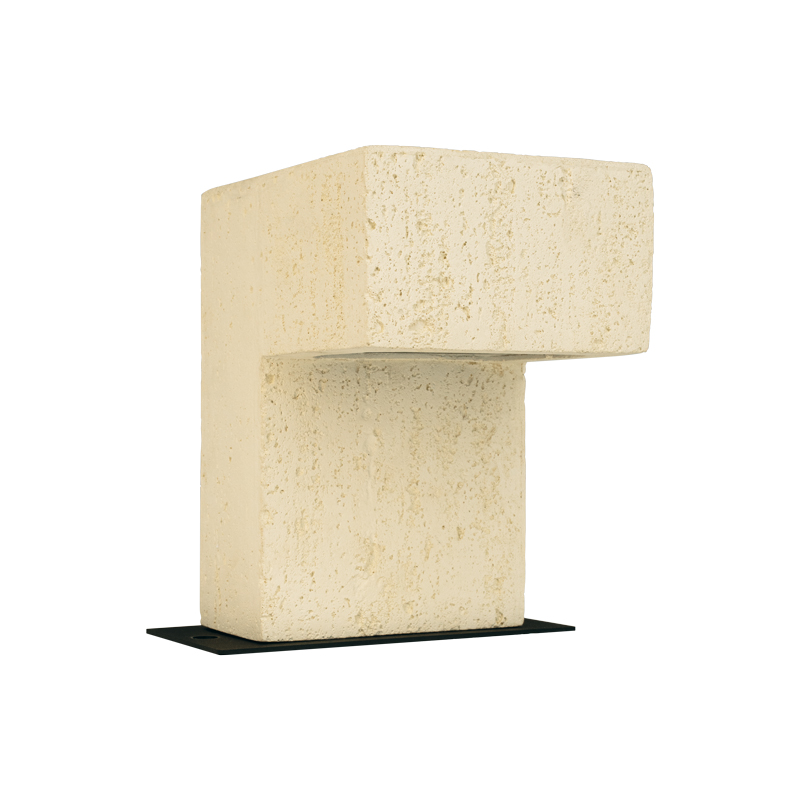
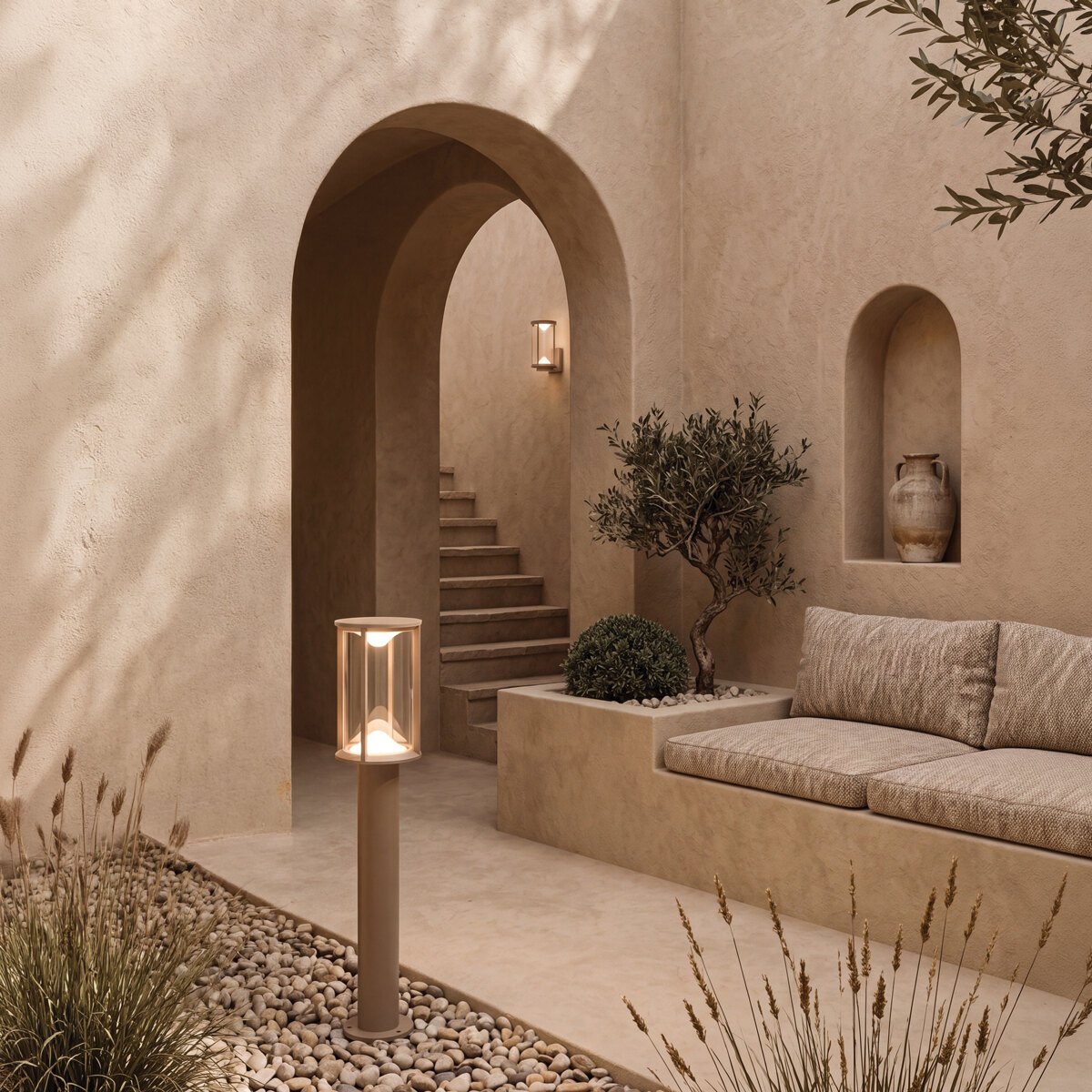
Every light in this category gives a warm light: mostly 3000K, some 2700K, and a few with tunable white (CCT). There are no cool-white models here. Housings are mainly aluminium, diffusers are polycarbonate or glass, and some bollards are concrete. A concrete light is heavy and stable and sits well beside paving and stone, but it is harder to move later. Aluminium bollards come in grey, anthracite, black, sand and brown.
| Material | Properties | Where it fits |
|---|
| Aluminium | light, does not rust | along paths, terrace edges |
| Concrete | heavy, stable | beside paving and stone |
| Polycarbonate | light, shatterproof diffuser | where children play |
| Tempered glass | tougher than standard glass | clear and frosted diffusers |
Freestanding lights are often combined with outdoor wall lights for the entrance, spike lights for planting and outdoor recessed lights set into paving.