3000 K or 4000 K: Which Light Colour to Choose
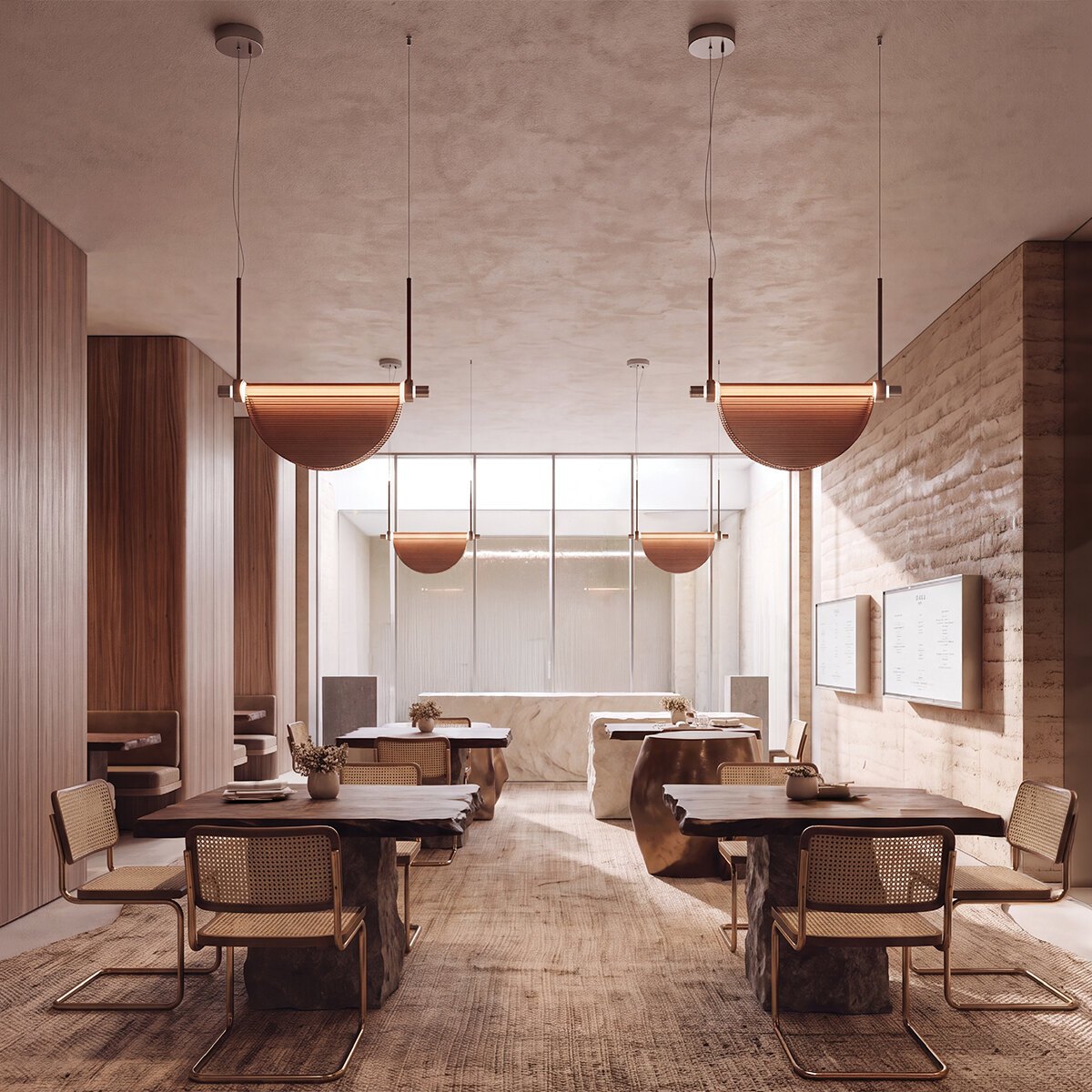
For homes, 3000 K usually works best, while 4000 K is the better choice wherever you work and need to see detail clearly: the kitchen worktop, a home office, a dressing room or a utility room. This guide explains how 3000 K differs from 4000 K, how the choice relates to illuminance (lx) under EN 12464-1 and CRI, and how to combine different light in one space.
How 3000 K differs from 4000 K
Colour temperature is measured in kelvins (K) and describes the tint of the light, not its brightness. 2700 K is considered warm, 3000 K warm white, 4000 K neutral and 5000 to 6500 K cool light. The lower the number, the more yellow and cosy the light; the higher it is, the whiter and bluer.
3000 K light is reminiscent of an incandescent bulb and supports a relaxed mood. 4000 K light looks fresh and keeps you alert, so it is often chosen where concentration matters. Remember that kelvins do not describe the amount of light: that is what lumens (lm) and illuminance in lux (lx) are for. Read more about these terms in What are CRI, kelvins and lumens.
Which colour temperature suits which room
The table gives indicative colour temperature and illuminance values by room and activity. You can adjust them to taste and to your interior colours. Note that different zones of the same room may suit different values, for example 3000 K for general kitchen light and 4000 K at the worktop.
| Room | Recommended K | Indicative illuminance (typical) |
|---|---|---|
| Living room | 2700 to 3000 K | about 150 to 300 lx |
| Bedroom | 2700 to 3000 K | about 100 to 150 lx, more for reading |
| Kitchen (general light) | 3000 to 4000 K | about 200 to 300 lx |
| Kitchen worktop | 4000 K | about 500 lx |
| Dining room | 2700 to 3000 K | about 150 to 200 lx |
| Bathroom, at the mirror | 3000 to 4000 K | about 300 to 500 lx at face height |
| Hallway, stairs | 3000 to 4000 K | about 100 lx |
| Home office, office | 4000 K | 500 lx |
| Utility room, garage | 4000 to 5000 K | about 100 to 300 lx |
The living room, kitchen worktop and office values are based on EN 12464-1, while those for the bedroom, hallway and other home spaces reflect common practice, so treat them only as a guide.
Why 3000 K suits relaxing spaces
In the living room, bedroom and dining room a cosy setting is usually what you want. Warmer light brings out wood, fabrics and warm-toned furniture, and disturbs less in the evening. That is why 3000 K is the most common colour of home lighting. It is comfortable light for meals, family time and winding down before sleep.
2700 K also works in these rooms, especially in a bedroom or by the bed. If you also work or read in the living room, you can choose tunable colour temperature (CCT) fittings that switch from 3000 K to 4000 K as needed.
When 4000 K is the better choice
4000 K light is neutral and separates detail well, so it suits places where you do precise work: the kitchen worktop, a home office, a laundry room, a dressing room or a workshop. Under EN 12464-1 about 500 lx is recommended for an office or worktop, and that level looks especially clear in neutral light.
However, 4000 K does not always suit a home interior. Walls in warm shades, wood and textiles can look paler under it. For this reason 4000 K is often used only in functional areas, with 3000 K kept for shared spaces.
How CRI changes the choice
The colour rendering index (CRI, Ra) shows how accurately light renders colours. For homes a CRI of at least 80 is recommended, and 90 or more where colour matters: in the kitchen, at the mirror and in a dressing room. With a low CRI, 4000 K light can look cold and unnatural, while a good CRI lets you choose neutral light without sacrificing colour accuracy.
How to combine different light in one space
In an open-plan space where the kitchen joins the living room, follow one principle: use the same colour temperature within one visible zone, and it is usually recommended to keep the difference between zones within 1000 K. For example, 3000 K in the living area and 4000 K at the kitchen island and worktop.
- One fitting, one source type: do not mix 2700 K and 4000 K bulbs in the same fitting or row.
- One circuit, one K: if ceiling lights share a switch, their colour temperature should match.
- Tunable colour temperature fittings: let you choose 3000 K for the evening and 4000 K for the day in one fitting.
- Replacing a bulb: check the K on the packaging so the new one matches the others.
Judge the amount and the colour of light together: the same room looks softer in 3000 K and more contrasting in 4000 K, while brightness does not depend on colour temperature. You can estimate how many lumens a particular room needs with the lighting calculator.
How this looks in our range
In most of our fitting categories 3000 K is the most common light colour, with fewer 4000 K models. Ceiling fixtures have 464 published listings, pendant luminaires 699 and wall fixtures 341. All three include 3000 K, 4000 K and tunable (CCT) models, as well as fittings whose light colour depends on the bulb you fit. For those you choose the colour yourself: the LED bulbs category (25 listings) offers 3000 K, 4000 K and 6500 K bulbs with E27, E14, GU10, G9 and other bases. The main brands are Zambelis, TK Lighting and Thoro Lighting.
Frequently asked questions
Which is better for a living room: 3000 K or 4000 K?
3000 K is usually better for a living room, because this warm white light creates a cosy setting that suits relaxing. As a guide based on EN 12464-1, about 150 to 300 lx is enough there. If you also work in the room, choose a colour-tuneable fitting or a separate 4000 K light for the work corner. That way you get a warm mood in the evening and clear light for work during the day.
What light is best for a kitchen?
A kitchen usually suits 3000 to 4000 K. For the worktop use 4000 K light with a CRI of at least 90 and about 500 lx, because it shows the colour of food clearly. For general kitchen lighting you can choose 3000 K if the kitchen opens onto the living room, so that both spaces read as one.
Can I mix 3000 K and 4000 K in one room?
Yes, but only deliberately. Different zones can differ, for example a 4000 K kitchen worktop and a 3000 K dining area. Within a single fitting or a row on one switch, however, the colour temperature should be identical, otherwise the light looks uneven and the room unfinished. Try to keep the difference between zones within 1000 K.
Does a higher K mean brighter light?
No, kelvins describe only the tint of the light, while brightness is given by luminous flux in lumens (lm). Cooler light can look brighter than warm light of the same output because of its tint, so a 4000 K room often appears lighter. If you want more light, increase the lumens, not the kelvins.
Which colour temperature should I choose for a bedroom?
A bedroom usually suits warm 2700 to 3000 K light. It is gentler on the eyes in the evening and creates a calming mood. For reading in bed you can choose a fitting with adjustable brightness or a separate reading light, so the general light can stay dimmed and calm. Bluer light is best avoided in the evening, as it resembles daylight.
Summary
For relaxing rooms such as the living room, bedroom and dining room choose 2700 to 3000 K light, and for work areas such as the kitchen worktop, home office and utility room choose 4000 K. In the bathroom and hallway either works, depending on the activity. Keep one colour temperature within a visible zone, choose a CRI of at least 80, and 90 or more where colours matter. Kelvins describe the tint; the amount of light comes from lumens and illuminance. Before deciding, test the chosen bulb in your own room by day and in the evening.
Related Articles

Dimming LEDs: TRIAC, DALI or 0–10 V – Which to Choose?
Learn how TRIAC, PUSH-DIM, 0–10 V, DALI and smart controls differ, how to avoid flicker and what to check before you buy.
Read more : Dimming LEDs: TRIAC, DALI or 0–10 V – Which to Choose?
Magnetic or Track Lighting: Which System Should You Choose?
We compare a 48 V magnetic system with a 230 V track system: voltage, single and three-phase rails, power supply, control and which suits your room.
Read more : Magnetic or Track Lighting: Which System Should You Choose?
LED vs Halogen vs Fluorescent vs Incandescent: Which Actually Saves?
We compare four bulb types – LED, halogen, fluorescent and incandescent – on efficiency, lifespan, safety and applications, with a clear table and expert conclu...
Read more : LED vs Halogen vs Fluorescent vs Incandescent: Which Actually Saves?