Magnetic or Track Lighting: Which System Should You Choose?
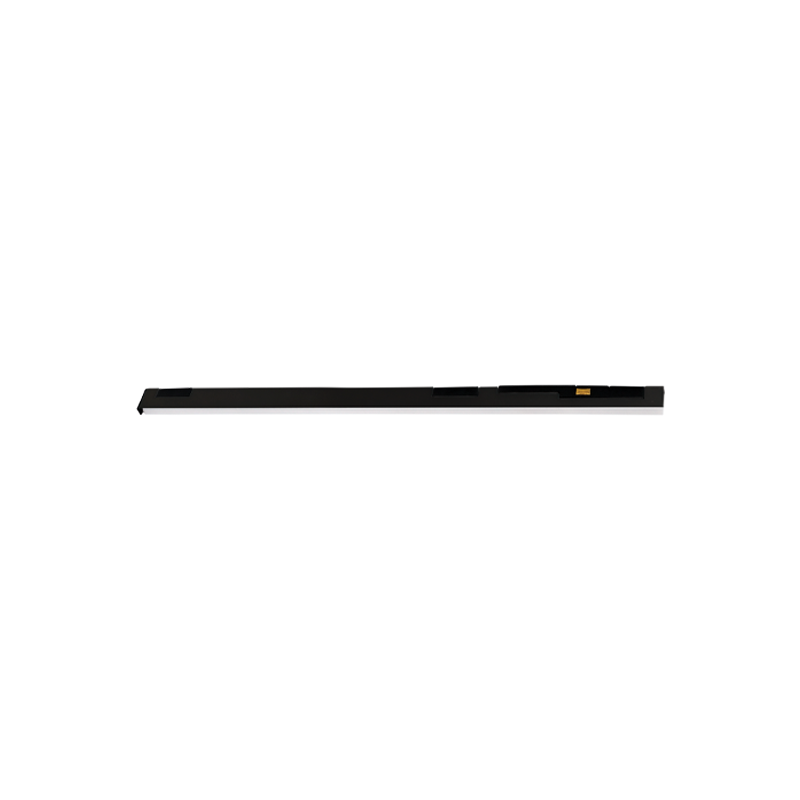
A magnetic system suits you when you want a slim, almost invisible rail and fittings you can move by hand, while a track system suits you when you want a wider choice of fittings and replaceable light sources. The main difference is voltage: a magnetic system runs on 48 V low voltage through a power supply, whereas a track system is fed directly from the 230 V mains. This guide compares the two and explains how to choose.
The main difference: 48 V or 230 V
In a magnetic system the rail carries 48 V direct current supplied by a separate power supply, so the rail is safer to touch and the fittings are held on by a magnet. In a track system the rail carries 230 V alternating current and each fitting attaches through a mechanical adaptor that you twist into a lock.
| Feature | Magnetic system | Track system |
|---|---|---|
| Rail voltage | 48 V DC | 230 V AC |
| Power supply | Required, with ~20 % power reserve | Not needed for the rail; fittings with integrated LED carry their own |
| Fitting attachment | Magnet, repositioned with one hand | Locking adaptor, twisted into place |
| Rail profile | Narrow, often recessed into the ceiling | Wider, usually surface mounted |
| Light source | Mostly integrated LED | Integrated LED or replaceable: E27, GU10, G9 |
In practice: if appearance and frequent repositioning matter, look at a magnetic system; if you want standard lamp holders and replaceable light sources, a track system fits better.
Installation differs too. A magnetic rail is often recessed into a ceiling panel or plasterboard channel before painting, so the system is best planned at the start of building or renovation work. A track rail can be fixed later onto a finished ceiling, which makes it convenient for refurbishment. In both cases the 230 V connection should be made by a qualified electrician.
Track systems: single-phase and three-phase rails
Track systems are divided by how many independent circuits the rail contains. That decides how many groups of fittings you can control separately.
Single-phase rail
A single-phase rail is one controllable circuit: every fitting on it switches on and off together. It is a simple solution for a small room, a corridor or a single display wall where one switch is enough.
Three-phase rail
A three-phase rail has three circuits, so one line can carry three separately controlled groups, for example general light, accent light and display light. The circuit each fitting uses is set on its adaptor. This is common in shops, galleries and larger homes.
Note that single-phase and three-phase adaptors are usually not interchangeable, so buy fittings for the rail type you have or plan to install.
Magnetic systems: power supply and reserve
For a 48 V magnetic system the power supply (sometimes called the driver) is a mandatory part. It converts 230 V to 48 V and must be sized for the combined power of all fittings. A reserve of about 20 % is recommended, so the supply does not run at its limit and lasts longer.
Example: you hang ten fittings of 12 W each. The total is 120 W, and with a 20 % reserve you need at least 144 W, so you pick the next size up, such as 150 W. Sizing is covered step by step in our guide How to choose an LED power supply.
A track system does not need a power supply at the rail because it connects to 230 V. If a fitting has an integrated LED, its power supply is inside the fitting itself.
Dimming and control
The control method depends on the fitting and power supply you choose. It is worth deciding before you buy, because changing it later is difficult.
| Method | How it works | Typical use |
|---|---|---|
| TRIAC (phase cut) | Cuts part of each 230 V half-cycle, operated by a wall dimmer | Simple home projects, few fittings |
| DALI | Digital signal, each fitting or group has an address | Magnetic systems, scenes, larger projects |
| PUSH-DIM | A short press switches on or off, a longer press changes brightness | Simple control without an extra controller |
| No dimming | On and off only | General lighting where brightness need not change |
Not every fitting dims with every method. Check the attribute "Dimming method" on the product page and the type of power supply you will connect.
Which system suits which room
There is no single rule, but a few situations come up again and again.
- Living or dining room: a magnetic system lets you rearrange accents when furniture changes. As a guide based on EN 12464-1, a living room needs roughly 150–300 lx.
- Kitchen: a worktop usually needs around 500 lx, so several directional fittings are convenient.
- Shop or display: a three-phase rail lets you control display and general light separately.
- Corridor or small room: a single-phase rail is enough.
- Damp rooms: fittings for both systems are mostly IP20, so do not use them in a bathroom and follow the zones in HD 60364-7-701; the IP codes themselves are defined in IEC 60529.
If you are unsure how many fittings you need, first work out the required luminous flux and only then choose the system. Once you have decided, you can assemble the parts in the configurator.
How this looks in our range
The Magnetic Track category currently has 327 published listings with power from 1.5 to 250 W; some are DALI dimmable and there are TRIAC models too. Track Systems contains 136 listings from 3 to 42 W, a good share of them with replaceable light sources (E27, GU10 and G9 holders). You will also find three-phase track systems (84 listings) and single-phase ones (52). The main brands are Zambelis and TK Lighting. If you need help choosing, you can book a consultation.
Frequently asked questions
Is a magnetic system safer than a track system?
A magnetic rail runs on 48 V low voltage, so it is less hazardous to touch than a 230 V rail. Safety still depends on a suitable power supply and sound installation. A qualified electrician should connect either system, and the supply power should match the fittings with a reserve of about 20 %.
Can I attach any fitting to any rail?
No, fittings and rails must match by system type and manufacturer. Magnetic fittings do not attach to a track rail, and single-phase and three-phase adaptors usually differ. Before buying, check the system name and the adaptor description on the product page.
How many fittings can one rail carry?
The limit is power, not length: on a magnetic system it is the power supply, on a track system the rated load of the rail and circuit. Add up the power of all fittings and add about 20 % reserve. If the total exceeds what one supply or circuit can handle, split the rail into several lines.
Can a magnetic system be dimmed?
Yes, if both the fitting and the power supply support it. Magnetic systems most often use DALI and less often TRIAC, so choose both components for the same control method. If you want to control fittings individually, choose DALI, since it gives each fitting its own address.
Summary
A 48 V magnetic system is valued for its slim rail, easy repositioning and low voltage, but it needs a correctly sized power supply. A 230 V track system offers more fitting types, replaceable light sources and simpler connection. When choosing, consider the purpose of the room, the control you want, the number of separately controlled groups and future changes. If you are still undecided, start by listing the power of the planned fittings and the control you need.
Related Articles

Dimming LEDs: TRIAC, DALI or 0–10 V – Which to Choose?
Learn how TRIAC, PUSH-DIM, 0–10 V, DALI and smart controls differ, how to avoid flicker and what to check before you buy.
Read more : Dimming LEDs: TRIAC, DALI or 0–10 V – Which to Choose?
3000 K or 4000 K: Which Light Colour to Choose
We compare 3000 K and 4000 K light: which suits a living room, kitchen, home office or bathroom mirror, and how it relates to lux and CRI.
Read more : 3000 K or 4000 K: Which Light Colour to Choose
LED vs Halogen vs Fluorescent vs Incandescent: Which Actually Saves?
We compare four bulb types – LED, halogen, fluorescent and incandescent – on efficiency, lifespan, safety and applications, with a clear table and expert conclu...
Read more : LED vs Halogen vs Fluorescent vs Incandescent: Which Actually Saves?