How many lumens and lights does a room need: a worked example
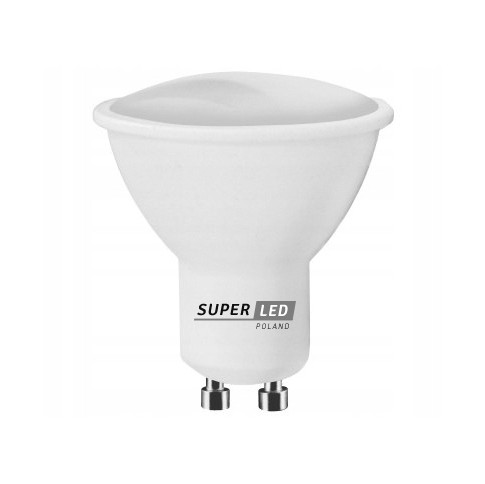
The luminous flux a room needs follows from a simple formula: area (m²) × target illuminance (lx) ÷ a utilisation factor, which is typically around 0.5–0.7. For a 15 m² living room at about 200 lx, that comes to roughly 5,000 lm. Below we explain how lumens differ from lux, walk through the calculation step by step and turn the result into a practical number of fittings.
Lumens and lux: what is the difference
Luminous flux (lm) tells you how much light the fitting or bulb itself emits. Illuminance (lx) tells you how much light reaches a surface: one lux is one lumen spread evenly over one square metre. So the same bulb produces different illuminance in different rooms: higher in a small room, lower in a large one.
Product details give a fitting's output in lumens, while a room's needs are expressed in lux. The formula linking the two is what the calculation rests on. You will find more about the terms in our guide to CRI, kelvins and lumens.
How many lux different rooms need
Illuminance levels for offices and other workplaces are set by EN 12464-1: 500 lx for an office, and about 500 lx for a kitchen worktop as well. There are no mandatory levels for homes, so the table gives guideline values commonly used in practice.
| Room | Guideline, lx | Note |
|---|---|---|
| Living room | 150–300 | Adjustable brightness lets you change the mood |
| Bedroom | 100–200 | A separate reading light by the bed |
| Kitchen, general light | 150–300 | About 500 lx for the worktop |
| Bathroom | 200–300 | Extra light at the mirror |
| Hallway, stairs | 100–150 | Safe movement matters most |
| Study, office | 500 | Per EN 12464-1 for a workstation |
Choose a value within the range to suit who uses the room and for what: older people need more light, while a relaxing area needs less. A room used for eating, reading and watching television is best lit in layers, as described in our guide on choosing the right light fixture for every room.
The formula, step by step
The calculation takes three steps.
- Work out the area: length × width, in m².
- Multiply it by the target illuminance (lx). This gives the luminous flux that has to reach the surface.
- Divide by the utilisation factor, which usually lies between 0.5 and 0.7. It shows what share of the light reaches the work surface: walls and ceilings absorb some of it, and some is lost inside the fitting itself.
The formula is Φ = A × E ÷ η, where Φ is the required luminous flux (lm), A is the area (m²), E is the target illuminance (lx) and η is the utilisation factor. With light walls and ceilings you can use 0.7, with dark ones 0.5.
Worked example: a 15 m² living room
Suppose the living room is 5 × 3 m, the walls are of medium brightness and the target is 200 lx. Let us take a utilisation factor of 0.6.
- Area: 5 × 3 = 15 m².
- Flux that must reach the surface: 15 × 200 = 3,000 lm.
- Required flux: 3,000 ÷ 0.6 = 5,000 lm.
With dark walls (η = 0.5) you would need 3,000 ÷ 0.5 = 6,000 lm, and with very light ones (η = 0.7) 3,000 ÷ 0.7 ≈ 4,300 lm. That spread is why the result is best read as a range rather than an exact figure.
From lumens to a number of fittings
Divide the flux you need by the lumens of one fitting: 5,000 ÷ 500 = 10, so ten spotlights of 500 lm each. Another option is one 3,000 lm ceiling light plus four 500 lm spotlights: 3,000 + 4 × 500 = 5,000 lm. Output varies widely: in our ceiling fixtures category it ranges from 120 to 6,152 lm, in pendants from 115 to 9,357 lm and in spotlights from 120 to 5,700 lm, so one more powerful ceiling fixture can stand in for several small ones.
Layout matters too: spread the fittings evenly so that no dark bands remain. If you want to change the mood, choose dimmable models; a slightly higher total flux then does no harm, because you can turn the light down in the evening and up for reading or tidying. Colour temperature does not change the lumens, but it does change how the light feels, so choose it to suit the room.
From watts to lumens
Watts (W) show power consumption, not the amount of light. Luminous efficacy (lm/W) depends on the type of source, so the same wattage can give very different amounts of light. The table shows typical values; the efficacy of a particular product is given in its specification.
| Light source | Typical efficacy, lm/W | Typical power for 800 lm, W |
|---|---|---|
| Incandescent bulb | about 10–15 | about 60 |
| Halogen bulb | about 15–20 | about 40–50 |
| LED source | about 80–120 | about 7–10 |
So an old bulb's wattage cannot simply be carried over to LED: a 60 W incandescent bulb gives about as much light as an 8–10 W LED bulb. When choosing an LED bulb, look at the stated lumens, not the watts. For bulbs, see our LED bulb guide.
An easier way: the calculator
If you do not want to calculate by hand, use the led.lt lighting calculator. It is based on LST EN 12464-1 recommendations: you enter the room dimensions, its purpose and how light the ceiling, walls and floor are, pick a fitting, and the calculator shows how many fittings you need, how to arrange them and what average illuminance you will get. It is a preliminary calculation for an empty room, not a lighting design, so compare the result with the guideline values in this guide.
What our range offers
The main light in a room usually comes from ceiling fixtures (464 listings), with power ratings from 2 to 150 W. Pendant luminaires and spotlights and downlights suit accent and additional light, while old bulbs in existing fittings can be replaced with LED bulbs of 1–14 W. If you want help with the maths, book a consultation.
Frequently asked questions
How many lumens does a 15 m² living room need?
At about 200 lx and a utilisation factor of 0.6 you need 15 × 200 ÷ 0.6 = 5,000 lm. With dark walls the figure rises to about 6,000 lm, and with very light ones it falls to about 4,300 lm. This is an approximate total that can be shared between several fittings.
How many watts of LED lighting does a room need?
Divide the required flux by the efficacy of the source. If the LEDs deliver about 100 lm/W, a room that needs 5,000 lm requires 5,000 ÷ 100 = 50 W in total. The exact figure depends on the specific fitting, so compare lumens rather than watts and choose fittings by the luminous flux in their product details.
Why does the formula include a utilisation factor?
Not all of the light leaves the fitting and reaches the work surface: walls and ceilings absorb part of it, and the housing or shade holds back some. So the fittings must emit more than the area multiplied by the illuminance. The factor is about 0.5 in dark rooms, about 0.7 in light ones, and 0.6 is a sensible default.
Does the calculator replace doing the sum by hand?
Not entirely. The lighting calculator, based on LST EN 12464-1, quickly shows how many of the chosen fittings you need and what illuminance they give, but it is a preliminary calculation for an empty room. Working it out by hand shows where the result comes from and helps you adjust it for furniture, daylight and the needs of the people using the room.
Summary
The luminous flux a room needs equals the area multiplied by the target illuminance and divided by the utilisation factor, which is usually 0.5–0.7. For a 15 m² living room at 200 lx that is roughly 5,000 lm, for example ten fittings of 500 lm. Compare lumens rather than watts, because LED gives the same light for much less power. Treat the result as a guideline and adjust it for wall colour, the purpose of the room and the needs of the people who use it.
Related Articles

Dimming LEDs: TRIAC, DALI or 0–10 V – Which to Choose?
Learn how TRIAC, PUSH-DIM, 0–10 V, DALI and smart controls differ, how to avoid flicker and what to check before you buy.
Read more : Dimming LEDs: TRIAC, DALI or 0–10 V – Which to Choose?
3000 K or 4000 K: Which Light Colour to Choose
We compare 3000 K and 4000 K light: which suits a living room, kitchen, home office or bathroom mirror, and how it relates to lux and CRI.
Read more : 3000 K or 4000 K: Which Light Colour to Choose
Magnetic or Track Lighting: Which System Should You Choose?
We compare a 48 V magnetic system with a 230 V track system: voltage, single and three-phase rails, power supply, control and which suits your room.
Read more : Magnetic or Track Lighting: Which System Should You Choose?