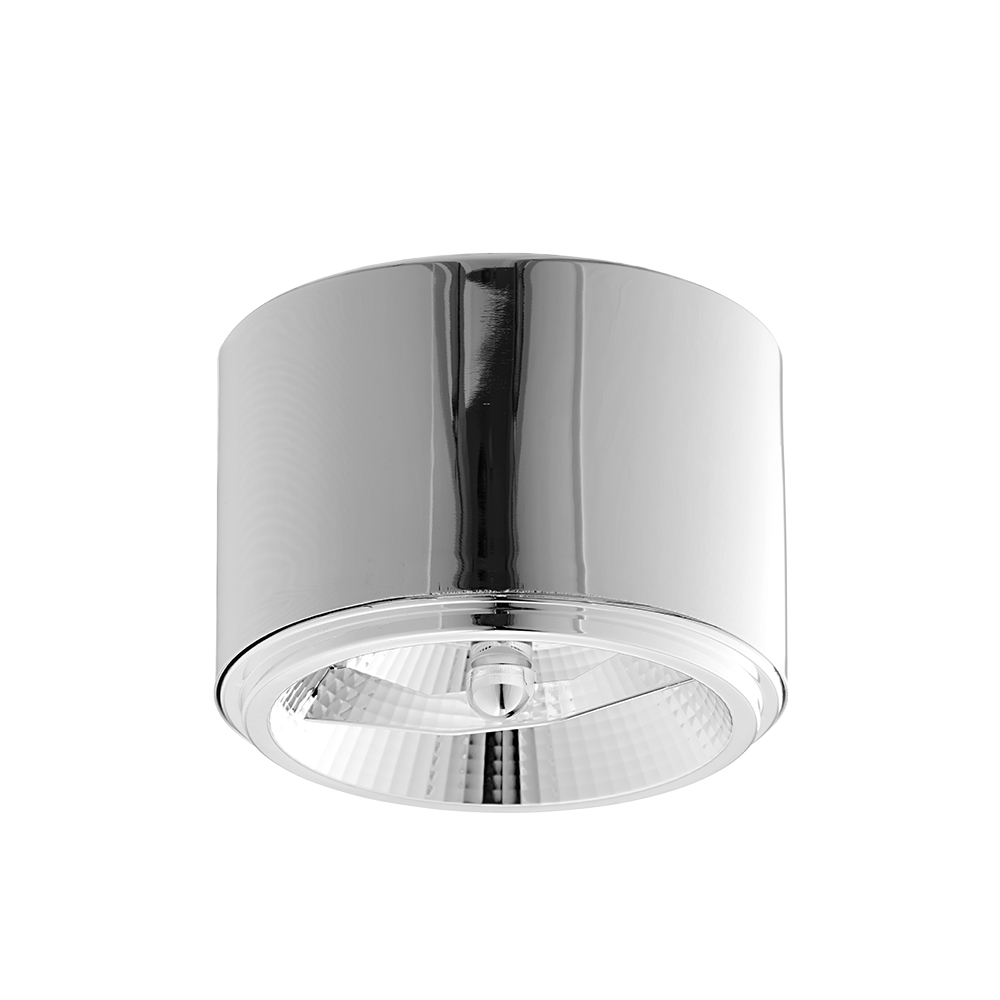
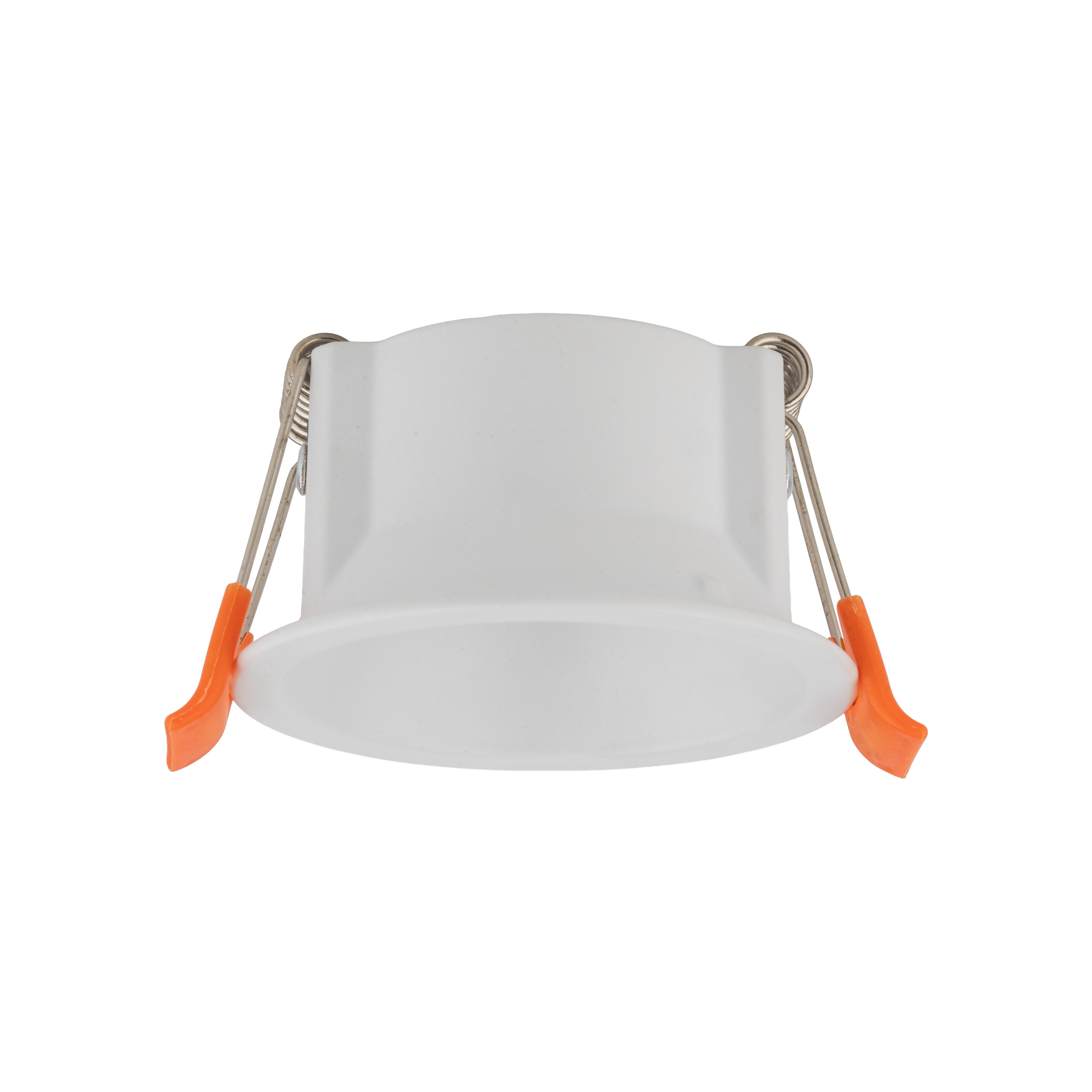
How to choose spotlights and downlights
Start by deciding what the fitting has to do: pick out a picture, a shelf or a worktop, or light the whole room evenly. That decides the beam angle, the luminous flux and the number of fittings.
GU10 base or integrated LED
Two light source types dominate this category. In a fitting with a GU10 base you change the bulb yourself, and with it the colour temperature, output and beam angle; that is why such fittings list colour as depending on the bulb. A fitting with an integrated LED comes with a light source chosen by the manufacturer, so its figures are known in advance. GX53, G9, E27 and MR11 bases appear less often. Power runs from 2 to 50 W and luminous flux from 120 to 5700 lm.
Beam angle for the task
The beam angle sets the size of the pool of light on a wall, floor or worktop, and it is listed in the data for the fitting or the GU10 bulb. A narrow beam concentrates light and adds contrast, so it suits accents, while a wide beam spreads light and softens shadows between fittings. The higher the ceiling, the larger the pool from the same angle, which is why tall rooms often use a narrower beam for accents. The table shows common practice.
| Beam angle | Pool of light | Usually suits |
|---|
| about 15–24° | narrow | painting, sculpture, textured wall |
| about 30–40° | medium | kitchen island, work area, shop shelving |
| 60° and wider | wide | general hallway or living room lighting |
Colour temperature and dimming
The most common colour temperature is 3000K, and there are also 2700K, 4000K and 6500K models plus fittings with adjustable colour temperature (CCT). Warm 2700K to 3000K light is usually chosen for living areas and 4000K for kitchen work zones and offices. Dimmable models are few: some list DALI or TRIAC control. To dim a GU10 fitting, choose a dimmable bulb and a dimmer that is compatible with it.
IP rating and finish
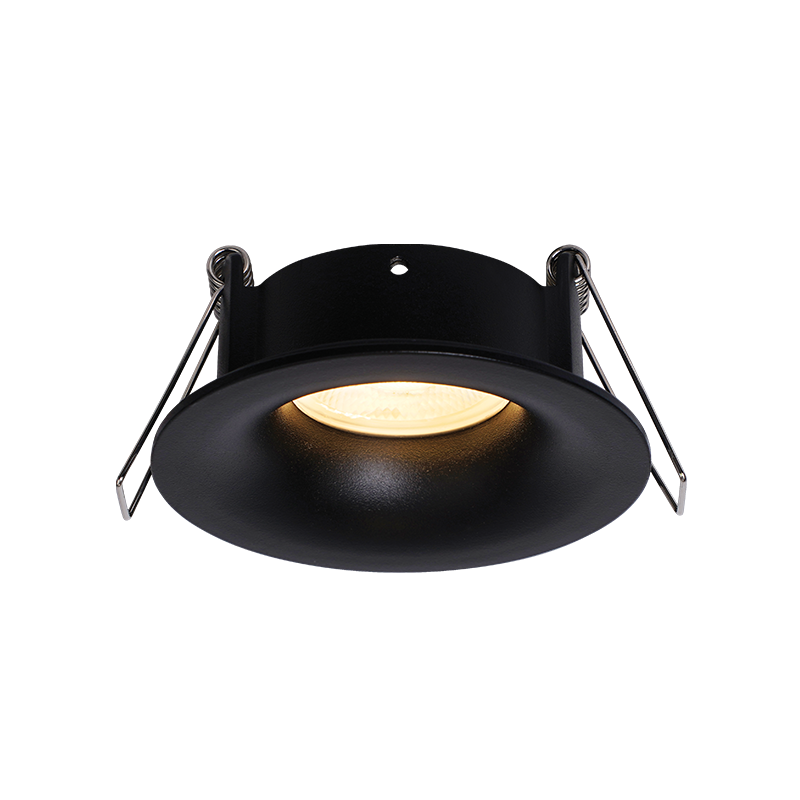
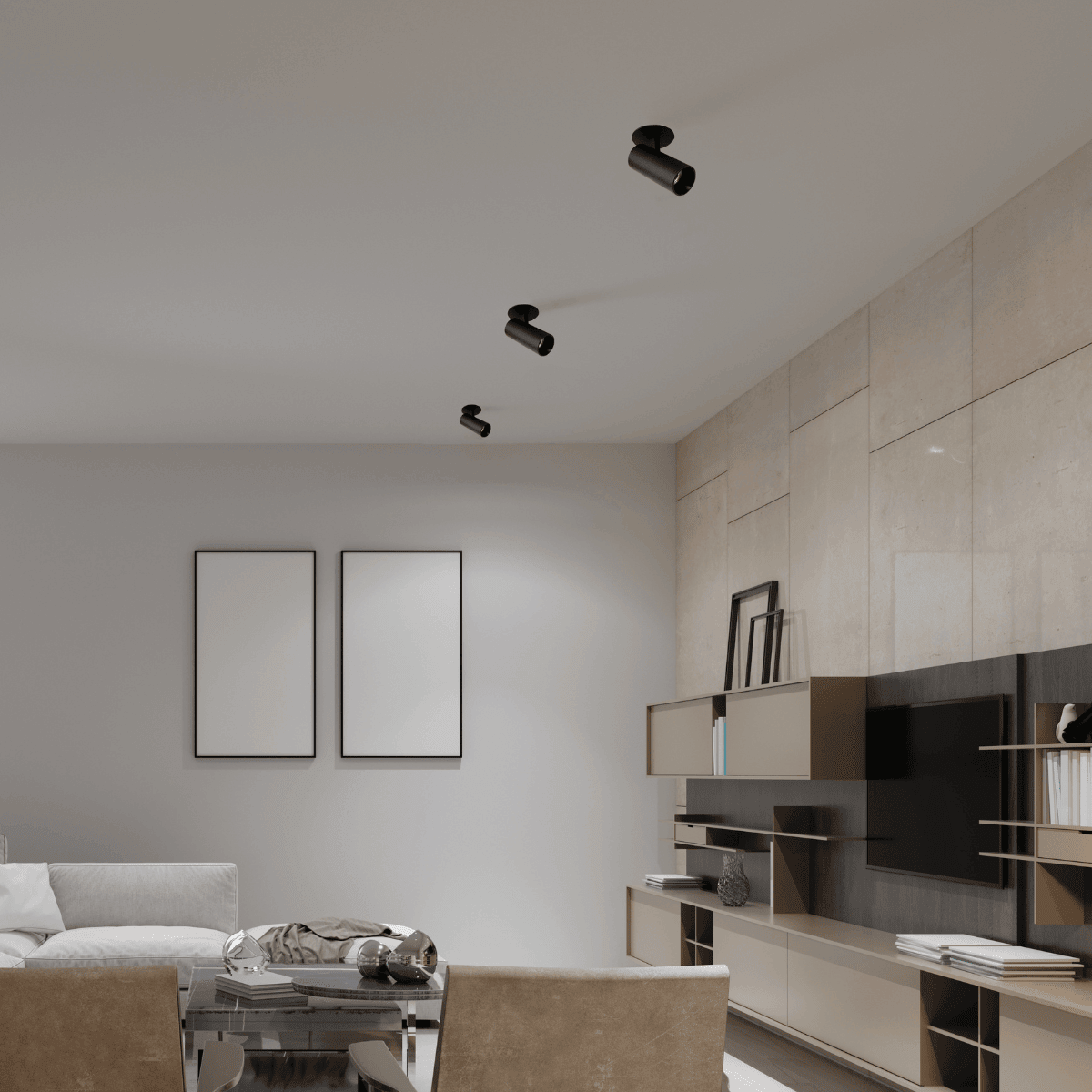
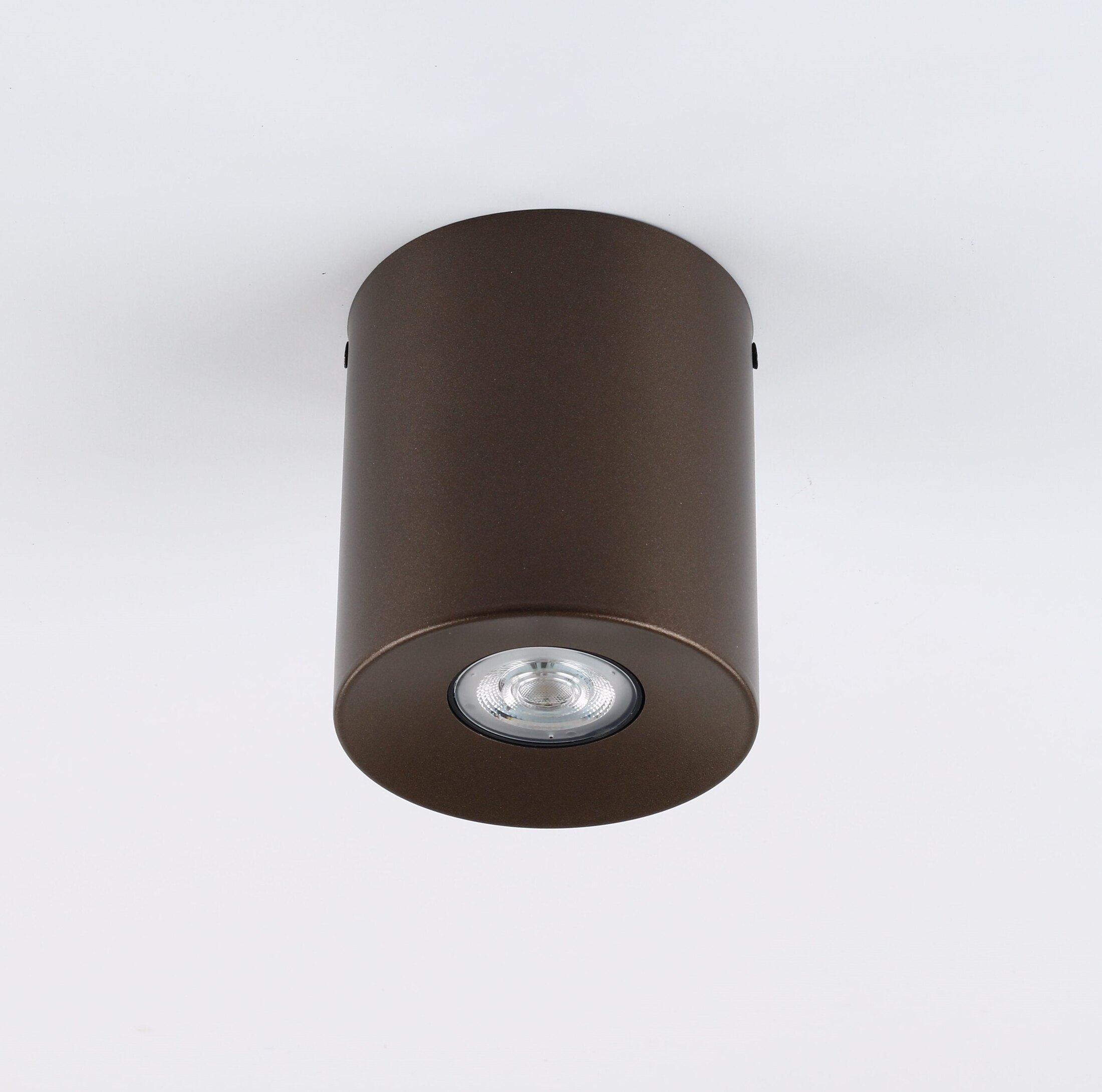
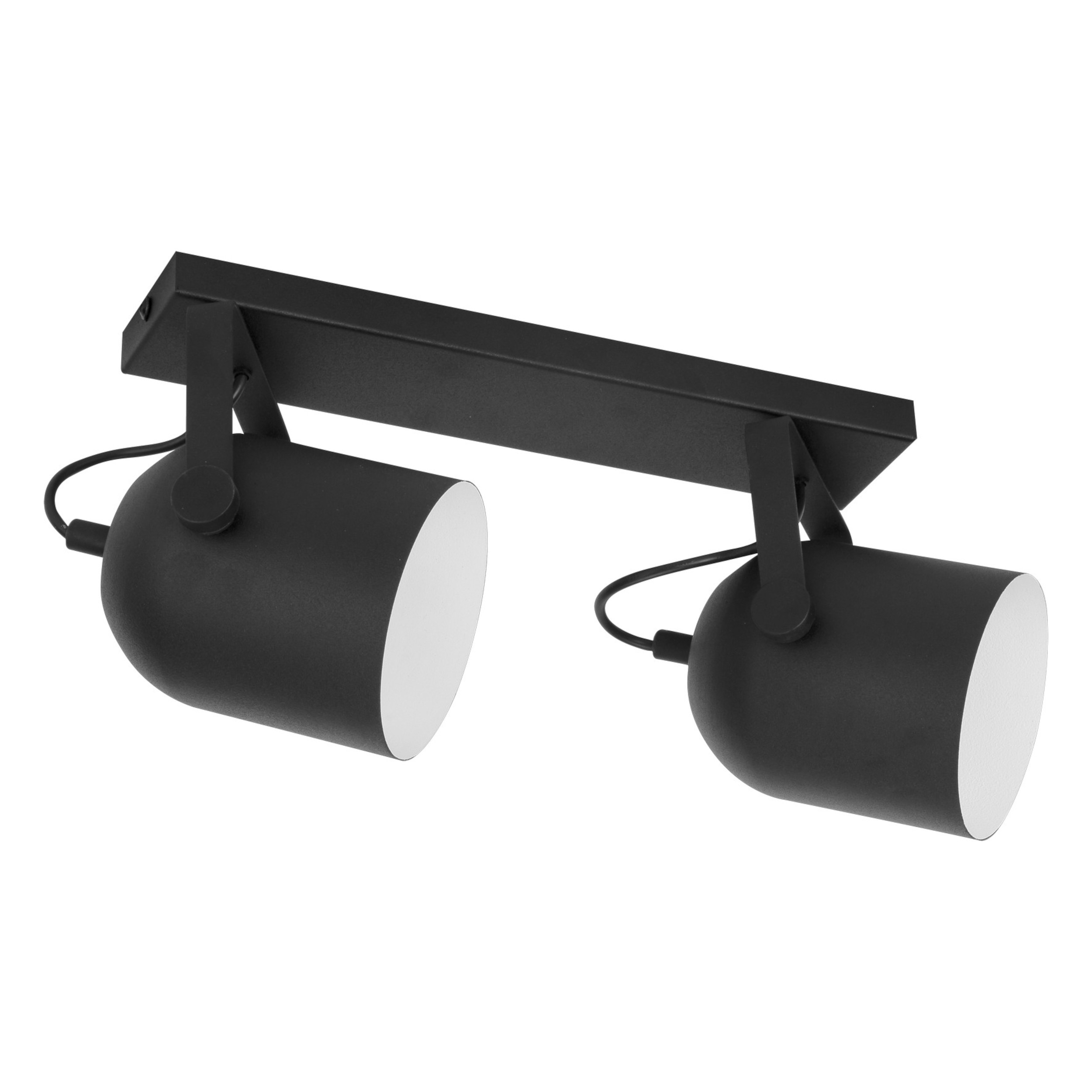
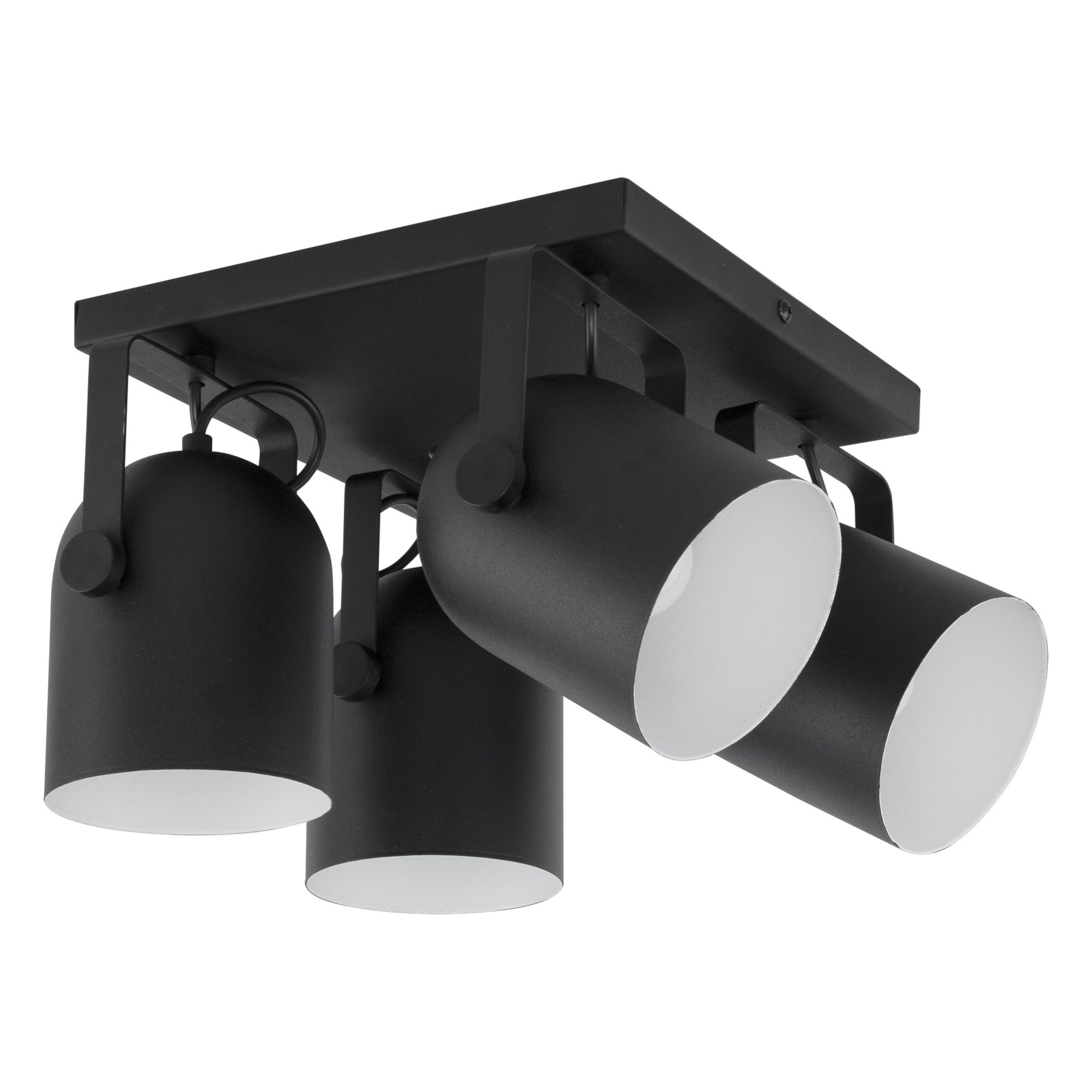
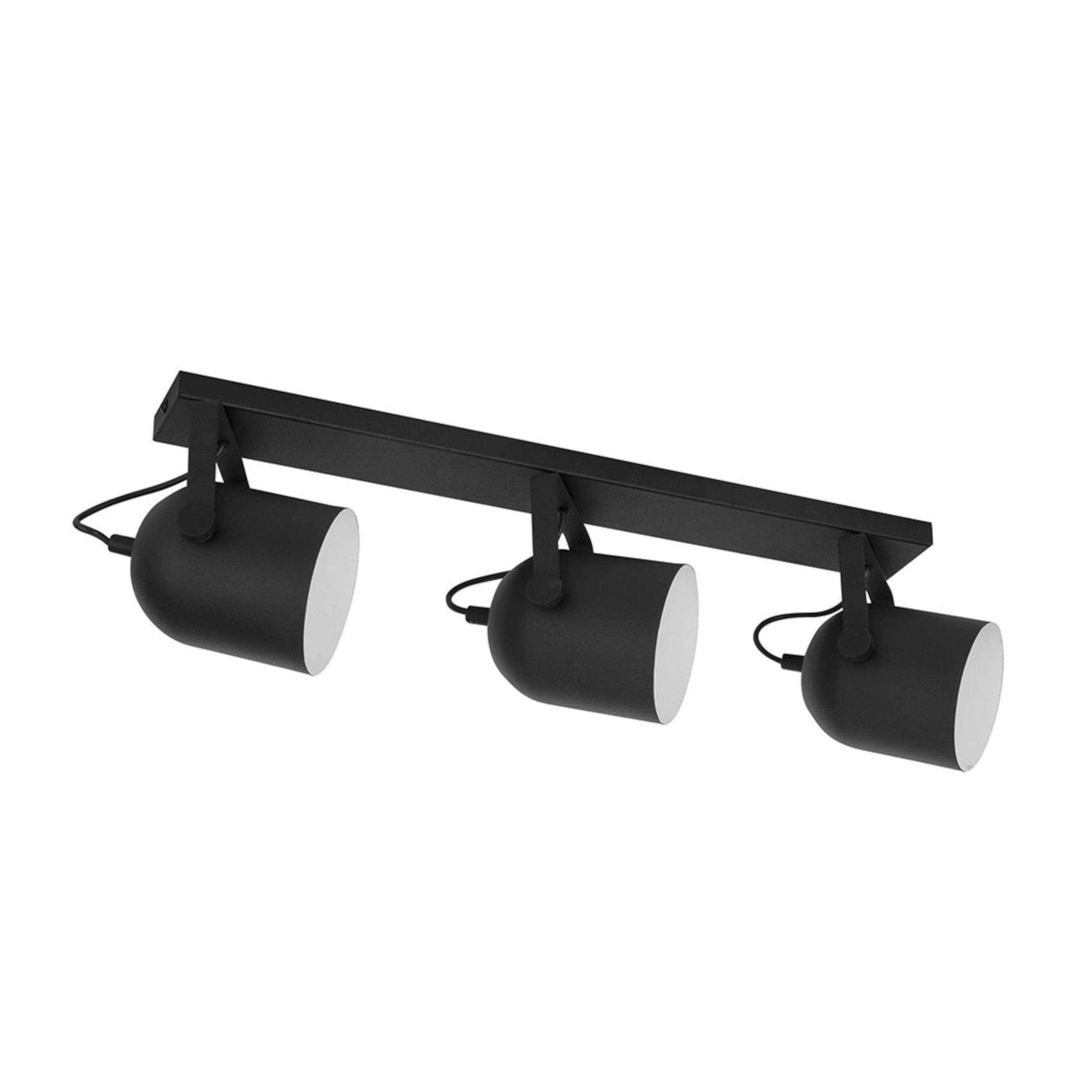
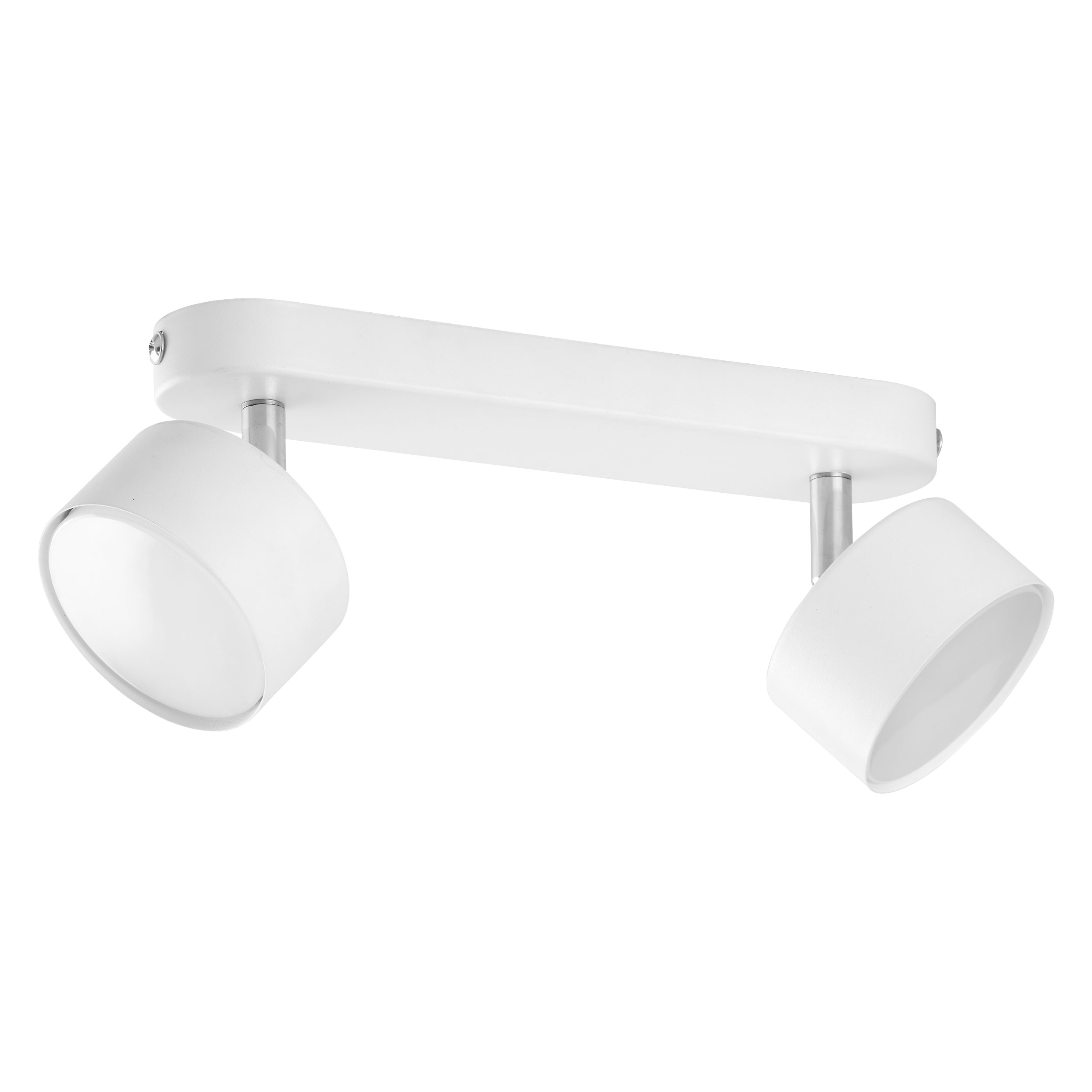
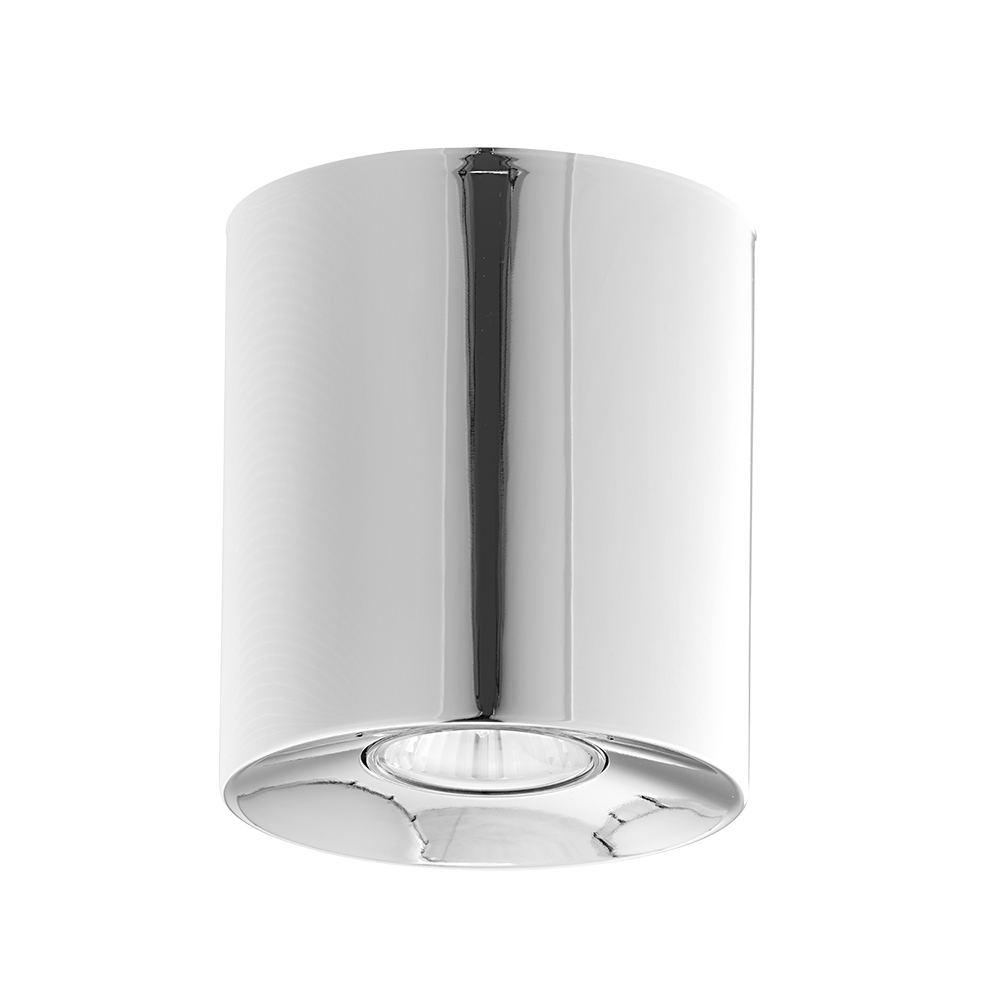
Most fittings are rated IP20 and are meant for dry rooms. For a bathroom, the area over a kitchen sink or a covered terrace, there are models rated IP44, IP54 and IP65. Housings are mostly black or white, less often gold, brown or grey. Aluminium dominates, with plastic, steel, glass and acrylic also used. Match the finish to the ceiling: a white housing almost disappears into a white ceiling, while a black one becomes a clear accent.
Compare with recessed lighting, surface-mounted lighting and linear lights. To work out how many spotlights a room needs, use the lighting calculator.