How to choose recessed lighting
A recessed light needs a void above the ceiling, so buying one starts with checking the ceiling rather than the design.
Void depth and cut-out
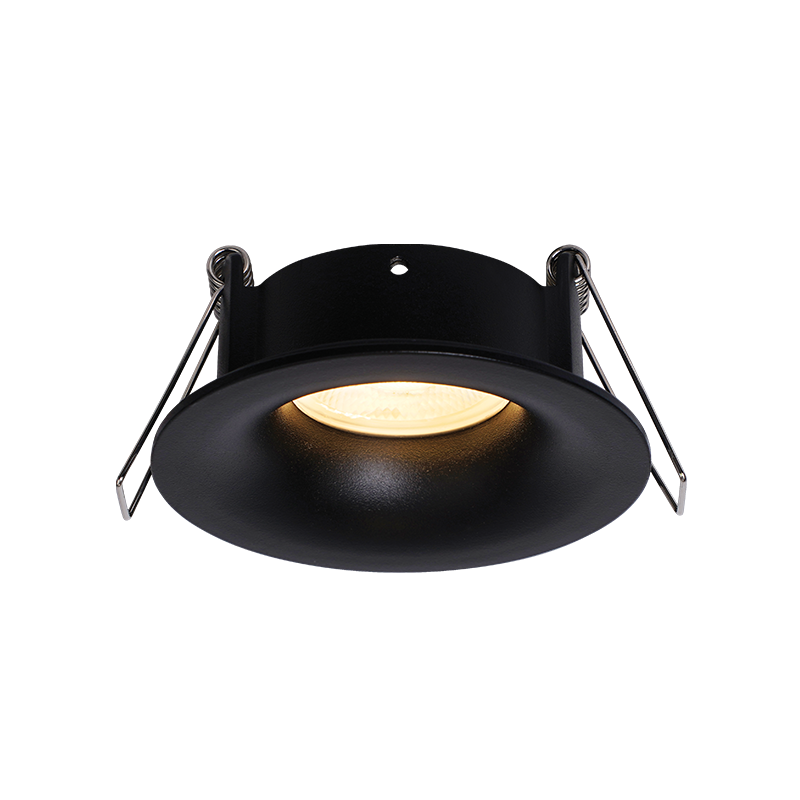
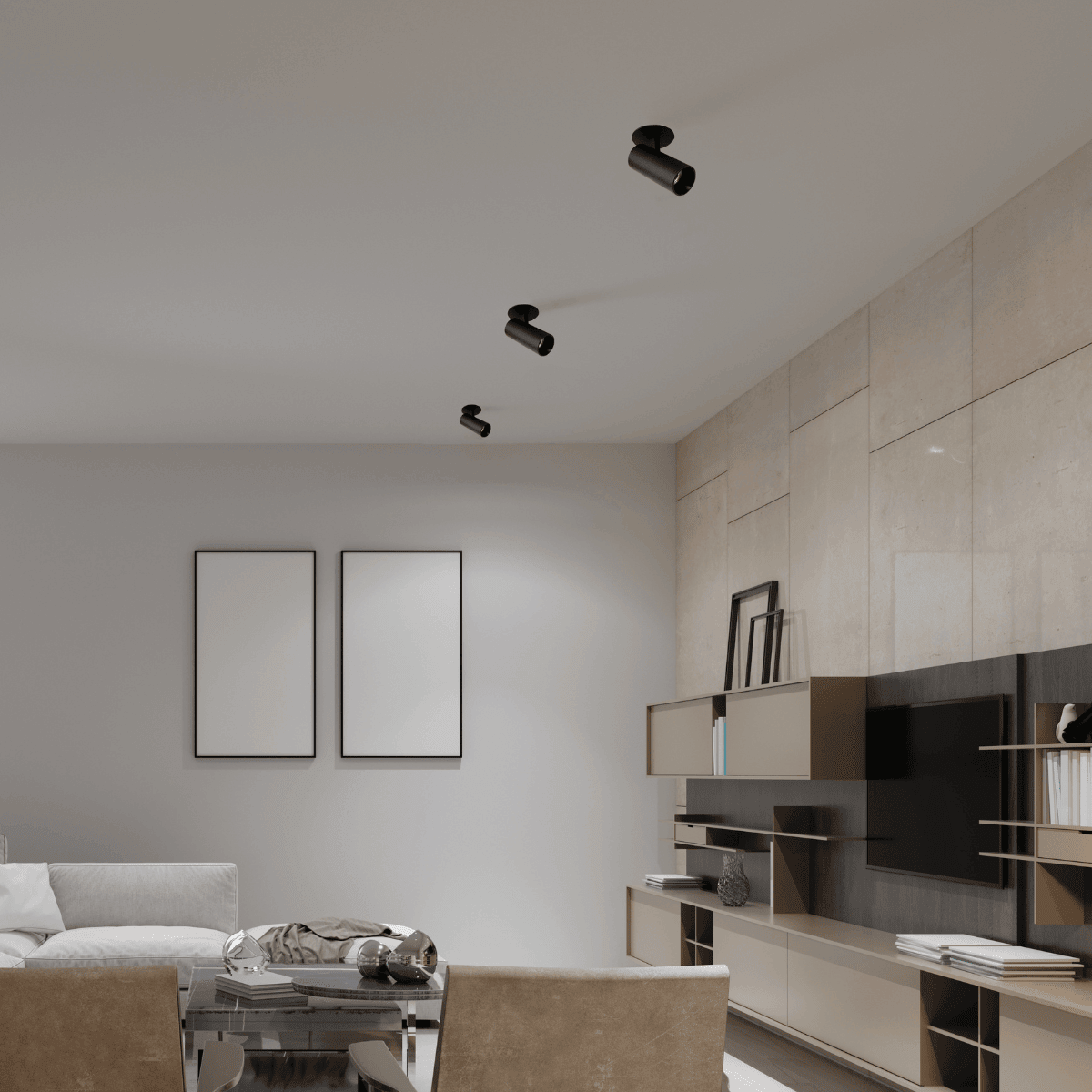
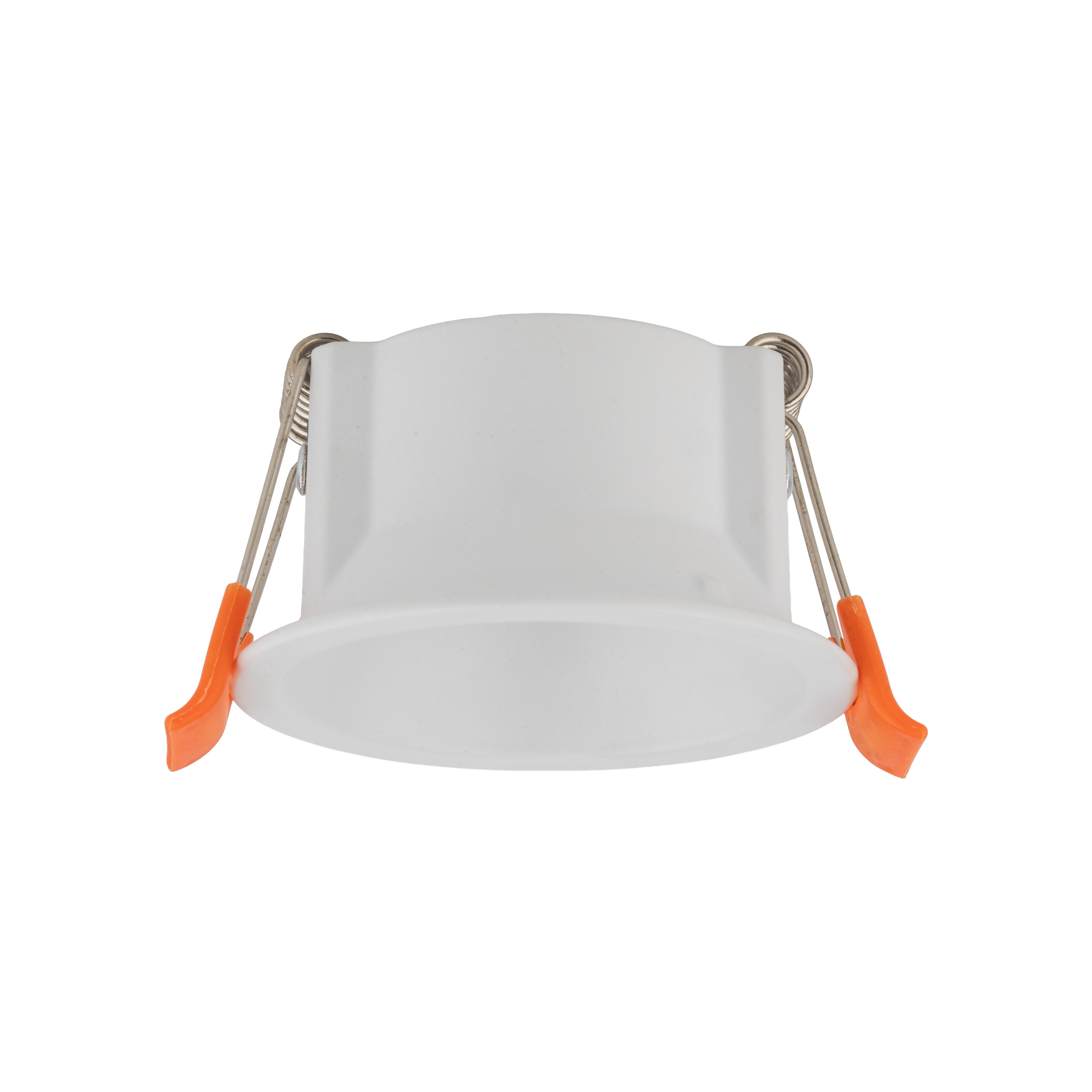
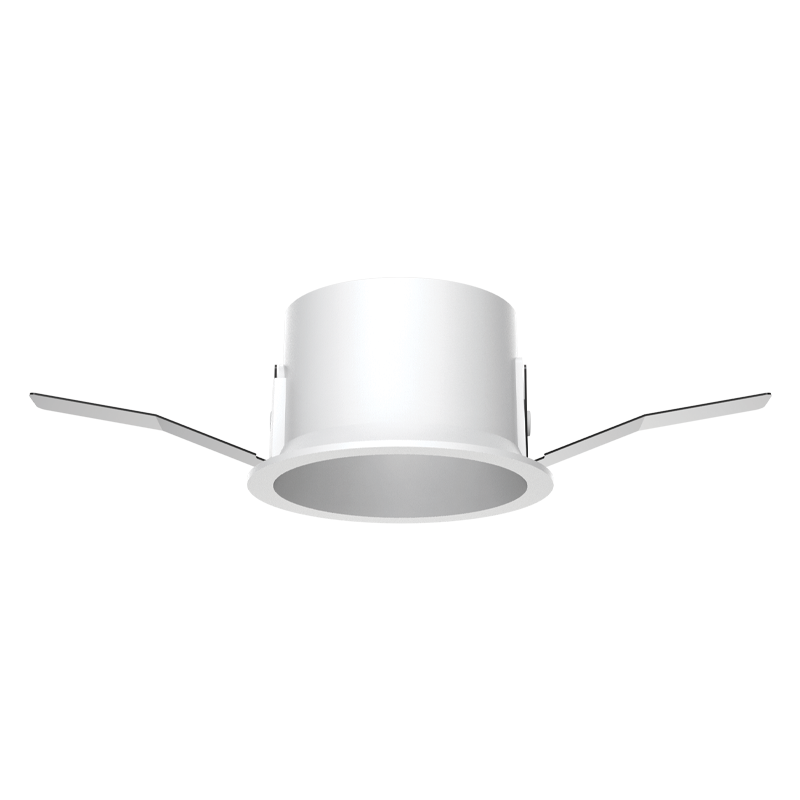
Measure the distance from the ceiling board to the slab or frame above: the housing, driver and cables all have to fit. The cut-out diameter is given in the data for each fitting, so cut the hole only once you know the exact size. Recessed lights usually go into plasterboard or suspended ceilings and do not suit concrete ceilings without a void. Some models tilt, so the light can be aimed at a wall or a painting. The plaster housings in this category blend into the ceiling once filled and painted.
Light source, colour and output
Most fittings have an integrated LED, so their colour temperature and output are fixed in advance. The most common colour is 3000K, with 4000K, 2700K, 6500K and adjustable colour temperature (CCT) models also available. Other fittings take GU10 or MR11 bulbs, which can be replaced, changing the colour with them. Power runs from 2 to 50 W and luminous flux from 120 to 2900 lm. Living rooms and bedrooms usually get warm light, kitchens and studies neutral 4000K.
IP rating by location
Most fittings in this category are rated IP20 and suit dry rooms. For bathrooms, shower recesses, the area above a kitchen sink or a covered terrace, there are models rated IP44, IP54 and IP65. In common practice, the space above a bath or shower (zone 1) needs IP65 and the area beside it (zone 2) IP44. The table shows which rating to pick for a recessed light in each location.
| Location | Recommended IP rating |
|---|
| Living room, bedroom, hallway | IP20 |
| Above a kitchen sink, bathroom zone 2 | IP44 |
| Covered terrace, unheated basement | IP54 |
| Shower recess ceiling, bathroom zone 1 | IP65 |
DALI control and dimming
Some recessed lights are controlled via DALI, which lets you dim each fitting or group separately and set up lighting scenes. It needs a DALI controller, so discuss it with your electrician before the ceiling is closed. Other models have no dimming and simply connect to a switch. For straightforward dimming without a separate controller, choose a GU10 fitting with a dimmable bulb and a compatible dimmer.
If there is no void in the ceiling, choose surface-mounted lighting. You can also browse spotlights and downlights and linear lights. Work out how many fittings a room needs with the lighting calculator.