Kitchen lighting: how to plan three layers of light
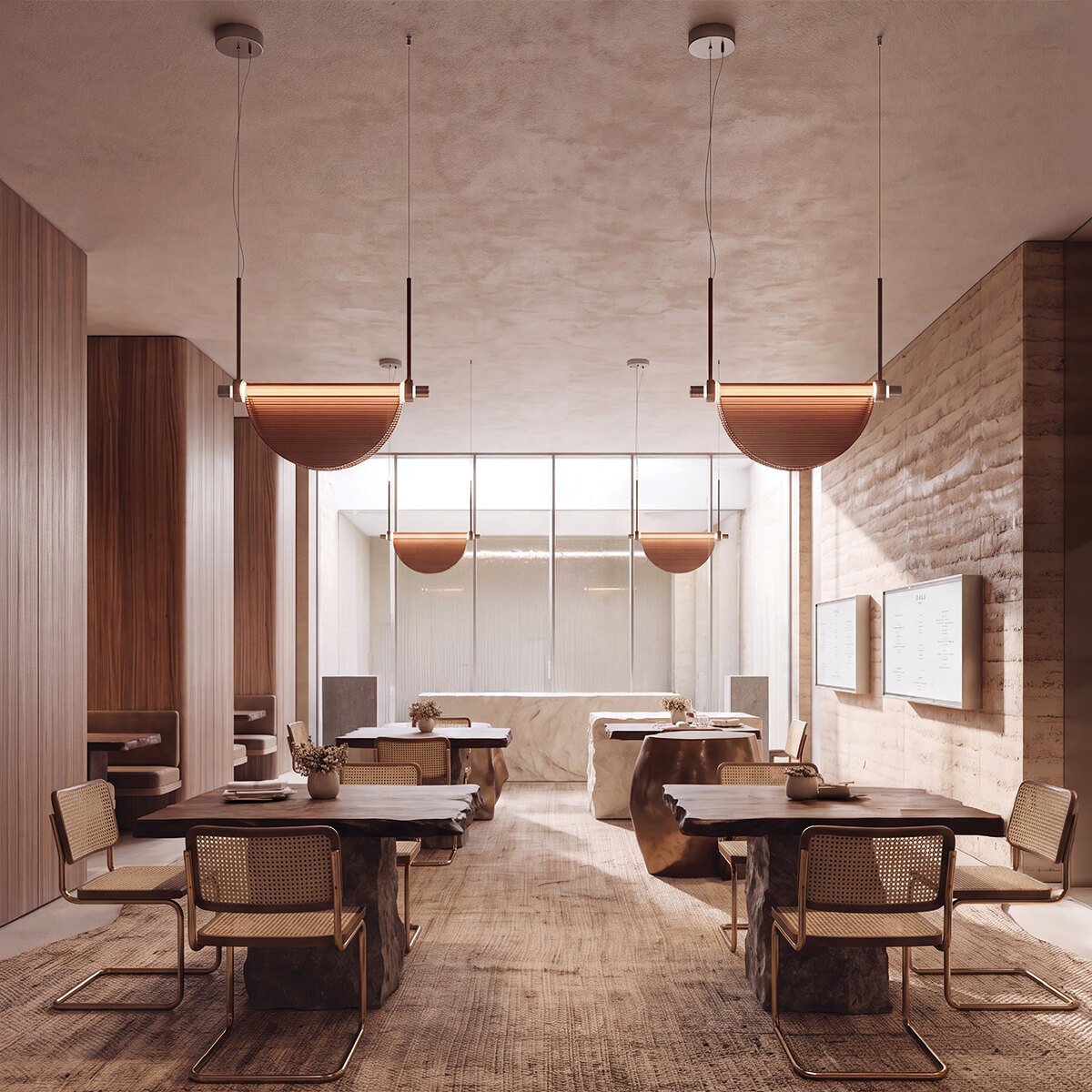
A kitchen needs three layers of light: ambient light for the whole room, brighter task light on the worktop (a guideline of about 500 lx) and accent light that makes the space feel welcoming. One light in the middle of the ceiling is not enough: standing at the worktop, you block it and cast your own shadow over the chopping board. This guide explains how to combine the layers, which colour temperature and CRI to choose and where the IP rating matters.
Three layers of light in a kitchen
In a kitchen you chop, cook and also sit down to eat or talk at the island, and each of these needs different light. That is why it pays to split the lighting into layers you can switch separately.
- Ambient light lights the whole room so there are no dark corners. It usually comes from recessed lights or spotlights in the ceiling, or from a ceiling light.
- Task light falls straight onto the worktop, sink and hob. It should be brighter than the ambient light and arrive from the front, not from behind you.
- Accent light highlights the island, the dining corner, open shelves or display cabinets. Pendant lights and warm light are the usual choice here.
Ideally each layer has its own circuit, so you can leave just the accent light on in the evening and switch everything on to cook. If you want to adjust brightness, decide on the method before the cables go in; TRIAC and DALI are the usual choices.
The task zone: how much light the worktop needs
EN 12464-1 sets illuminance levels for workplaces, and under it the guideline for a kitchen worktop is about 500 lx. A home kitchen does not have to meet that figure, but it is a good indication of how much brighter the worktop should be than the rest of the room. For general kitchen light, roughly 150–300 lx is usually enough.
| Zone | Guideline, lx | Light source | Note |
|---|---|---|---|
| Worktop and chopping area | about 500 | Fittings above the work area or under wall cabinets | Light should arrive from the front |
| Sink and hob | 300–500 | Spotlights with a suitable IP rating | Watch for reflections on glossy surfaces |
| General kitchen light | 150–300 | Recessed or ceiling fittings | Adjustable brightness is a plus |
| Island and dining corner | 150–300 | Pendant lights | Warm light, about 3000 K |
Illuminance is easy to convert into luminous flux: a 1.5 m² worktop at about 500 lx needs 1.5 × 500 = 750 lm actually reaching the surface, and more once losses are allowed for. To work out the total for the whole kitchen, use the lighting calculator.
Pendant lights above the island and dining table
The accent layer usually comes from pendant lights. Over an island or table their lower edge typically sits 70–90 cm above the surface, and where people walk underneath, at least about 2.1 m above the floor. A long island is better served by several identical fittings in a row than by one large one. Height and size are covered in more detail in our guide on how high to hang a pendant light.
Because a pendant over an island shines downwards, the island top becomes another work surface. Choose models that do not dazzle people sitting at the island, for example with a matt or opal diffuser or a deeper shade. If the fitting needs a bulb, check the cap type and pick the same light colour as in the rest of the kitchen.
Light under wall cabinets and above the worktop
The most common kitchen lighting mistake is relying on light from the middle of the ceiling alone. Standing at the worktop, you block it and work in your own shadow. The fix is simple: add a light source above the worktop, as close to its front edge as possible, for example under the wall cabinets. The light then falls from above and from the front, and shadows disappear.
How you do it depends on the units. Slim linear fittings can be mounted under wall cabinets. Where there are no wall cabinets, light the work area with ceiling spotlights placed above the front edge of the worktop rather than in the middle of the room. Choose a beam angle that covers the full length of the worktop without dark gaps.
Colour temperature and CRI in the kitchen
In a kitchen you need to see food in its true colours: whether the meat is done, whether the vegetables are fresh. Choose fittings whose CRI (colour rendering index, Ra) is 80 or higher, and 90 or more in the task zone. Good colour rendering makes both chopping and spotting dirt easier.
| Zone | Colour temperature, K | CRI (Ra) |
|---|---|---|
| Task zone and worktop | 3000–4000 | 90 or more |
| General kitchen light | 3000–4000 | at least 80 |
| Island, dining corner | 2700–3000 | at least 80 |
The key rule is to use the same or a very similar light colour throughout the kitchen: fittings of different tones lit side by side look like a mistake. How to choose between the two is covered in 3000 K or 4000 K, and see the CRI, kelvins and lumens guide for the terms.
Moisture and grease: does a kitchen need IP-rated fittings?
The IP rating, defined in IEC 60529, shows how well a fitting is protected against dust and water. A kitchen has no zones like a bathroom, but fittings by the sink and above the hob face steam, condensation and grease. IP44 or higher is recommended there, while the rest of the kitchen usually needs only IP20. A better-sealed housing is also easier to clean.
Among the spotlights you will find IP20, IP44, IP54 and IP65 options, so a better-sealed one can be chosen for the area near the cooker hood or sink. Mount the fitting where a direct jet of water cannot reach it, and above the hob choose a smooth surface that wipes clean easily.
What our range offers
For accent light above an island or table there are pendant luminaires (699 listings) and single pendants, including models with 2700 K and 3000 K light. Spotlights and downlights serve for ambient and task light, and linear lights suit a long worktop. Some of them are rated IP44 or IP65, and the spotlights include TRIAC and DALI dimmable models. If you are unsure what to pick, book a consultation.
Frequently asked questions
How much light does a kitchen worktop need?
The EN 12464-1 guideline for a kitchen worktop is about 500 lx, while general kitchen light is usually enough at roughly 150–300 lx. These values are not mandatory at home, but the worktop should be clearly brighter than the rest of the room, with light falling from the front so that you do not shade your own work.
Which colour temperature suits a kitchen?
Most kitchens suit 3000–4000 K: warm white feels cosier, while neutral white works well for the task zone. Above an island or dining corner, 2700–3000 K is a good option. Keep the values close across the whole kitchen, because fittings of different tones next to each other look mismatched, and choose a CRI of 90 or more for the task zone.
Do I need IP-rated fittings in a kitchen?
Near the sink and above the hob IP44 or higher is recommended, because steam, splashes and grease reach those spots. In the rest of the kitchen IP20 is normally enough. A higher rating also makes cleaning easier, but the fitting must still be installed where a direct jet of water cannot reach it.
How do I light a kitchen without shadows on the worktop?
Add light above the worktop, as close to its front edge as possible: linear fittings under the wall cabinets or spotlights in the ceiling. The light then falls from above and from the front, so you do not block it. One light in the centre of the ceiling is not enough, because when you stand at the worktop it is behind you.
Summary
A well-lit kitchen is built from three layers: ambient light for the whole room, brighter task light for the worktop, with a guideline of about 500 lx, and warmer accent light above the island or table. Place the task light above the front edge of the worktop so that no shadows form. Choose 3000–4000 K and a CRI of at least 80, rising to 90 in the task zone, and at least IP44 next to the sink and hob. Put each layer on its own circuit so you can set different light for cooking and for the evening.
Related Articles

How to space recessed lights and how many you need
Learn how far apart to place recessed lights, how ceiling height and beam angle change the spacing, how many a room needs and what to check before cutting holes...
Read more : How to space recessed lights and how many you need
How High Should You Hang a Pendant Light and What Size to Choose?
Learn how high to hang a pendant over a table, island or walkway, what size to choose and how to arrange several pendants.
Read more : How High Should You Hang a Pendant Light and What Size to Choose?
How to Choose Bathroom Lighting: IP Ratings, Zones and Colour
Learn what the IP code means, how a bathroom is split into zones 0, 1 and 2, and which light and fittings suit the mirror, shower and washbasin.
Read more : How to Choose Bathroom Lighting: IP Ratings, Zones and Colour