How to choose a single pendant light
A single pendant usually lights one particular spot, so start with what it will hang over and at what height.
Hanging height over a table or island
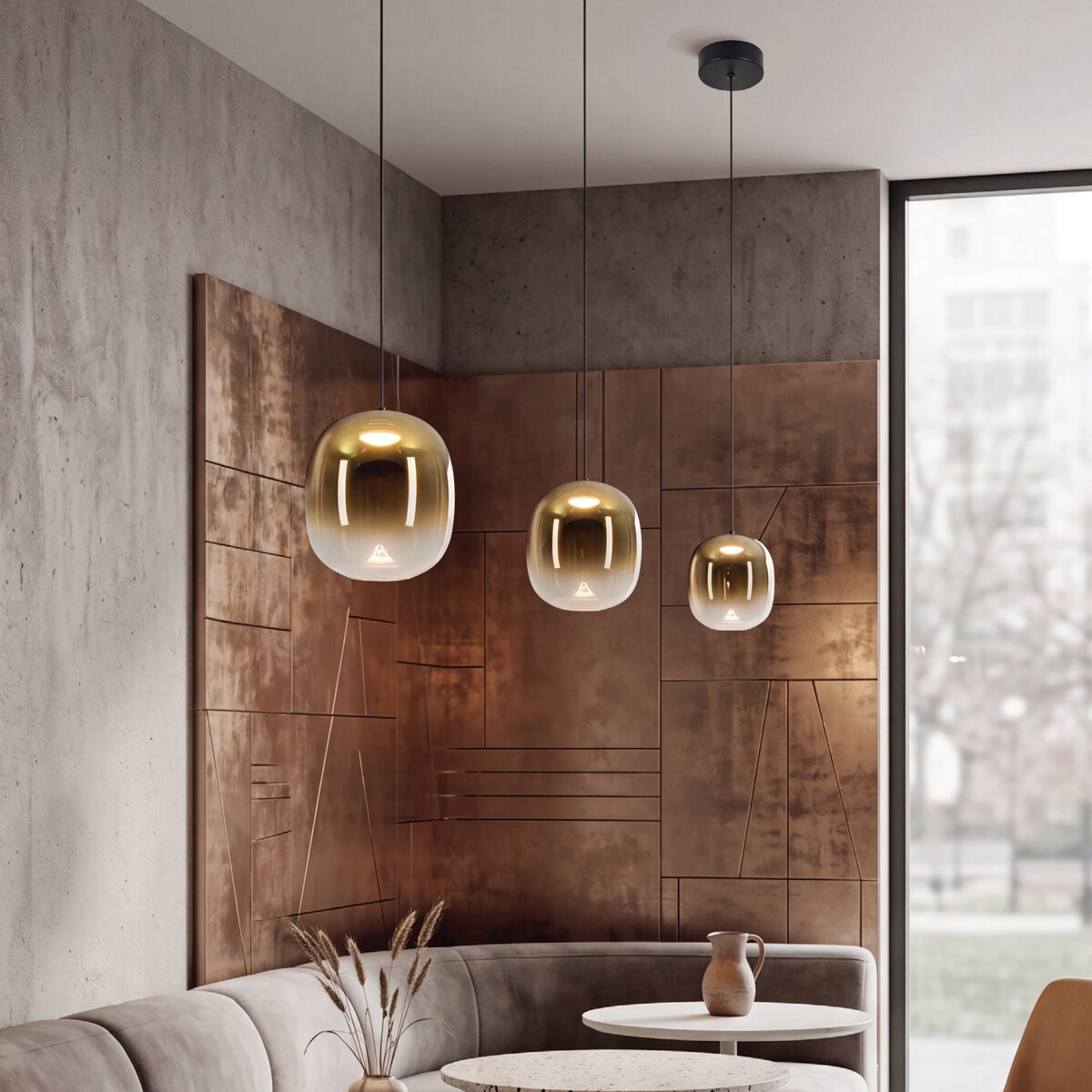
Above a dining table or kitchen island, the bottom of the pendant is normally hung 70 to 90 cm above the surface. At that height light falls on the table, does not dazzle anyone seated and does not block the view across. The higher the ceiling, the longer the cable or rod you need, so check the maximum drop on the product page and whether the cable can be shortened. Over an island, two or three matching pendants are often hung at even spacing, leaving some distance to the ends of the worktop.
| Position | Usual height | Usual colour temperature |
|---|
| Above a dining table | 70–90 cm above the table top | 2700–3000K |
| Above a kitchen island | 70–90 cm above the worktop | 3000–4000K |
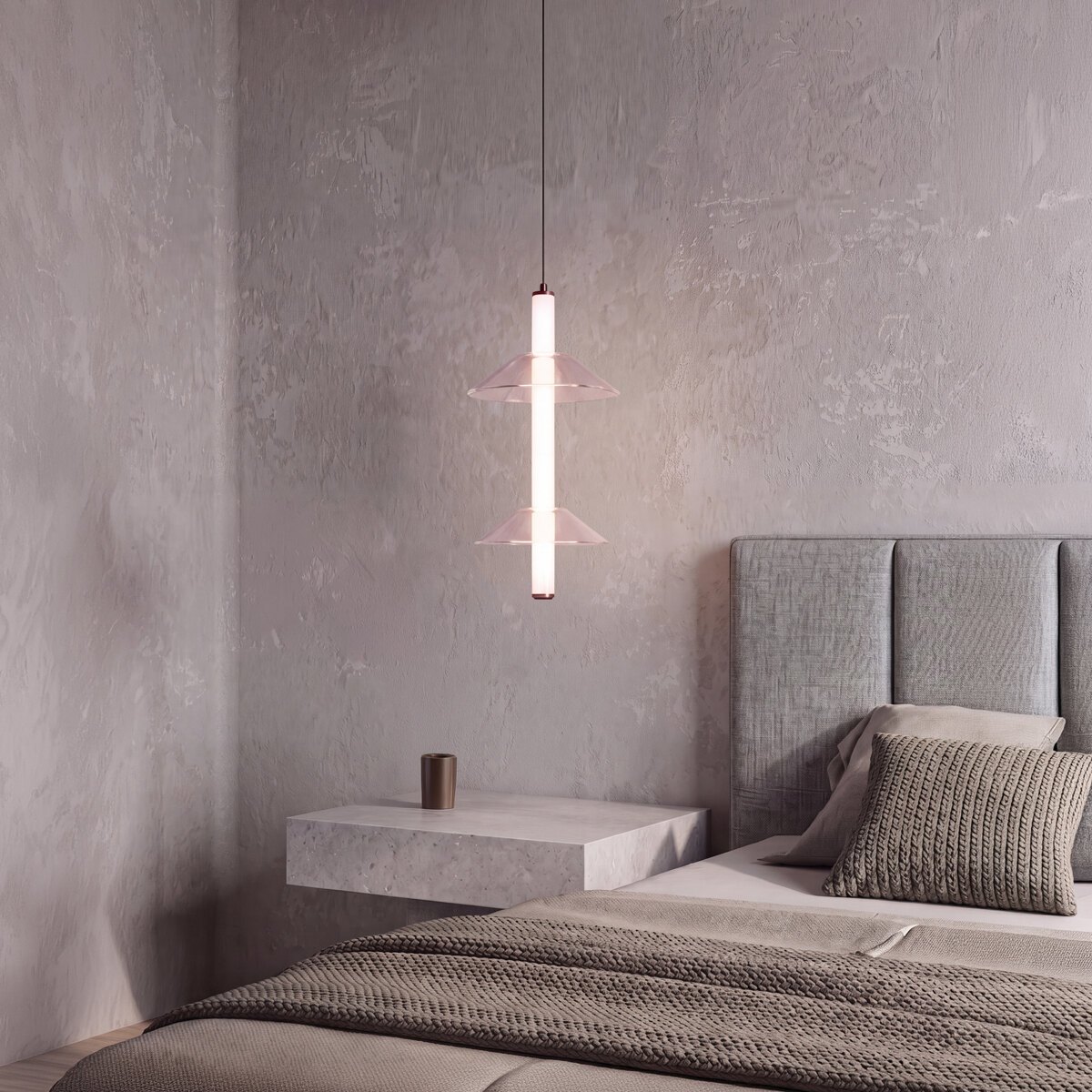
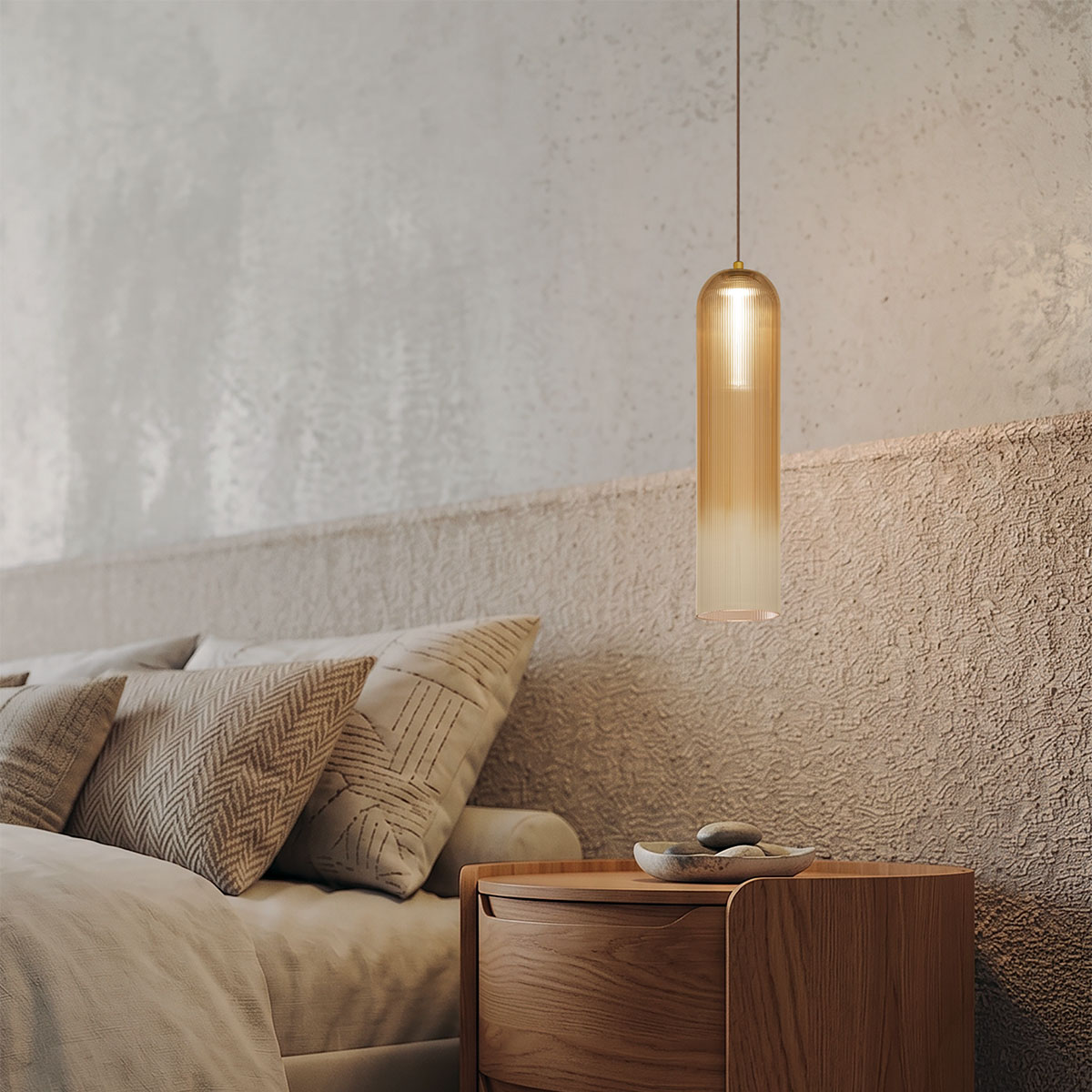
| Beside a bed | about 50–60 cm above the bedside table | 2700K |
| Hallway, stair landing | bottom at least 2.1 m above the floor | 3000K |
Light output and light source
Pendants in this category are rated 3 to 40 W, and models with an integrated LED deliver 150 to 2461 lm. Lower-output pendants suit soft light beside a bed or on a landing, while stronger ones belong over a dining table or desk. In pendants with an E27, G9, E14 or GU10 socket, the bulb you choose sets the output and colour. If you hang several pendants in one room, their outputs add up.
Colour temperature and dimming
Most models give warm white 3000K light, fewer 2700K, and there are some 4000K and adjustable colour temperature (CCT) pendants. Warm light suits dining and relaxing areas because food and skin look natural. Some pendants are dimmable: TRIAC (phase cut) is the most common method, with step dimming and DALI much rarer. A TRIAC pendant connects to a compatible wall dimmer, letting you lower the light over the table in the evening.
Shade, materials and colour
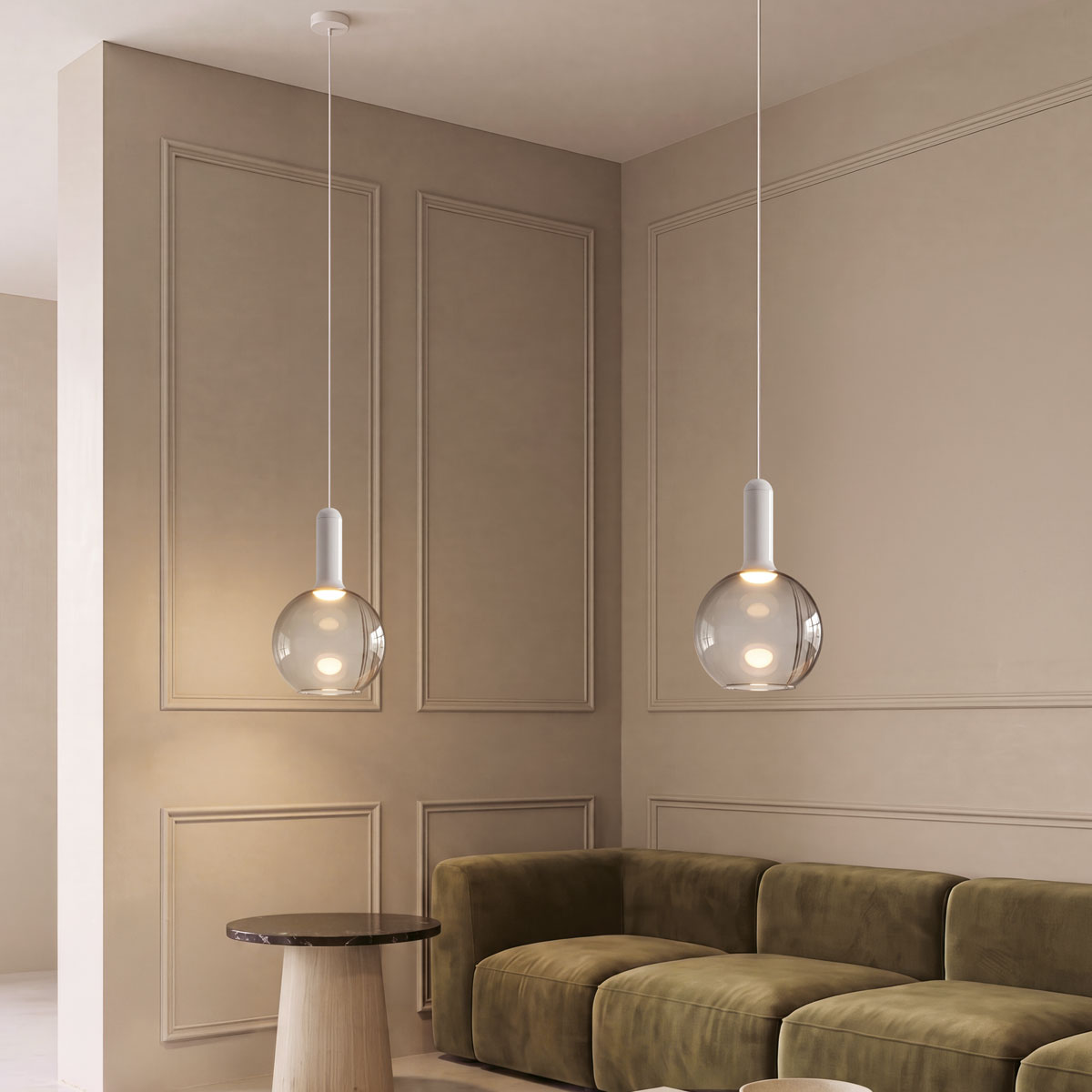
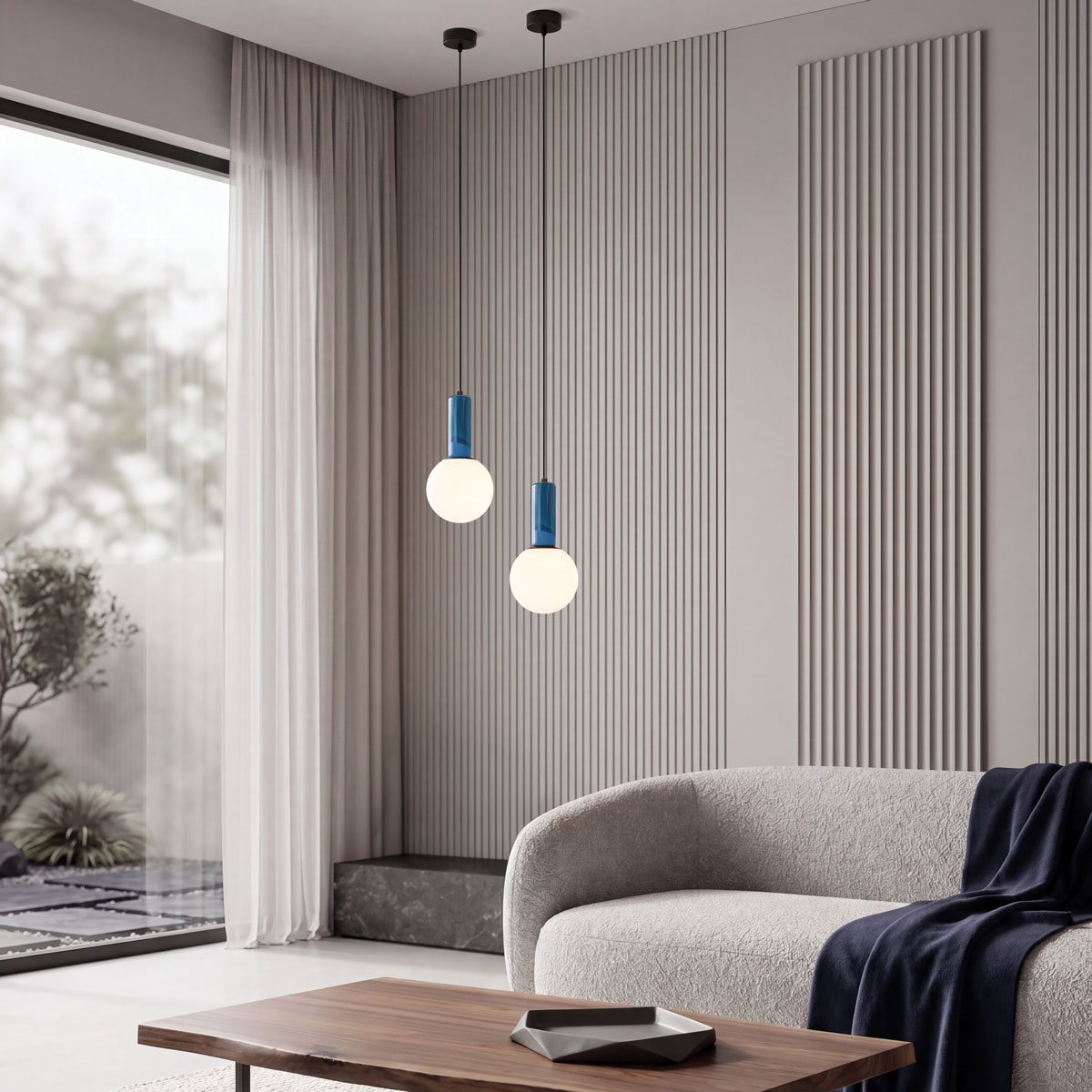
Shades and bodies are made of metal, aluminium, glass, acrylic and opal glass. Clear glass shows the bulb and gives brighter, more contrasting light, so a decorative bulb is worth choosing for it. Opal glass and acrylic diffuse the light and reduce glare, while a closed metal shade directs it down onto the table. The most common finishes are black and gold, with white, copper and grey also available.
A long table or island is often easier to light with one linear pendant, and a larger room suits chandeliers. Work out the light a room needs with the lighting calculator.