How to choose a single-phase track system
Before choosing fixtures, decide whether all the light on the track can be controlled from a single switch. If it can, a single-phase system is enough and the wiring stays simpler. If you want to switch zones separately, a three-phase track is the better choice.
| Question | Single-phase track (this category) | Three-phase track |
|---|
| How fixtures are switched | All from one switch | In three groups |
| Circuits needed in the wiring | One | Three |
| When it is enough | When the run does one job | When zones must be kept apart |
| Range at led.lt | 52 products, TK Lighting Tracer | 84 products, TK Lighting and Zambelis |
Where single-phase track works best
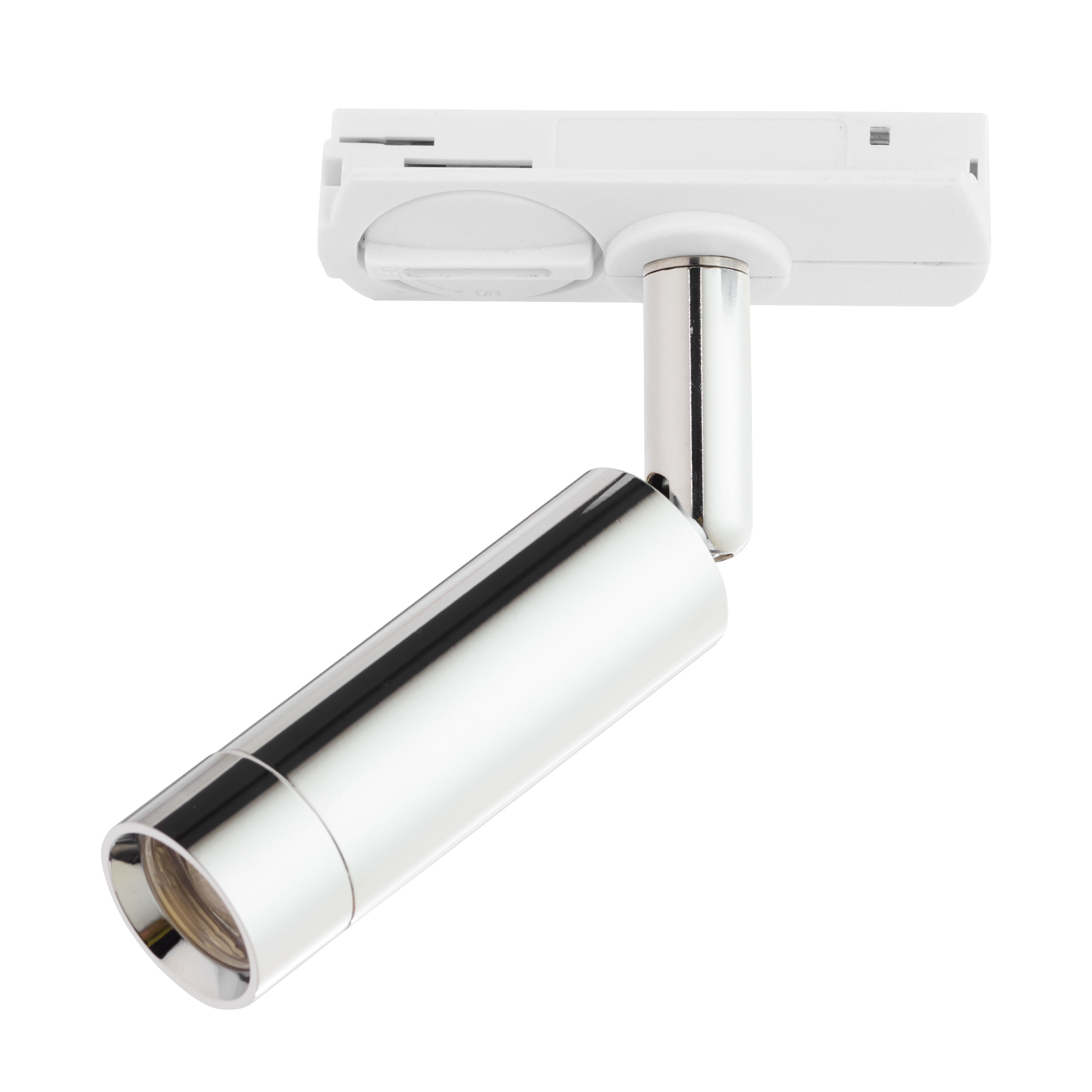
One circuit suits places where the whole run does a single job: lighting a hallway, a kitchen worktop, a picture wall or a shop shelf. Directional heads can be turned and slid along the track, so when furniture or a display changes you can adjust the lighting without new cabling. In flats and small shops this is usually all that is needed, and the installation stays straightforward.
Sockets and bulbs
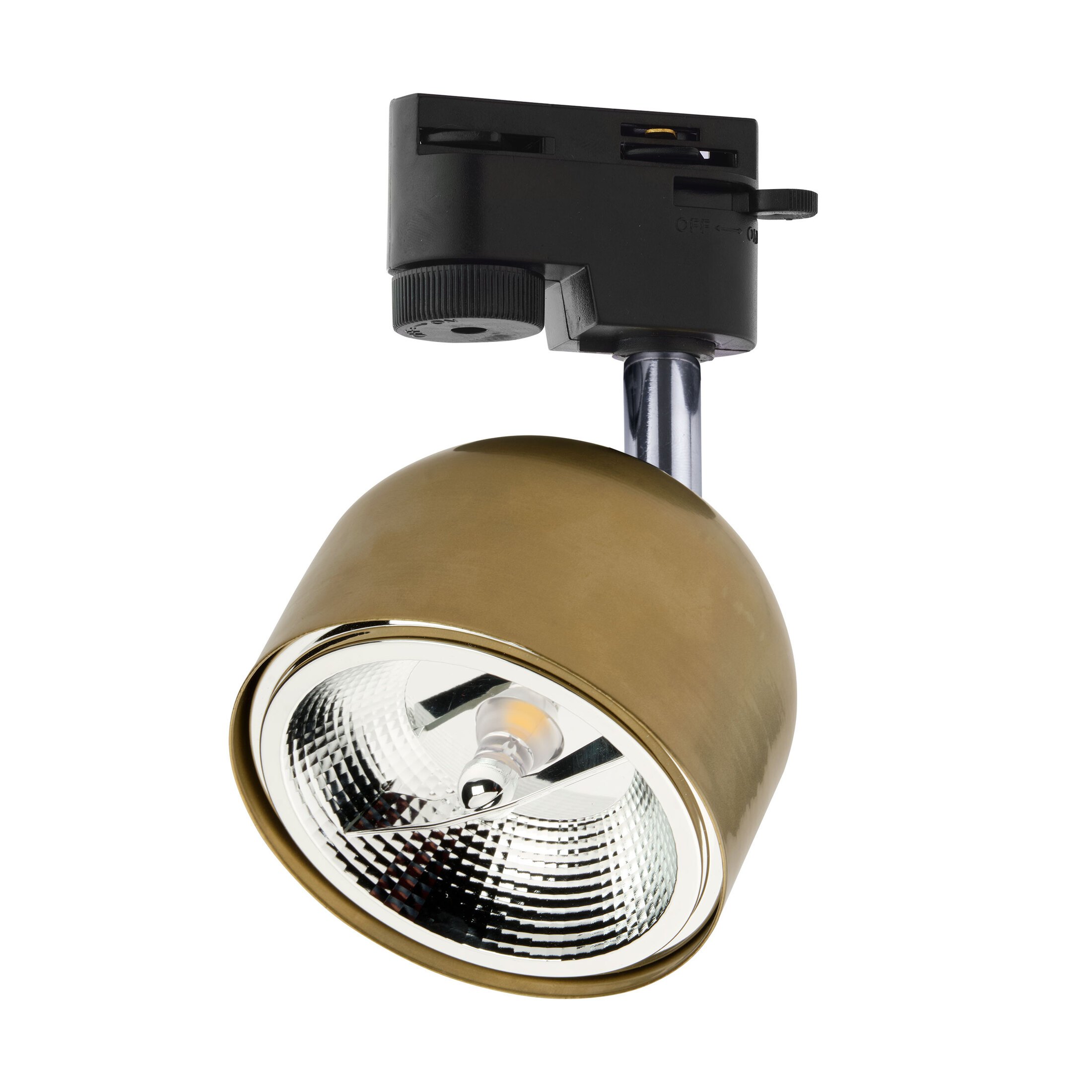
Most fixtures take bulbs with a GU10, E27 or G9 socket; a few use GX 53, GU10 MINI MR11 or ES111, and some models have integrated LEDs. Luminous flux is not listed in this category because it depends on the bulb, so you set the brightness when you buy bulbs. GU10 is typical for directional spotlights, while E27 suits larger shades that need more light.
Colour temperature
With a socket fixture the colour temperature depends on the bulb. Integrated LED models list 3000 K, 4000 K, 6500 K or tunable CCT. Living spaces usually call for 2700–3000 K, a kitchen work area or shop for around 4000 K. At 6500 K the light looks cold in a home, so it tends to be used in technical rooms and workspaces.
Installation and finishes
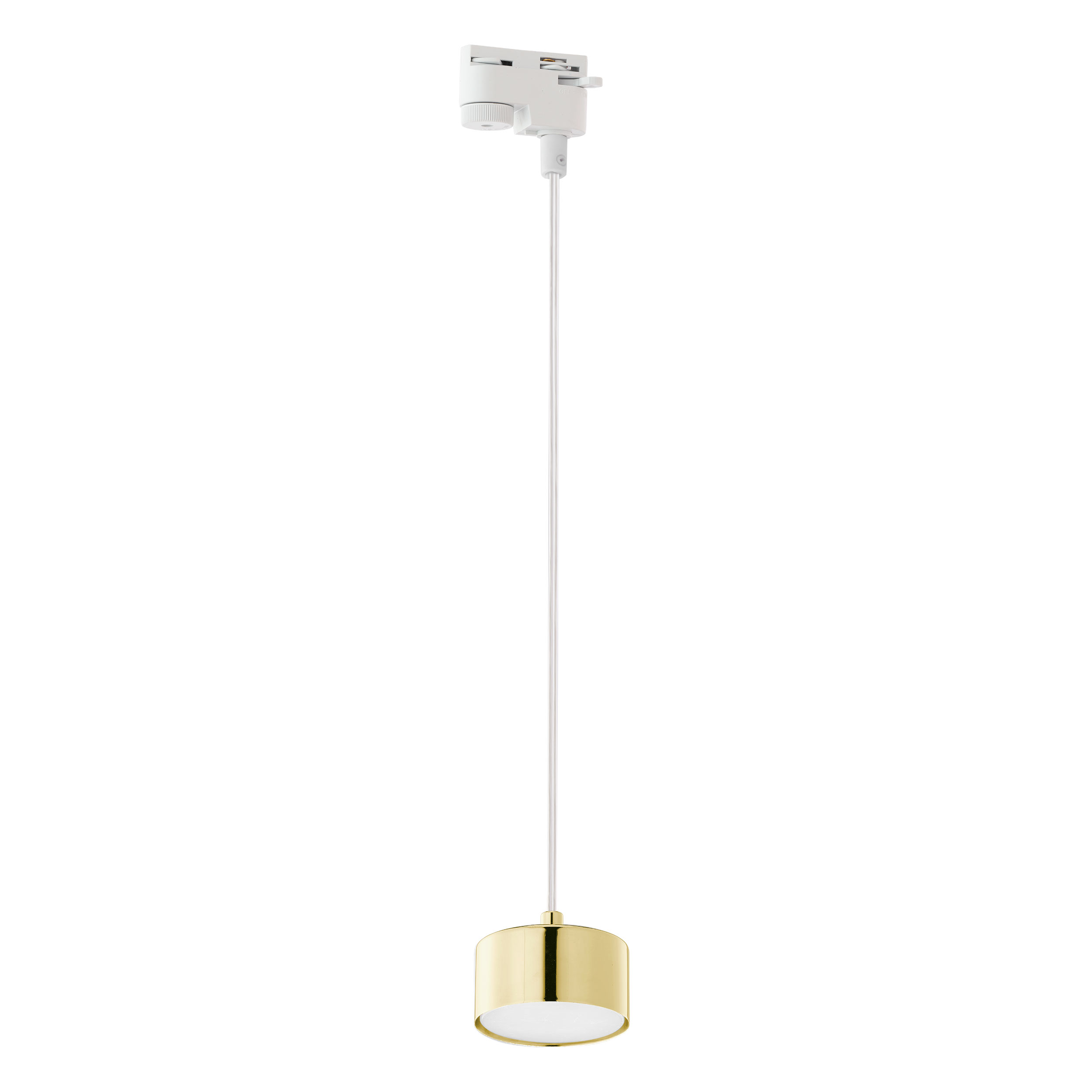
Every product is rated IP20, so the track belongs in dry rooms only. A single-phase track connects directly to the 230 V mains with no power supply, and the wiring should be done by an electrician. Bodies are mostly black or white, with brown, gold and beige options, in plastic, steel, aluminium and fabric. On a white ceiling a white track almost disappears, while a black one turns the run into a visible line.
Every product here belongs to the TK Lighting Tracer single-phase system. For separate zones, see three-phase track systems. You can lay out the track in the configurator.