How to choose a flush mount or decorative ceiling light
A flush mount is often the only ceiling light in a room, so the priority is enough light for the whole floor area, with a colour temperature and size that suit the space.
Will it light the whole room
The luminous flux a room needs is normally worked out from its floor area: multiply a guideline lm/m² figure by the number of square metres. Fittings in this category deliver 846 to 6152 lm at 4 to 150 W. For example, a 14 m² bedroom needs roughly 1400 to 2100 lm, and a 25 m² living room about 3750 to 5000 lm. If the room has several fittings, add their outputs together. The guide figures below follow common practice.
| Room | Guide luminous flux, lm/m² |
|---|
| Bedroom | about 100–150 |
| Hallway, stairwell | about 100–150 |
| Living room | about 150–200 |
| Kitchen | about 200–300 |
| Study, office | about 300–500 |
Integrated LED or replaceable bulb
Some ceiling lights have an integrated LED with a stated colour temperature, most often 3000K, with 4000K, 2700K, 6500K and adjustable colour temperature (CCT) also available. Others take an E27 bulb, or less often G9, GX53 or S14d. In that case the bulb is bought separately and sets the colour and output. Living spaces usually get 2700K to 3000K, kitchens and studies 3000K to 4000K. A fitting with several E27 sockets can reach a higher total output.
Dimming
The most common dimming method here is TRIAC (phase cut), and there are also DALI-controlled models and lights with no dimming at all. A TRIAC ceiling light can go on a wall-mounted phase dimmer as long as the dimmer's load range matches the fitting. DALI needs a separate controller, so it is more common in offices and smart homes. With an E27 fitting, you can only dim the light if the bulb itself is dimmable.
Size, height and finish
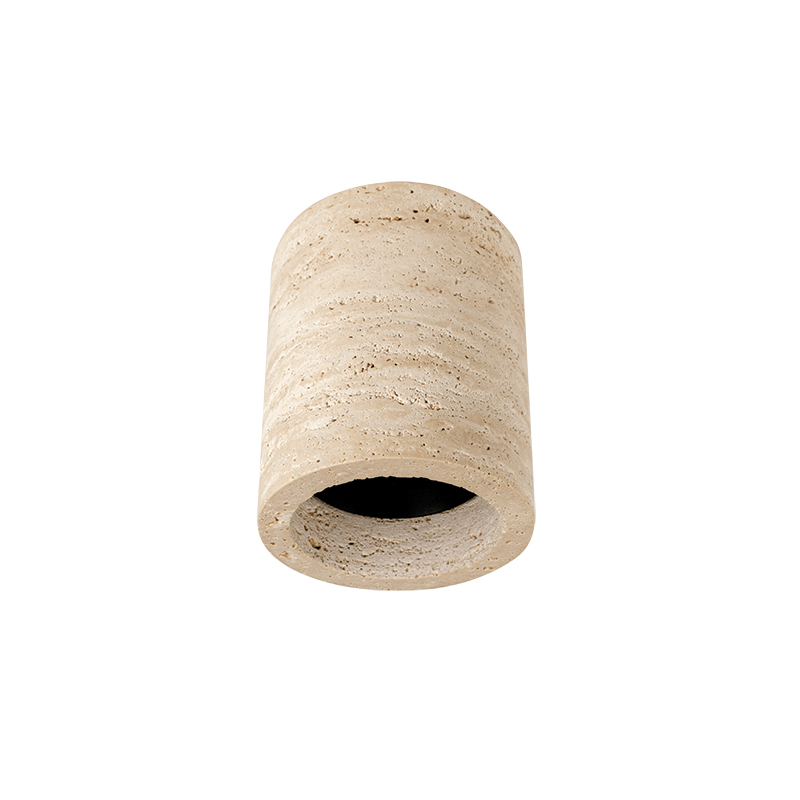
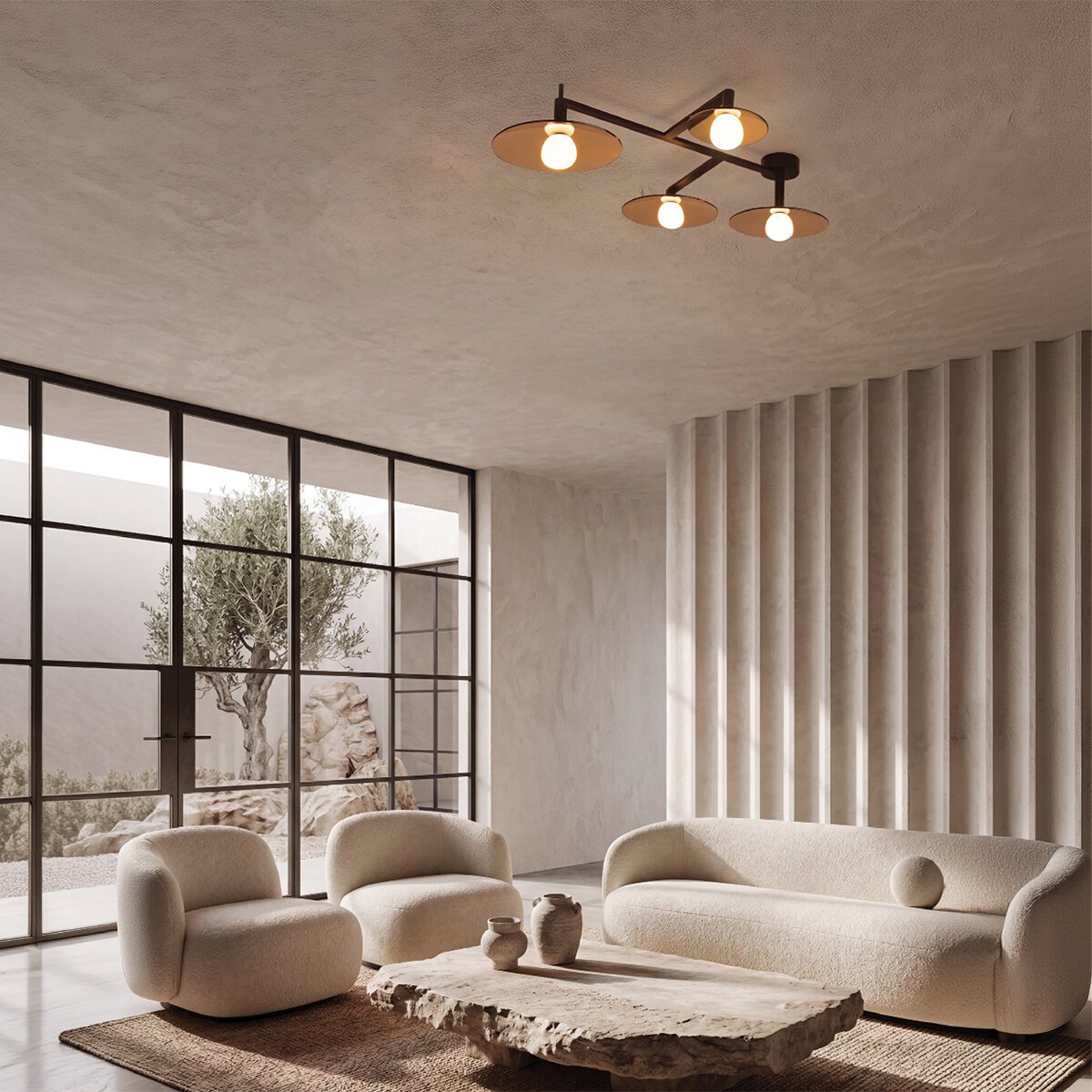
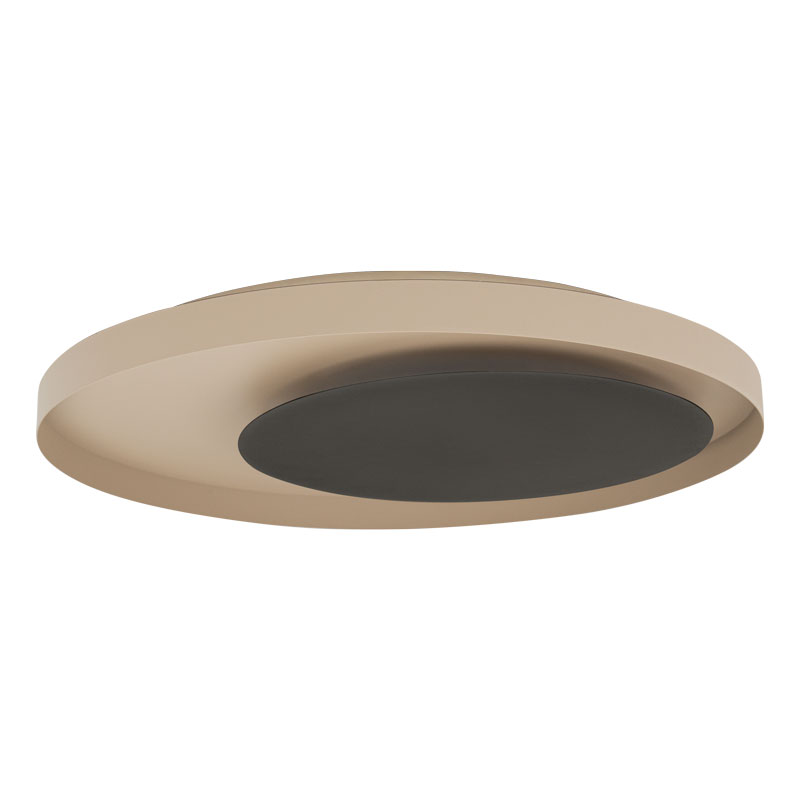
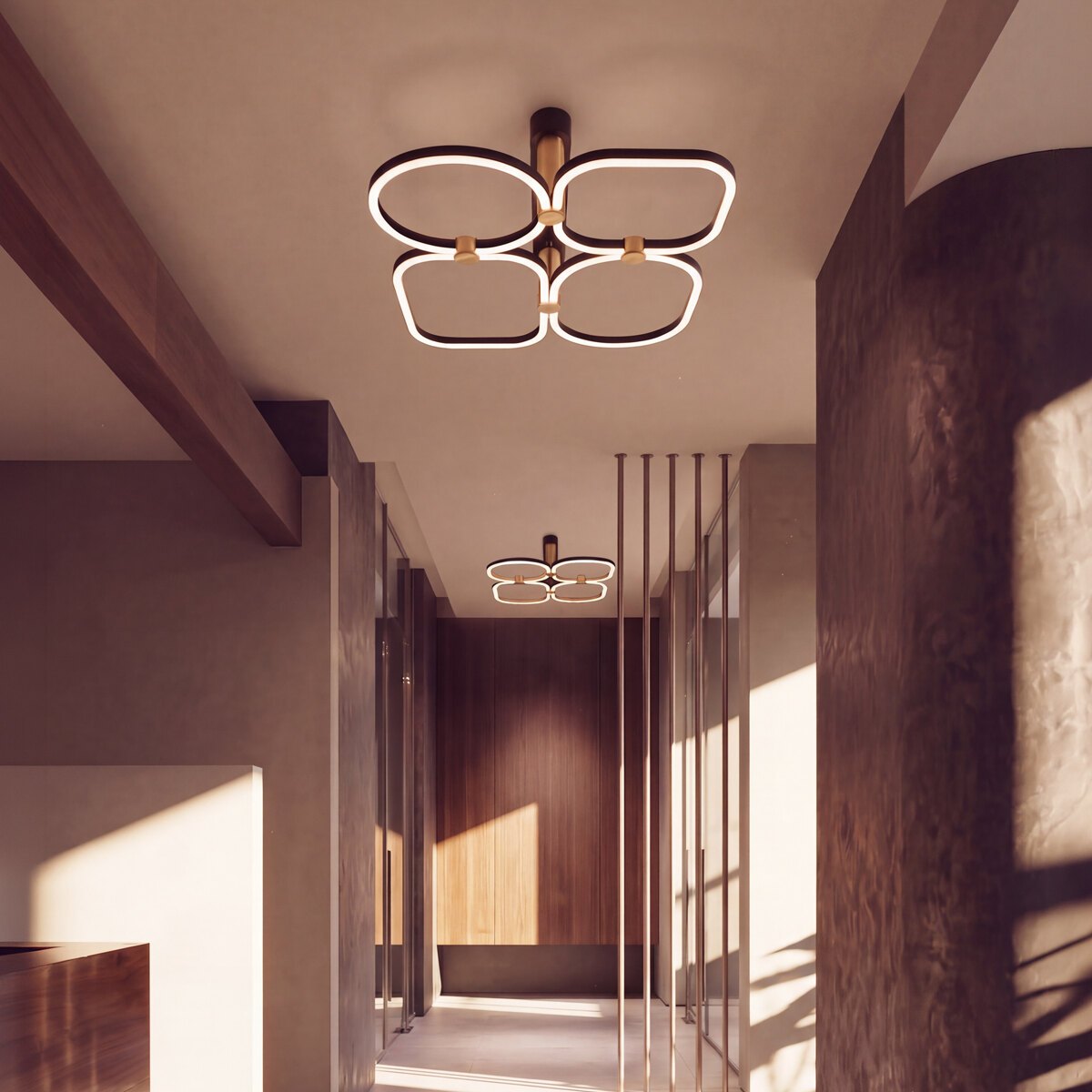
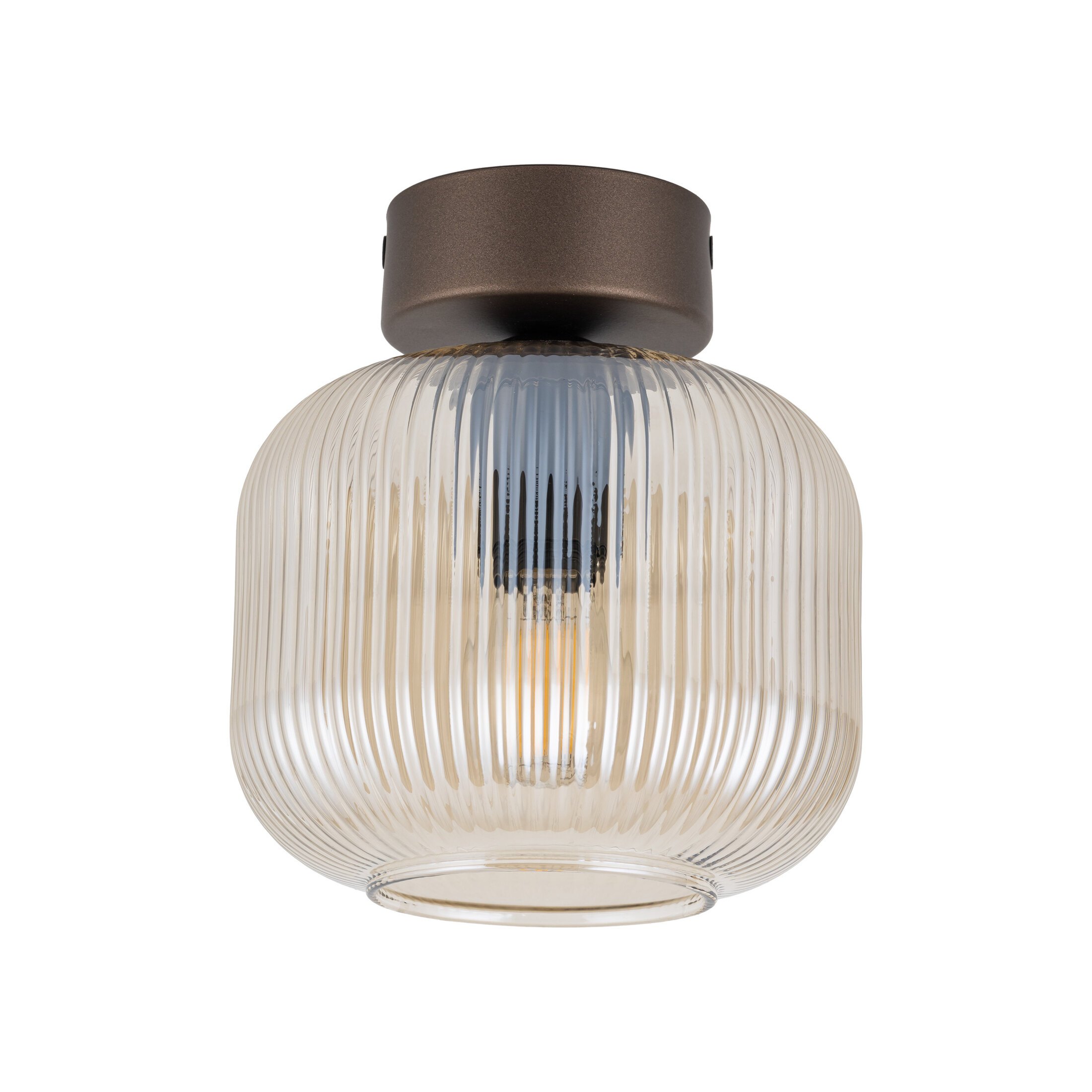
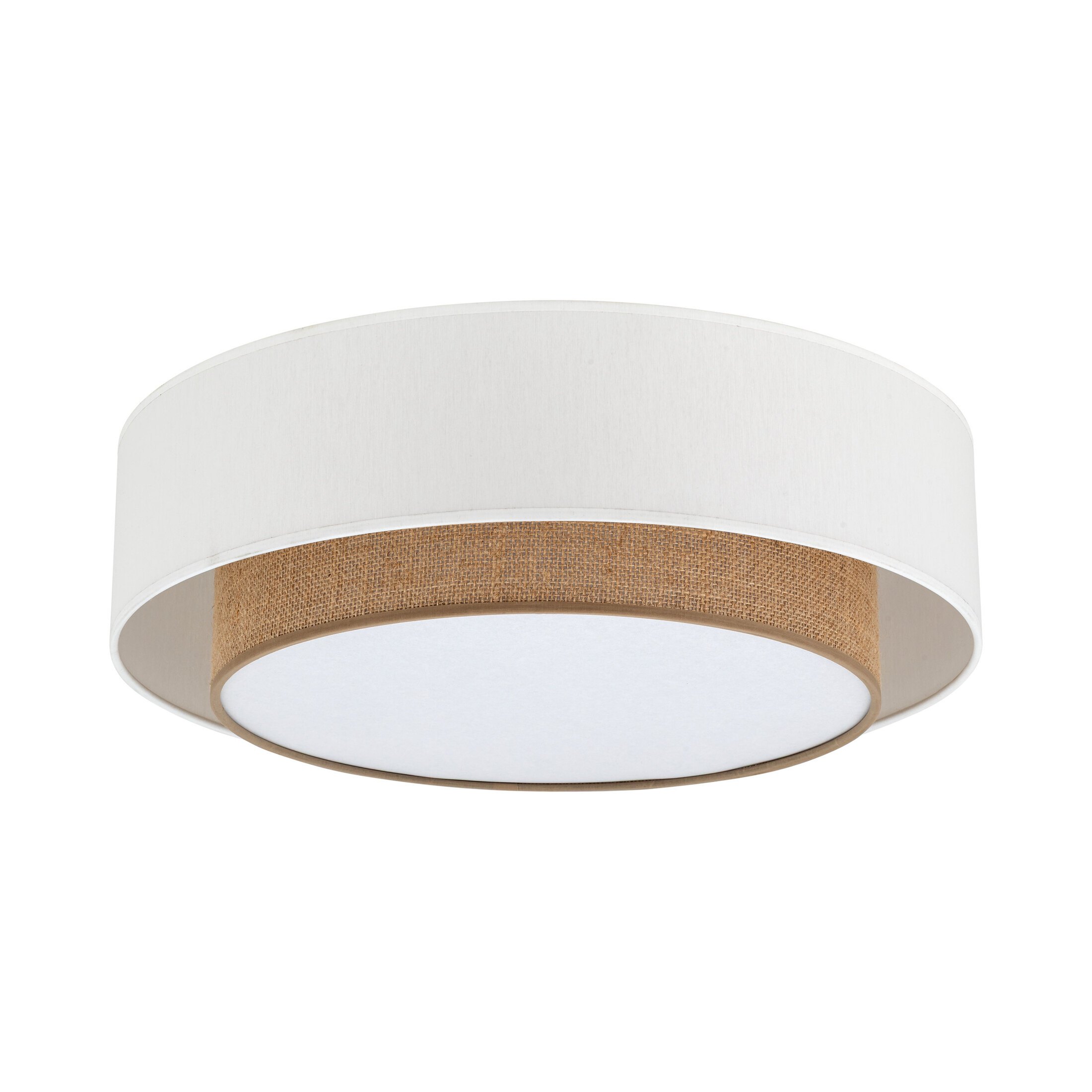
In rooms with low ceilings of about 2.5 m, choose a slim flush mount that sits close to the ceiling. Taller rooms suit decorative fittings with deeper shades. Match the diameter to the room, as a small light in a large living room looks lost. Housings are mostly white or black, also gold, beige and brown, in plastic, steel, aluminium, metal and acrylic. Most are rated IP20, but IP44, IP54 and IP65 models are available for damper spots.
Compare with surface-mounted lighting, ceiling fans with lights and spotlights and downlights. Work out the luminous flux for your room with the lighting calculator.